
Disclosure: Meeple Mountain received a free copy of this product in exchange for an honest, unbiased review. This review is not intended to be an endorsement.
Whenever I am leaving Germany following another round of the SPIEL Essen game fair, I always save space in my carry-on for 3-4 games, the games I am most excited to get to my table AND the titles that I would most regret if my bags were lost in transit.
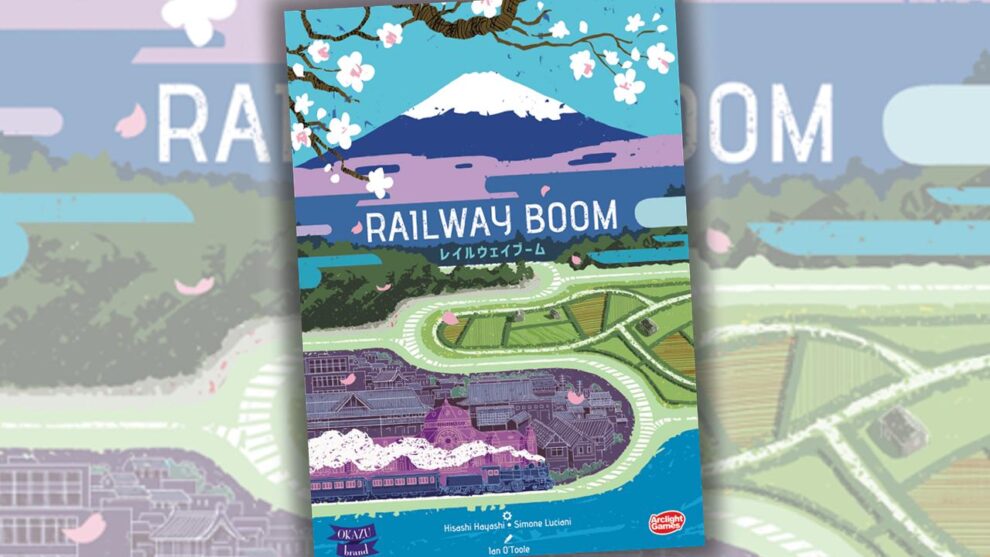
In 2025, one of those games was Railway Boom, the updated version of the same game from designer Hisashi Hayashi released in 2022. Hayashi is best known for Yokohama, one of my favorite Euros ever. And while Hayashi designed Railway Boom, the new version features graphic design from Ian O’Toole and was developed by Simone Luciani, my favorite game designer of them all.
Seeing the names of these three men on the front cover of the box told me one thing: I would be shocked if the game was anything less than brilliant. Turns out that I was right.
Auctions, Auctions, Auctions, Auctions
Railway Boom is a four-round economic route building game for 2-4 players. In my experience, the game plays in about 90 minutes with 2-3 players, a bit more with four players. At first blush, Railway Boom—thanks to a title that includes the word “Railway”—looks like a train game, a bit like the Iron Rail series games from Capstone that include Iberian Gauge, Ride the Rails and Age of Rail: South Africa. Same size box, art and graphic design by O’Toole, cover image of a train against a backdrop that seems to clearly hint: “psst, this is Japan, boss.”
But then you open the box and something else entirely unfolds. Sure, there is an auction format, but not for shares of corporations; the auctions exist to do almost everything for the entire game. In fact, four of Railway Boom’s six phases in each round are led by auctions, and each auction uses a different resource for each bidding phase: materials, to purchase trains; money, to establish trading posts across the country; technology, to purchase developments, and a rotating resource in the round’s final phase to invest in an end-game objective that rewards investment in various game elements.
This makes every resource in the game valuable. A fourth resource, coal, is used by each player’s train fleet to produce resources and boost in-game scoring opportunities. Each player’s personal board tracks income levels for these four resources plus victory point income, as well as total resources that will be spent during auctions and other actions. Income tracks come with bonuses that sometimes trigger when running up different tracks, with each track offering players valuable scoring opportunities by focusing on one or two of the five income tracks in play.
Each round follows the same structure. A bidding track drives each auction, and players have to outbid the current leader by one or more in order to take the lead. When all players have finished bidding, the player who won the bid pays full price, with other players paying half or even nothing based on their final bidding positions. That means everyone wins something every auction, but the leading player not only gets first choice from the items available in that bidding phase, but also sets themselves up to bid first in the next auction, something that proved critical in my plays.
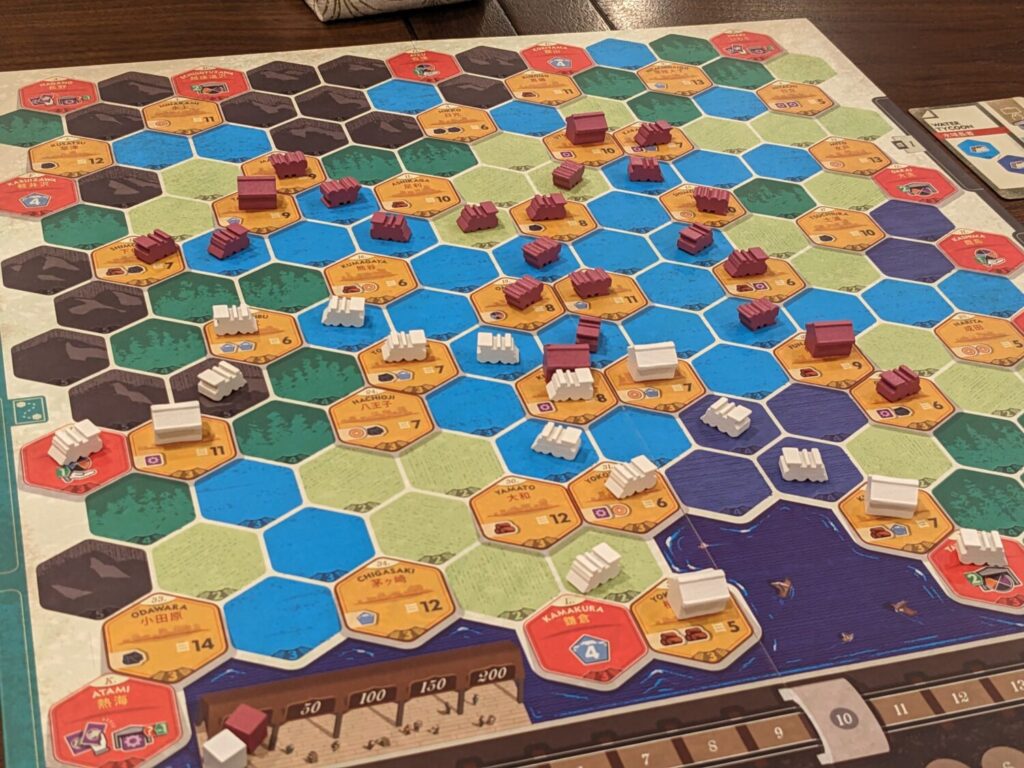
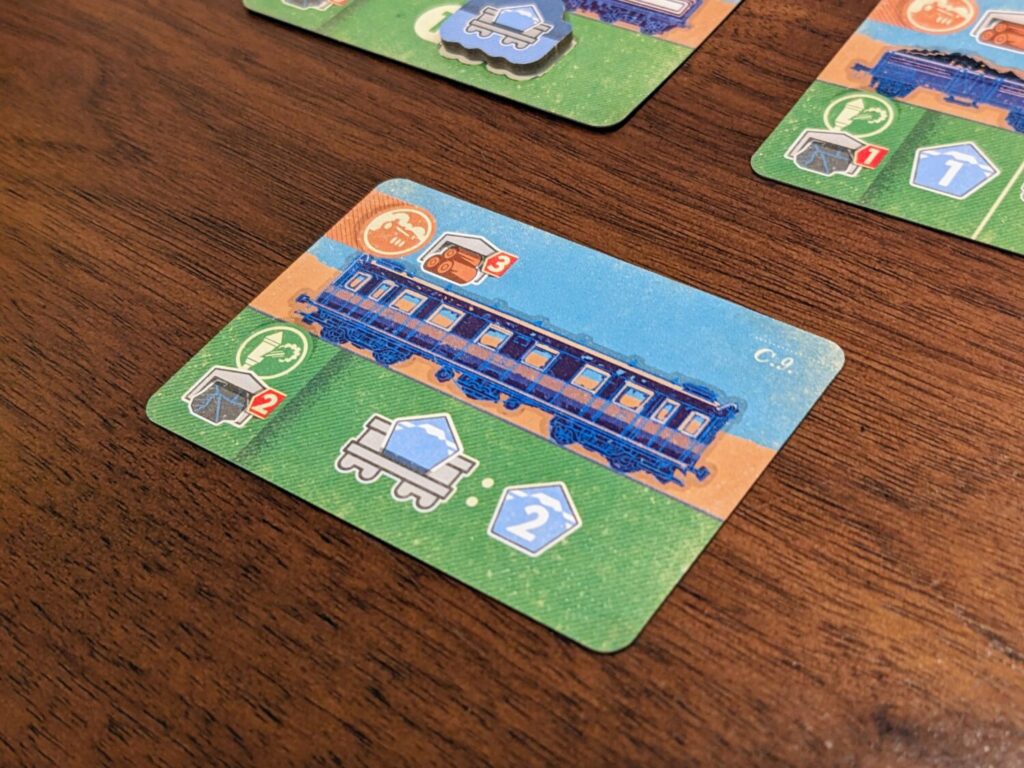
Players, taking on the familiar train game role of tycoons trying to run the best businesses, auction a pool of locomotives before getting a chance to purchase additional carriages that will be used during an operations phase late in each round. The second auction is to establish a single station amongst 30+ cities on the simplified map of Eastern Japan. Using a power system and action points listed on each city hex, players will use the city they win to build out links to their train network using a very simple spending system—each hex built through uses a certain number of power points, and players can boost that spend with the same resource used for the bidding in that phase.
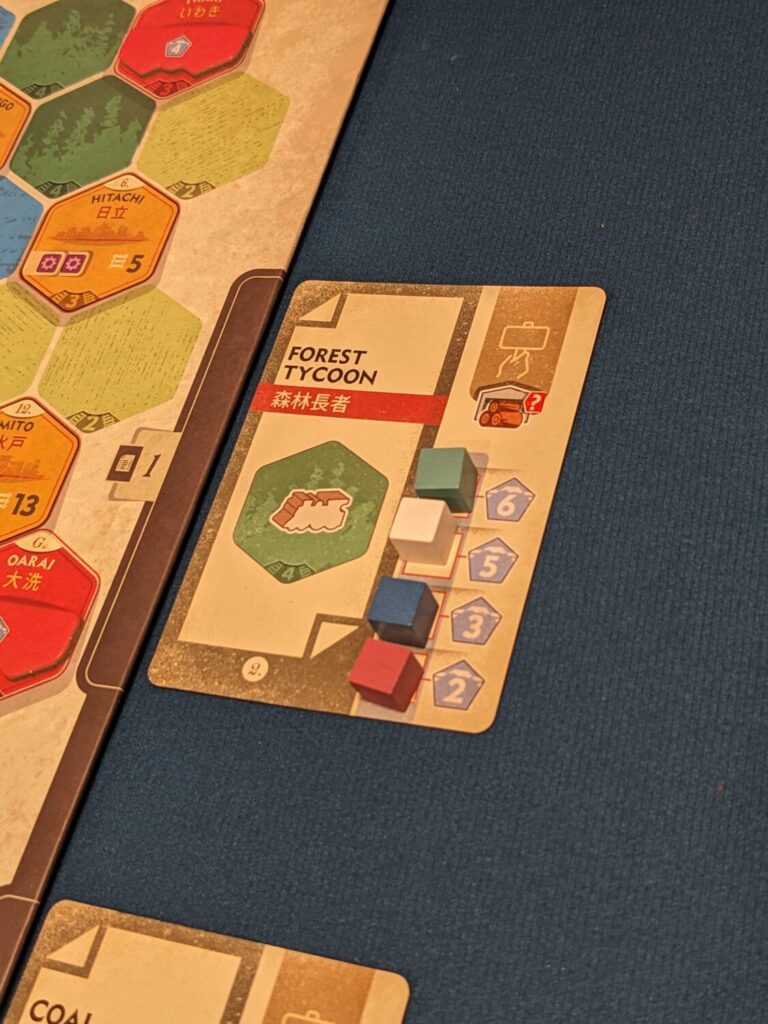
Like Hiyashi’s work in Yokohama, Railway Boom offers a technology market that proved vital. Everyone has the chance to acquire as many as three technology cards during the Development phase to acquire instant, once-per-round, and/or ongoing powers. Even the cheapest cards offer tangible benefits. After the income phase, players get to run their trains simultaneously by building the most efficient series of carriages attached to locomotives for a given round. Then each round ends with players bidding to get the highest slot on that round’s objective card, which will later be used to score dozens of points at the end of the game.
After adding in one minor scoring—trading in resources at a 2:1 rate—and one major scoring, where players score two points for each link in their longest contiguous link of trains, the player with the highest score wins.
Oh, It’s Clean, Baby
I never played the original Railway Boom, so I can’t compare the two titles. Now that I have played Railway Boom, I’m not sure if I prefer Yokohama or Railway Boom as my Hiyashi design of choice.
Railway Boom is so clean. I taught this game to a varied set of audiences and found that even a 10-minute teach is all I needed. In part, that’s because O’Toole’s work on the bottom-of-the-board player reference provides 80% of what most players will need to understand the system. (I still believe that every game needs a player aid, but even I will admit that the one on the Railway Boom board is pretty slick.) The auctions all run the same way, and even after a single auction, all players will have that part of the game down.
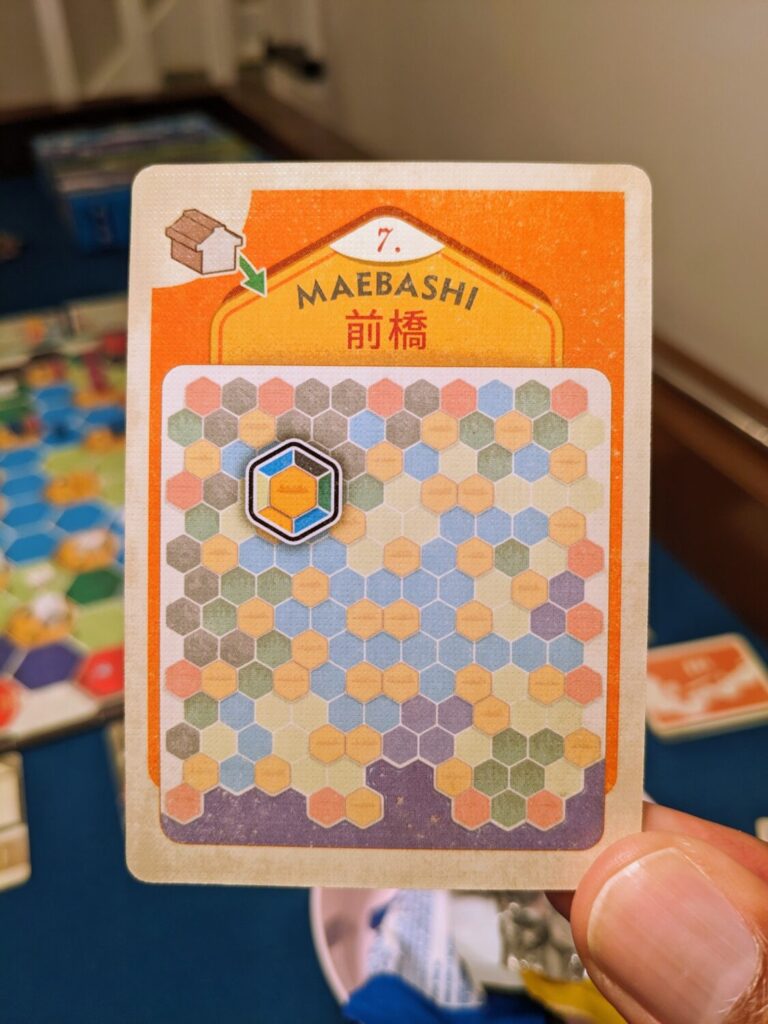
The randomness of how the station cards come out makes each game so different. The board comes with pre-printed bonuses on outlying “tourist” locations as well as standardized resource bonuses on each city hex. In both cases, there are additional tiles included that can be used to shuffle each city’s bonuses, offering a fantastic amount of replayability for those who want to dive deep.
There are dozens of technology cards (albeit with some duplicates across those ~75 cards), 18 different objective cards (with only four featured in each game), and seven public route cards available to offer players an instant bonus if they can connect the locations pictured. The board’s footprint is small, so even with four players, everyone can be situated around a small table and still have enough space to maneuver.
Railway Boom has essentially zero downtime. You’re always either bidding, sorting through your auction winnings, or doing simultaneous actions during the income and operations phases. It is a game that feels great as you are playing, so for an hour or maybe 90 minutes, there you are, doing something interesting every moment.
The game’s only weakness is player count. Railway Boom should only permit a minimum of three players and a max of four. My two-player game was the weakest part of my review cycle; Railway Boom is just too loose at two players. Also in a two-player game, the player that loses an auction pays nothing, so there are many auctions that end with a player looking at the available options and deciding “you know what, I think I’ll just bid zero and take the scraps.”
Like most auction games, you’ll want to play Railway Boom with the highest number of players possible. At two players, I don’t recommend this title.
Otherwise, Railway Boom is solid. Even if you don’t love “train games”, Railway Boom is worth a look. At four players, Railway Boom is one of the best games I played all year.