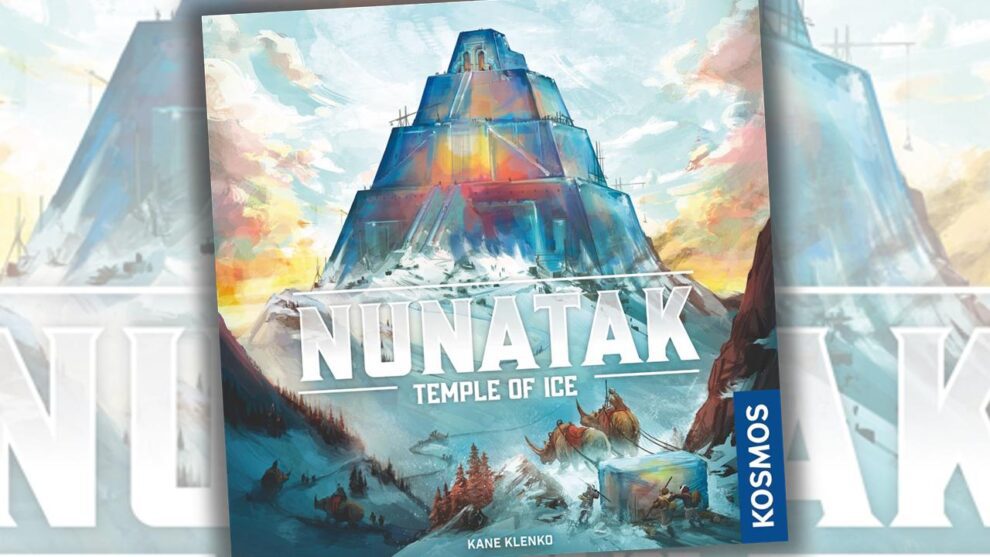

Disclosure: Meeple Mountain received a free copy of this product in exchange for an honest, unbiased review. This review is not intended to be an endorsement.

What’s Cooler Than Being Cool?
When I first saw this game on a table, I assumed it was a kids’/family title—something akin to ICECOOL or Santorini. But on closer inspection, that was just the tip of the iceberg. Nunatak: Temple of Ice comes to us from Kane Klenko, who, aside from having a catchy name, has plenty of titles on the market, including FUSE, Dead Men Tell No Tales, Pandemic: Rapid Response, and Covert. I can’t say I’ve played any of his other games, but his designs seem to have a unique flair, and Nunatak: Temple of Ice is no exception.
Dumping out the box, I found some cards, a ton of tiles, and—most interestingly—a TON of brightly colored plastic, cube-ish shapes. I was hoping this wouldn’t be a dexterity game, because I’m not keen on those (shaky hands and all). Luckily, it ain’t. But does this ice pyramid have a strong foundation, or will it easily crumble?
There’s only one way to find out!
Draft, Stack, Score
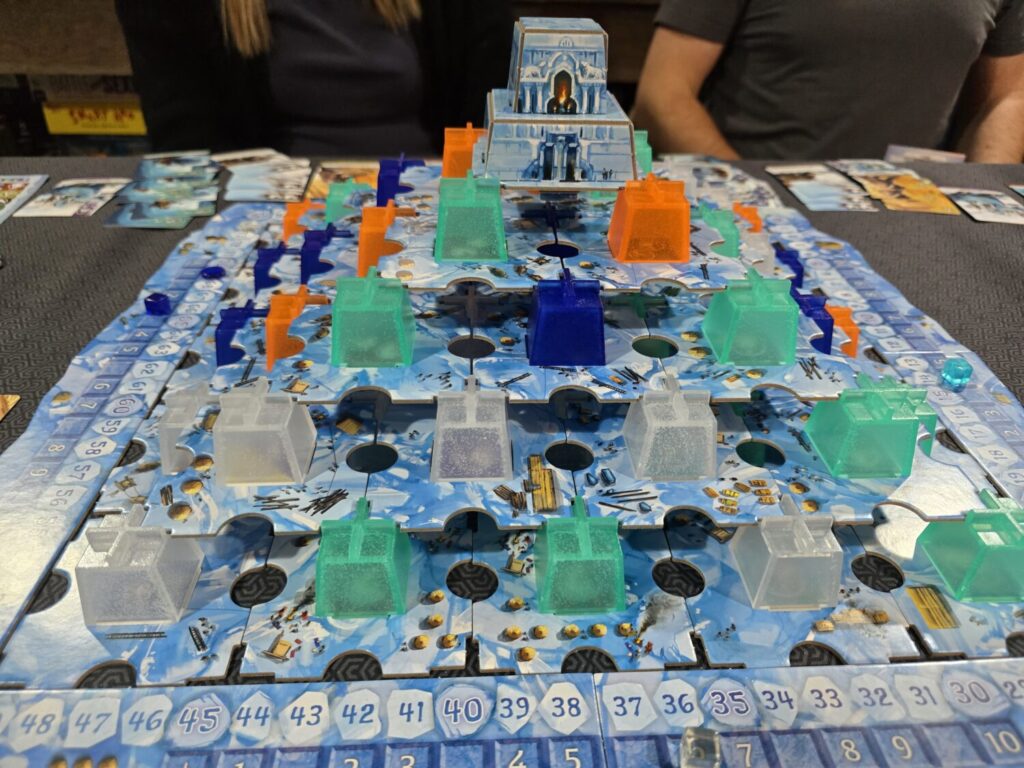
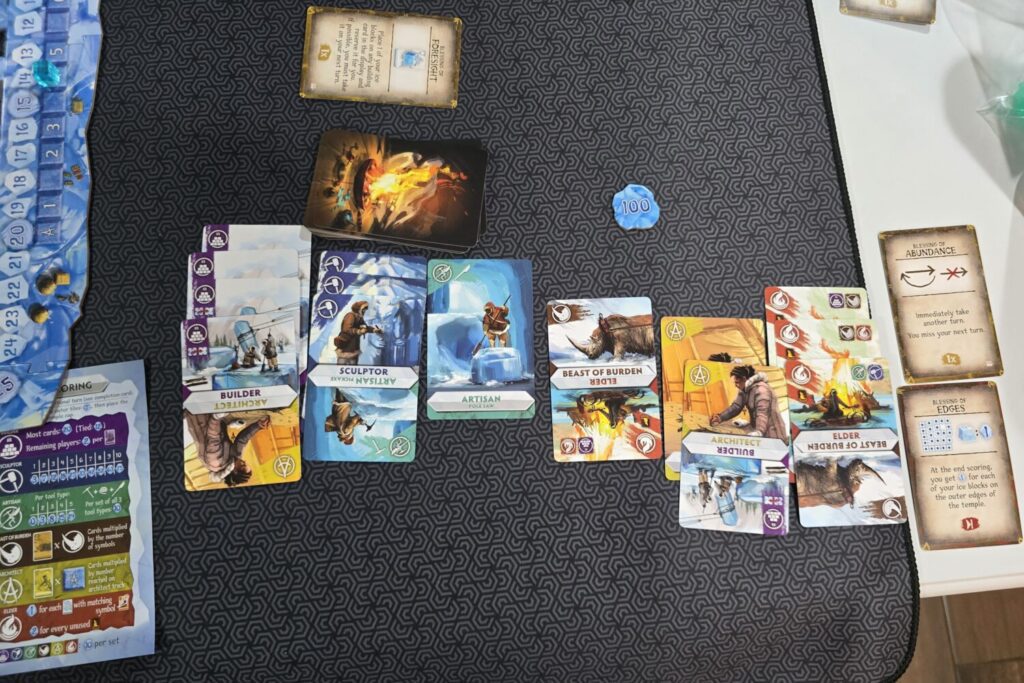
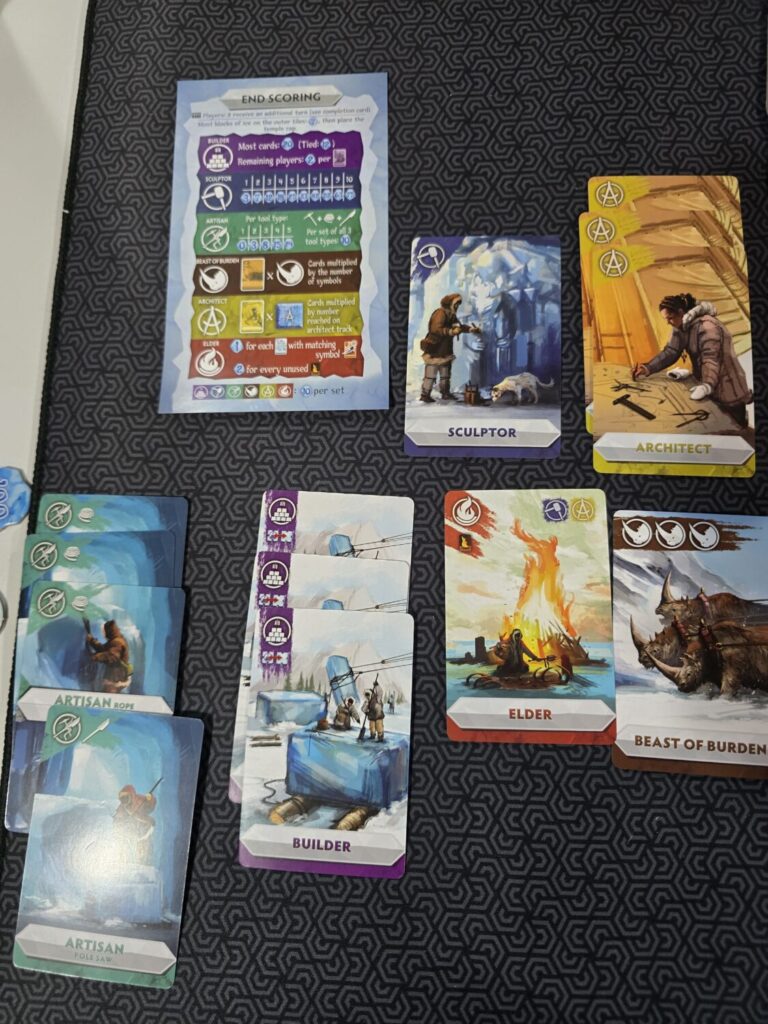
Nunatak: Temple of Ice is played in turns until the semi-communal pyramid has been fully built (complete with a topper!). On a player’s turn, they draft a card from the market and place one of their sturdy plastic blocks on the board, matching the card type they just drafted. Each card is placed into a personal tableau, which will count for set-collection scoring at the end. Some cards trigger abilities when drafted, such as moving ice pieces (before block placement) or drawing blessing cards (immediate effects or end-game scoring).
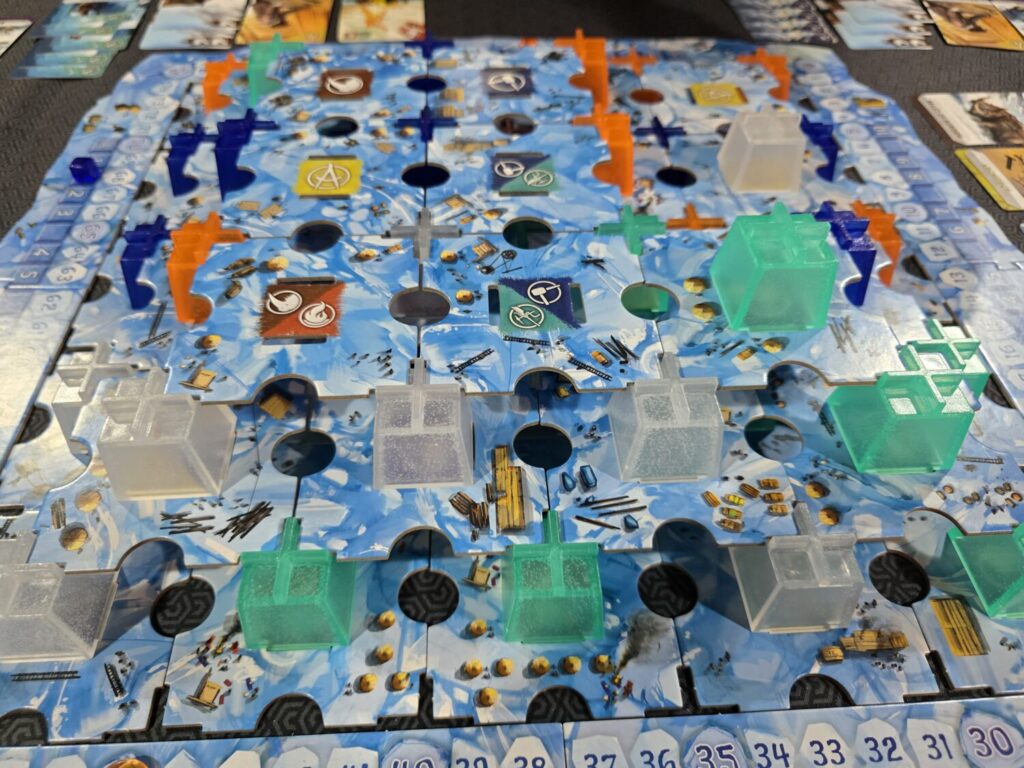
Once a 2×2 grid has been built, blocks can be placed on the next level, which triggers area-majority scoring for the blocks directly underneath. Completing rows and/or columns moves a player up the architect track, which is tied to that card’s end-game score.
When the pyramid is finished, players score their tableau according to their individual scoring conditions, and the player with the most points wins.
Cold Cuts and Clever Blocks
I was pleasantly surprised by how much I enjoyed this one. Shame on me for dismissing it so quickly, simply because of the massive pyramid on the board. I quickly learned that this visual centerpiece is the whole fun of the game.
It may seem cooperative at first—everyone building up the structure—but the game masks the cutthroat tactics that lie beneath the ice. Because of the area-majority scoring, every placement is an opportunity to set up (or shut down) another player. At first, you don’t necessarily want to do this, because you’re focused on your own tableau—and sometimes the card is worth more than the ice block placement. I can’t tell you how many times players were frustrated to have their juicy block placement sniped by someone else. Hey, it’s a cold world out there on the ice!
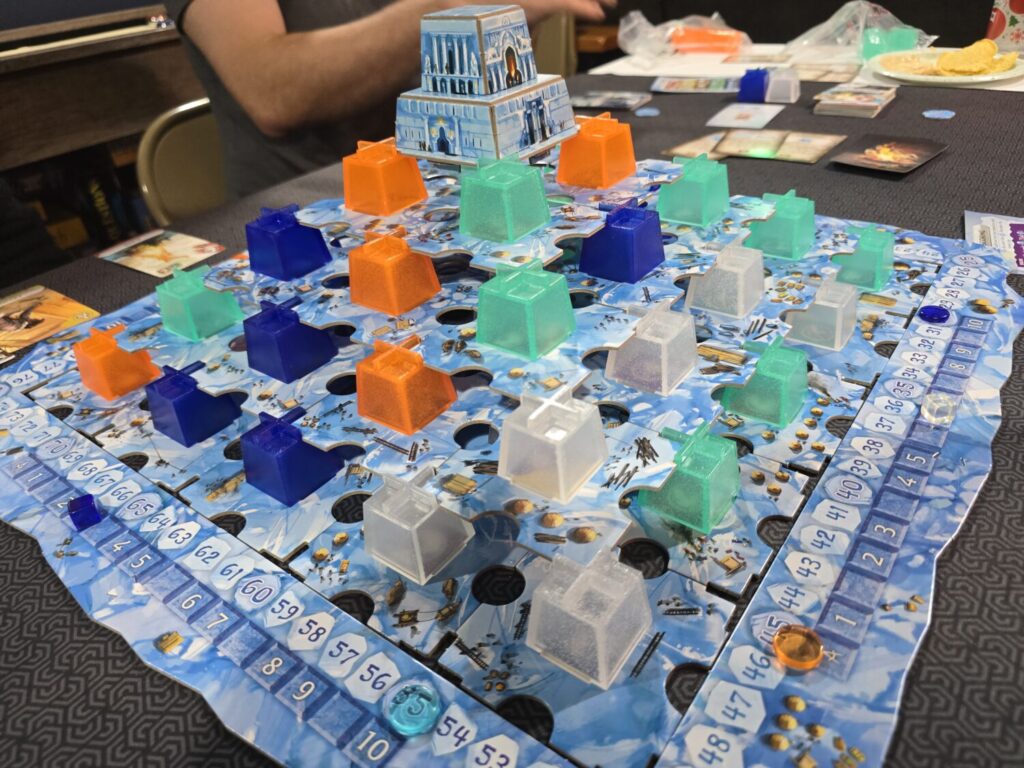
The gameplay loop itself is very simple, with deeper strategy underneath. It can be enjoyed by kids and gamers alike—though I’d check to make sure those kids are okay with getting hosed here and there!
Though end-game scoring is a bit point-salad-y, you’re limited by the market. Because there’s no way to wipe the row, not every block placement or tableau plan can be perfectly mapped out. If too many players lean into a specific card type, it becomes a race—and often that scoring set becomes less lucrative at the end if you can’t snatch enough of them.
I also have to give tremendous credit to the production. This is an extremely sturdy pyramid. I can bump the table, accidentally clip the structure, maybe even drop something on it, and it still holds. Like… c’mon. Did a structural engineer design these pieces? Very impressed!
However, there are some soft spots on the ice. While it plays well at all counts, things get a little wonky at 2 and 4 players. At four, there won’t be equal turns, so there’s a criteria card: the top two players who meet it place the final two pieces. It didn’t feel like a huge advantage, but it was a bit jarring at the end. At two, you add a dummy player to fill in extra spots. This one isn’t as weird, but it can create unexpected blockers that mess with your plan. Sweet spot is definitely three.
Lastly, I had multiple people mention that if the name were different, the game might’ve been more popular. A “nunatak” is a hill or mountain surrounded by glacial ice. That’s cool and all… but definitely not as marketable. Just a shower thought.
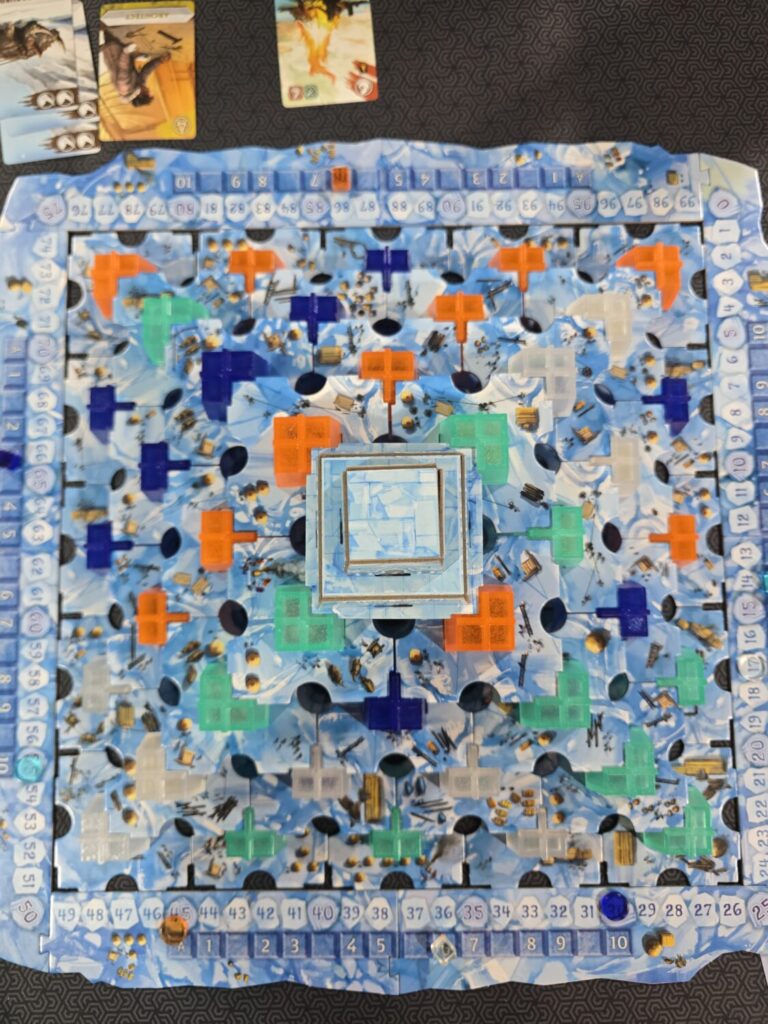
Overall, this is a fun and unique experience that works for many types of gamers—young and old, seasoned and new. Not to mention, the finished, colorful pyramid is very picture-esque, and everyone will be pulling out their phones to snap a shot. This flew under the radar for me, and I’d love it if there were a way to expand on the clever ideas here. Don’t let this glacial time pass you by!
Nunatak: Temple of Ice details
- Designer: Kane Klenko
- Artists: Kwanchai Moriya
- Publishers: 999 Games, Devir, IELLO, KOSMOS, Thames & Kosmos
- Release Date: 2023
- Player count : 2 - 4
- Age range : 10+
- Time range : 30 - 45 minutes
- Mechanism(s): Area Majority / Influence, Modular Board, Multi-Use Cards, Open Drafting, Set Collection
- BGG Geek Rating: 7.31449 - converted to Meeple Mountain scale: 3.5.
- More articles about Nunatak: Temple of Ice.