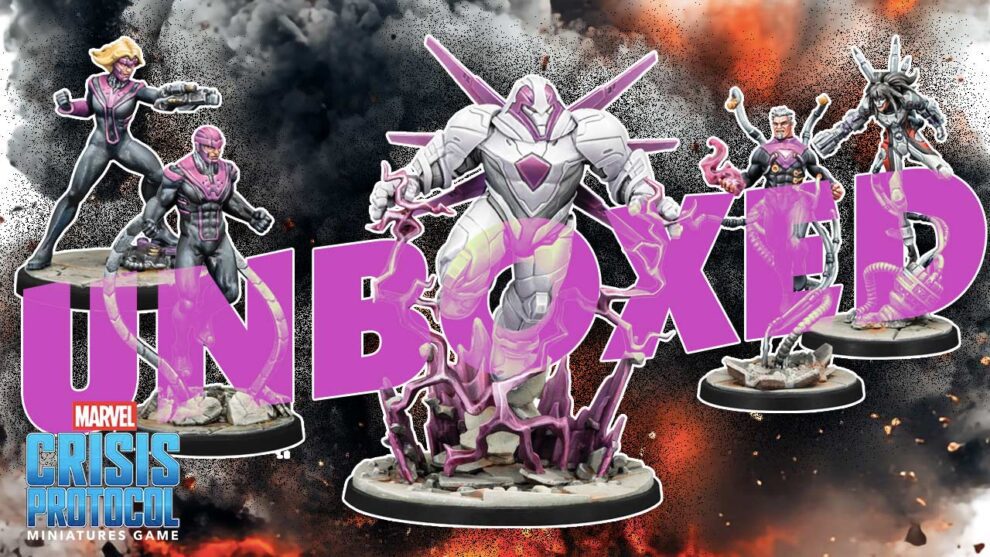

Excelsior, heroes, and welcome to a Meeple Mountain article for Marvel: Crisis Protocol! Today, we’re here to talk about the newest wave of releases for MCP, as your favorite evil robots join the battle. But that’s not all—we have not only fresh models to enjoy, but a whole new set of missions that aim to shake up the meta game! As we say goodbye to the previous 1.5 years of missions, these new ones promise to change the game entirely.
Quick refresher if you’ve never picked up MCP: this is a skirmish game where you build a squad of Marvel characters – usually four or five, pulled from a larger roster you build ahead of time—depending on how much “threat” (basically their power level and cost) you can afford, and throw them at each other across a comic-book cityscape. You win by controlling objectives called secures and extracts, not by wiping out your opponent, though plenty of games end with someone getting tabled anyway (losing every model on the table). Power is the currency that fuels your abilities, and you earn it mostly by dealing and taking damage, which is why a change to how power works can ripple through the entire game. Got it? Good, because that’s exactly what just happened. And that ripple effect is exactly why this is a great time to jump in—every player, veteran or newbie, is relearning the game right now.
Extinction Protocols
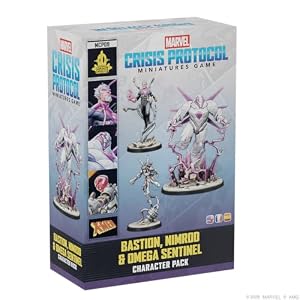
Across two new boxes, there are a total of five new models joining the game, all affiliated with the villainous Sentinels. Up until now, Sentinels have been a bit of an underplayed faction. With only Sentinel Prime MK4, Cassandra Nova, and a pair of Sentinel MK4s (you can run two copies of them), they really lacked the depth for list building, resulting in a very low play count. But now, they’ve more than doubled their model count with these new releases, including another pair of Prime Sentinels that have the same rule as the MK4s, allowing you to run multiple copies of them in your roster.
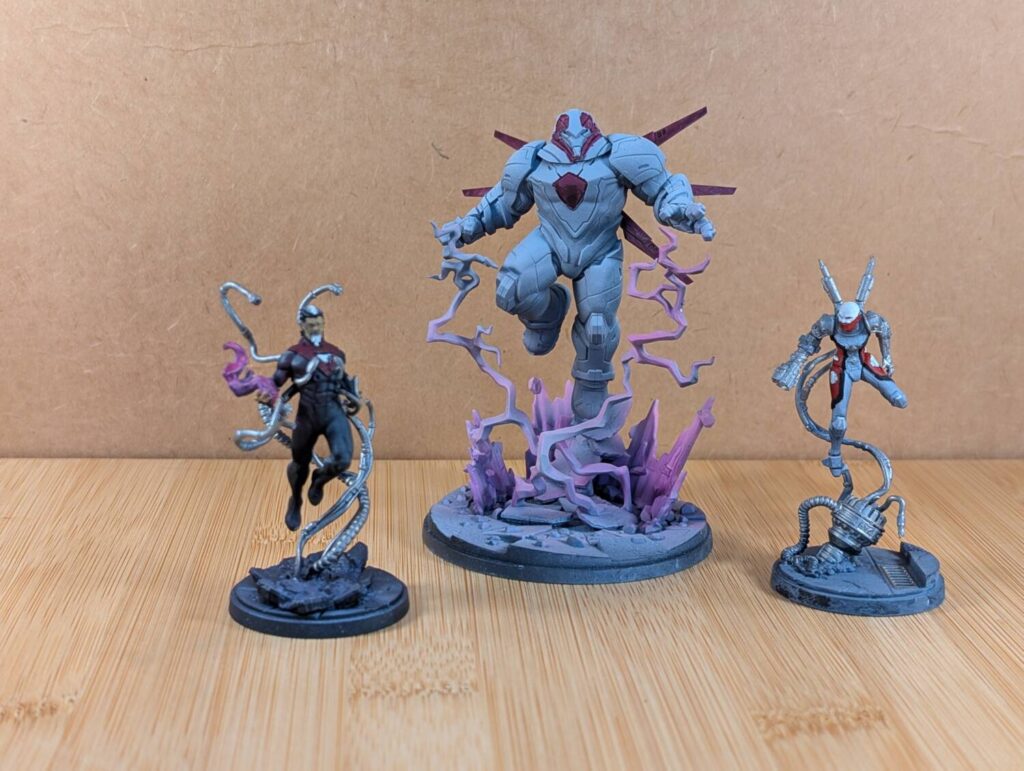
The most exciting change comes in the form of Bastion, a 4-threat model bringing along a new leadership (passive squad-wide ability) for the Sentinels. Operation Zero Tolerance is a leadership that denies your opponent power when you attack them, messing with a core design element of the game. Your opponent usually gets power equal to the damage dealt to them, but with this leadership, they always gain one less power from taking damage, and if your attacking model is a lower threat than their target, they’ll gain two less power! This leadership can be utterly backbreaking in some scenarios. Consider one of my first games trying this leadership: my dinky little 2-threat Nebula went and attacked Baron Zemo twice. The first attack did three damage, netting him only one power; the second did the final two damage to him, denying him any power gain at all. Zemo flipped to his injured side that round with only one power on him, meaning no scary clapback turn! Outside of his leadership, Bastion offers the ability to reposition your other models and deny your opponent the ability to heal, making him a great support piece in the roster.
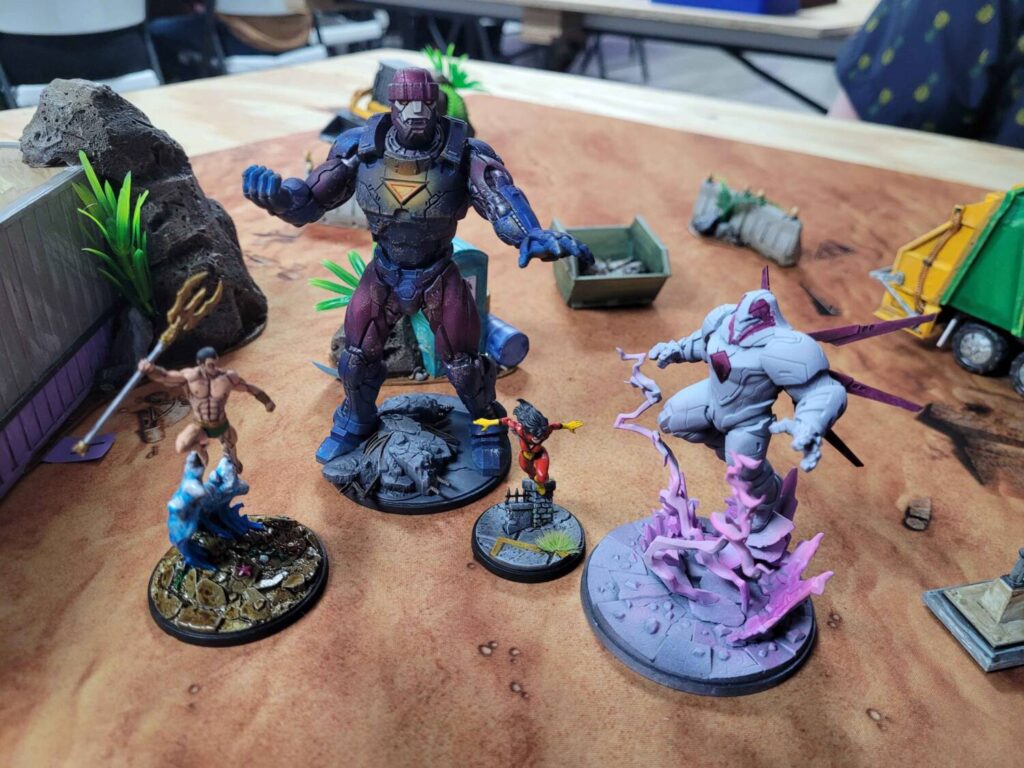
Nimrod is this wave of releases’ resident big boy. The model itself is huge, sitting on a massive 65mm base. He’s a size five model that can’t be advanced or pushed by certain attacks or superpowers, making him very hard for your opponent to displace. He’s what I like to refer to as “Cable-esque”. You’ll notice plenty of models in MCP have similar packages as Cable, including a self-place within range two, passively gaining more than one power per turn, a range three or more attack, and a terrain throw. Nimrod requires slightly more work to get going than Cable, as his self-place costs three power so he can’t do it automatically on turn one. Nimrod also has healing factor, which means even if your opponent gets damage on him, he can heal it off at the end of his turn. Overall, the main motivation for me to play Nimrod is just how cool the model is. It pops on the table in a way many models don’t, and it’s a fun one to paint.
Omega Sentinel rounds out this character pack, and what a star she is! There’s so much to love on her card: she’s a long mover, for starters, with a charge, so she can zoom all over the map and dish out attacks. She has a passive ability to buff one of her three defensive types at-will, with each of them granting additional bonus effects depending on what mode she’s in. As if that wasn’t enough, she refunds power to herself when interacting with objectives, which is a welcome relief in the new world where there are five pay-to-flip secures. Speaking of that new world…

Slowing Down the Game
For the last year and some change, the state of MCP has trended towards faster games, with people regularly scoring out on turns three or four. I don’t think I ever went to a sixth round during this timeframe. With these newest rotations, however, AMG has made a conscious effort to slow down the game. Not only do the points score slower, but there’s a massive wave of character updates coming down the pipeline in July, with the main focus being buffing health pools across the board so your favorite characters get to live longer.
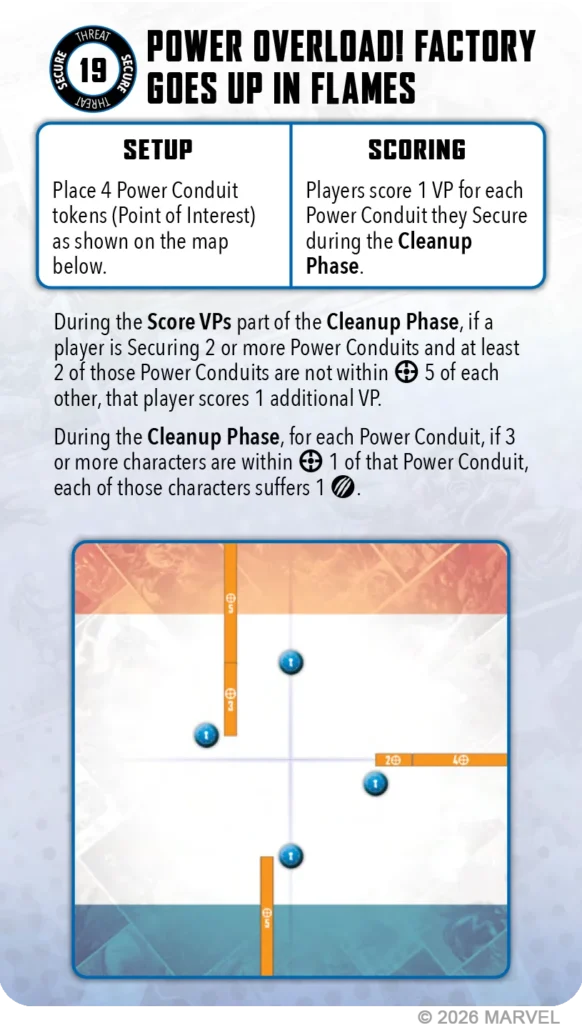
The new rotation of secure objectives includes 12 total crisis cards, and a whopping five of them are pay-to-flips. That means now, a team that really likes playing those missions can run nothing but pay-to-flips in their roster. The other massive change is the shape of the secures, with the majority of the crisis cards being closer together than the previous set, encouraging more fighting between squads. As someone who likes to play attrition, this is a welcome change
But perhaps the boldest new change is the introduction of a new extract type: source extracts. In traditional extracts, a character runs and picks up a token, and they then keep that token as they move around the board until they are dazed, KO’d, or have it stolen. Not the case anymore, as source extracts can be picked up but then return to their home point at the end of each round. This means the old scenario style of grabbing points and running away won’t work, as you’ll need someone to return to the point each turn and grab the extract again. This also increases the power tax on your team because you’ll have to pay one power each time you interact to pick up an extract.
All of this combines to create a very different world than the one we were in before. Now, fast-scoring teams have to put in much more work to stay ahead on points. Teams like the Web Warriors, for example, who struggle with power management, are going to have an even tougher time. The abundance of pay-to-flips and source extracts creates a lot more strain for models that don’t have great ways to generate power—which can also be exacerbated by the new Bastion leadership.
The upcoming balance pass next month means people will be exploring and experimenting with models in the post-buff world. It’s like I said earlier: now is a fantastic time to get into the game. Personally, I really am excited by the new direction these crisis cards are exploring. I’ve always been a fan of squads that like to brawl instead of play keepaway, and these new missions encourage you to fight, fight, fight!
Until next time, heroes!