This is the first part of a three-part series on getting back into board gaming after an extended absence. (If you want to skip ahead, you can go to Part Two to read about rebuilding your gaming groups, and Part Three to see the games that brought me back to gaming.) Today we’re looking at ways to re-build your gaming muscles (thinking strategically and logically, understanding mechanisms and how they interact, puzzle solving, etc.) that may have atrophied during a long hiatus from gaming.
My long hiatus began with Covid cancelling all in-person gaming and then swan-dived into three years of caregiving for my parents. When the storm abated, I looked around and realized that I had barely touched a board game in five years. Between having no time or mental bandwidth for games, my game shelf was covered in dust and, even more worrying, my gaming skills had atrophied.
I first tried to play Trollhalla, one of my favorite games. I felt stupid and slow. The game isn’t difficult, but my ability to remember the rules and work through a strategy was shot. Five years of too much doomscrolling, constant stress, and lack of sleep did a number on my ability to think clearly. I tried other games with much the same results. It was depressing and demoralizing.
I panicked at first. Was I doomed to give up gaming because my brain had too many holes in it to recover? (Or would I just be stuck playing Candy Land forever because I couldn’t handle anything more difficult?) What if I never found my gaming mojo again? I started making plans to sell my game collection and make watching bad foreign Netflix movies my new hobby.
I rallied. I decided that if I was going to give up gaming, it wasn’t going to be without trying everything I could to salvage it. My approach in real time wasn’t as neat as what I’m going to present below. There was a lot of trial and error and frustration. And so much losing. Fortunately for you, I’ve consolidated many months of flailing around into six tips to help you rebuild your gaming muscles.
1. Play solo
Thank goodness for the plethora of games available with solo modes these days. Solo play allows you to practice on your own, at your own speed, without fear of embarrassment. You can experiment with different mechanisms and strategies without worrying about slowing down the whole table or losing by a hundred points. You can also practice online by playing games on Board Game Arena or a similar platform. You might lose in embarrassing fashion, but at least it will be to internet strangers instead of people you have to face across the table.

2. Read rulebooks, even for games you don’t intend to buy or play.
I found that simply reading rulebooks (without distractions) helped me remember how games work and reinforced terminology that I’d forgotten. I read widely, picking both simple and complex games. These weren’t even games I necessarily owned or intended to buy. With so many rulebooks available online, this was an easy, low-cost way to re-teach my brain to think like a gamer. (I read the rulebook for Galactic Cruise and while I know it’s not a game I’ll ever play, I now feel like I could play. Granted, it took several readings to get there.)
3. Vary your mechanisms and weights.
While it was tempting to stick with my favorite mechanisms (tile-placement!) and lightweight games that I could quickly get good at, I constantly tried to stretch myself. I played some heavier games, even though they aren’t my favorites, knowing that they would push my brain to think in different ways. I also tried to find games that offer intertwining mechanisms. For example, Honey Buzz honors my love of tiles, but also incorporates worker placement and a memory element.
4. Choose games that are appealing.
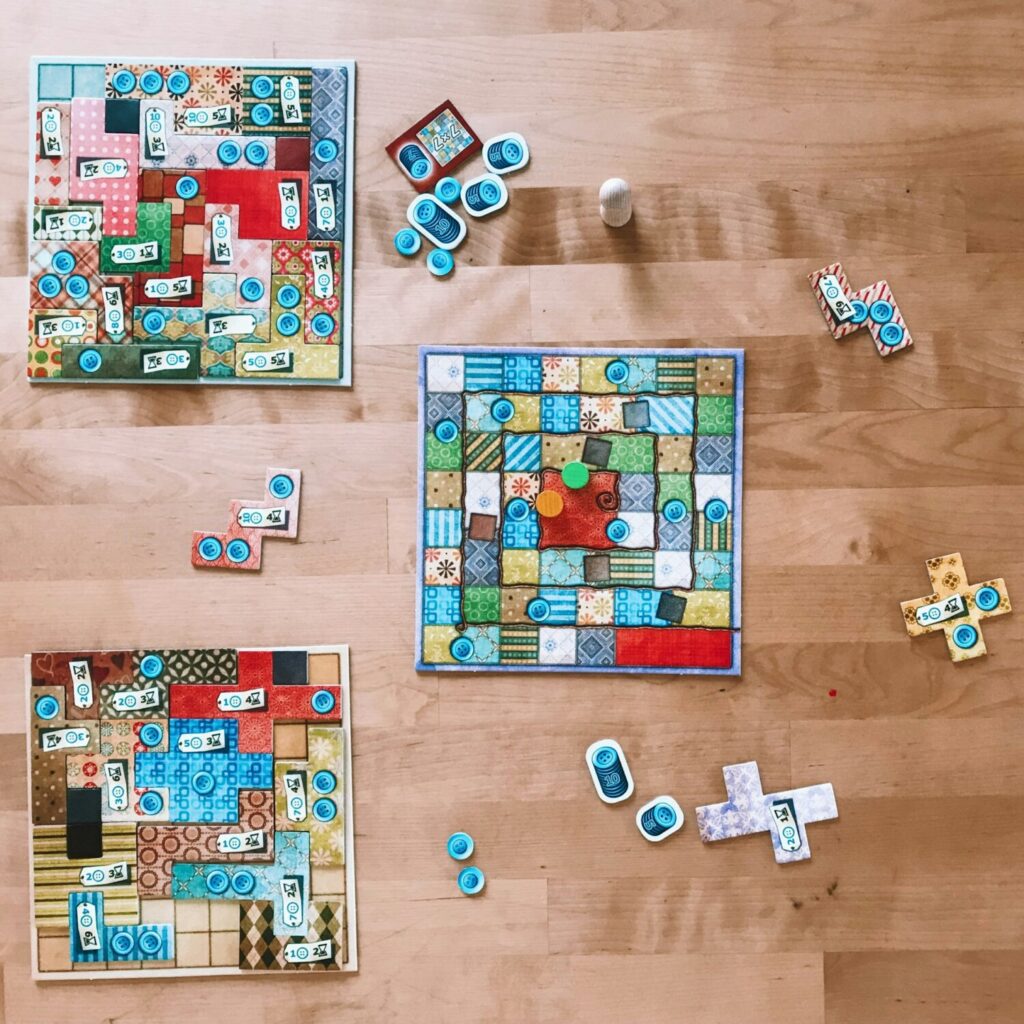
The last thing you need is for this process to feel like work, so choose games that meet whatever mood or weird headspace you’re in. If you’re stressed and sad, don’t pick something vaguely depressing like Scythe. Go with something bright and cheerful like Everdell, or pick something that brings up nostalgic memories. You can also choose games that tie in with a favorite IP that makes you happy, or another hobby you’re enjoying like sewing or bird-watching. Patchwork or Wingspan, for example. You can also choose games that take place in your favorite (or bucket list) travel destinations. The point is to pick games you want to play, not games you feel like you have to play.
5. Boost your brain with game-adjacent activities.
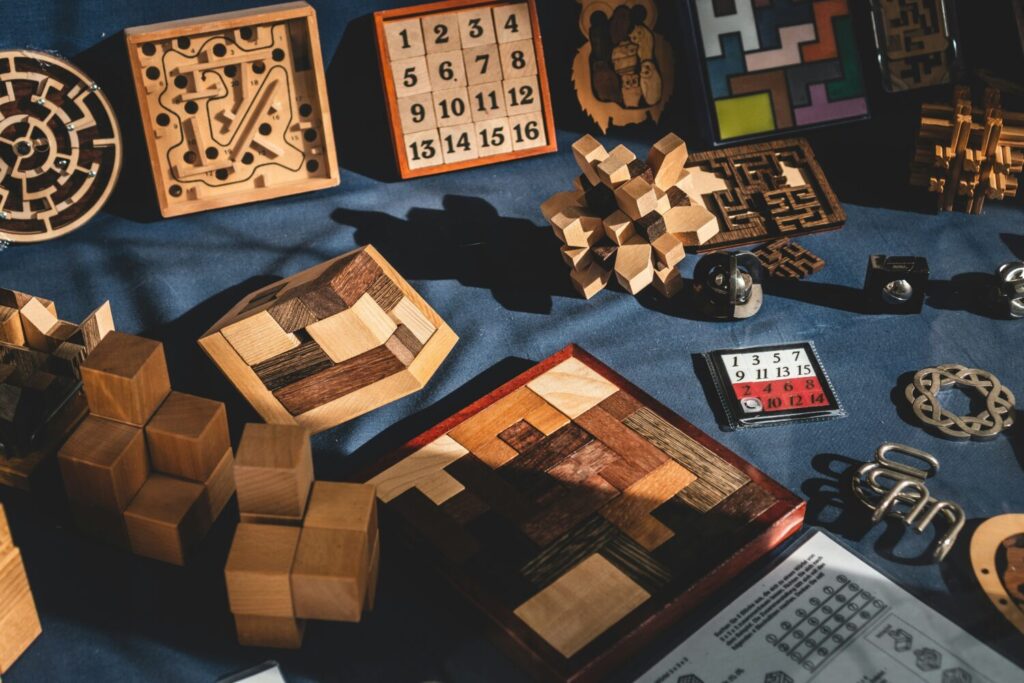
Board gaming requires skills that can be honed away from the game table. Things like logic, pattern matching, spatial reasoning, understanding probability, and forward planning can be practiced in other ways. Try logic puzzles like Murdle or sudoku, or escape room puzzle books. Work on jigsaw puzzles or other puzzles like a Rubik’s Cube. Video games that require strategy can also be helpful. If you can’t play actual games for whatever reason, don’t doomscroll and weaken your brain like I did for all those years. Find ways to keep your brain thinking like a gamer’s brain.
6. Find Out What You Missed.
If you’ve been out of gaming for several years, take a look at what you might have missed. You can search on BoardGameGeek for games released in your missing years, or look at award winners from those years. See what designers are doing that’s new and interesting. See what people are talking about. You don’t have to buy or even like all the new stuff, but knowing about it can make you conversant with others in the hobby and make you feel less isolated and lost. And if you do find a game you want to try, adding something new to your rotation can spark your brain in new ways.
My Best Advice
Ideally, you don’t let your brain waste away like I did during the “lost years.” In hindsight, I should have loaded up some rulebooks and puzzle books and brought them along to use when I had some time (like in waiting rooms). Or I could have tried to cram in some online games during my downtime. That probably would have made this whole process easier. But even if you think it’s too late, put in the time and effort, and you’ll get there. The good news is that the process is fun. We’re talking about games, after all.