Disclosure: Meeple Mountain received a free copy of this product in exchange for an honest, unbiased review. This review is not intended to be an endorsement.
It’s rare that a published game feels organic, but I guess that makes sense. Most authored works, regardless of medium, do not feel organic. The closest most games come is “intuitive,” which is not the same thing. “Intuitive” as applied to game criticism is more about the rules making sense and flowing. You use it when you’re talking about something that’s easy to teach and easy to learn and easy to play, about games that just. make. sense. In order for something to be intuitive, it has to build on what has come before, on a shared cultural reference or two.
That is not the case with “organic,” a word which I cannot say I have ever wanted to apply to a board game before. Strap in, folks. We’re developing a new theory. “Organic” can be as free-form as it wants. That’s probably a key feature, right? I mean, who tells an heirloom tomato how to grow? Nobody, that’s who.
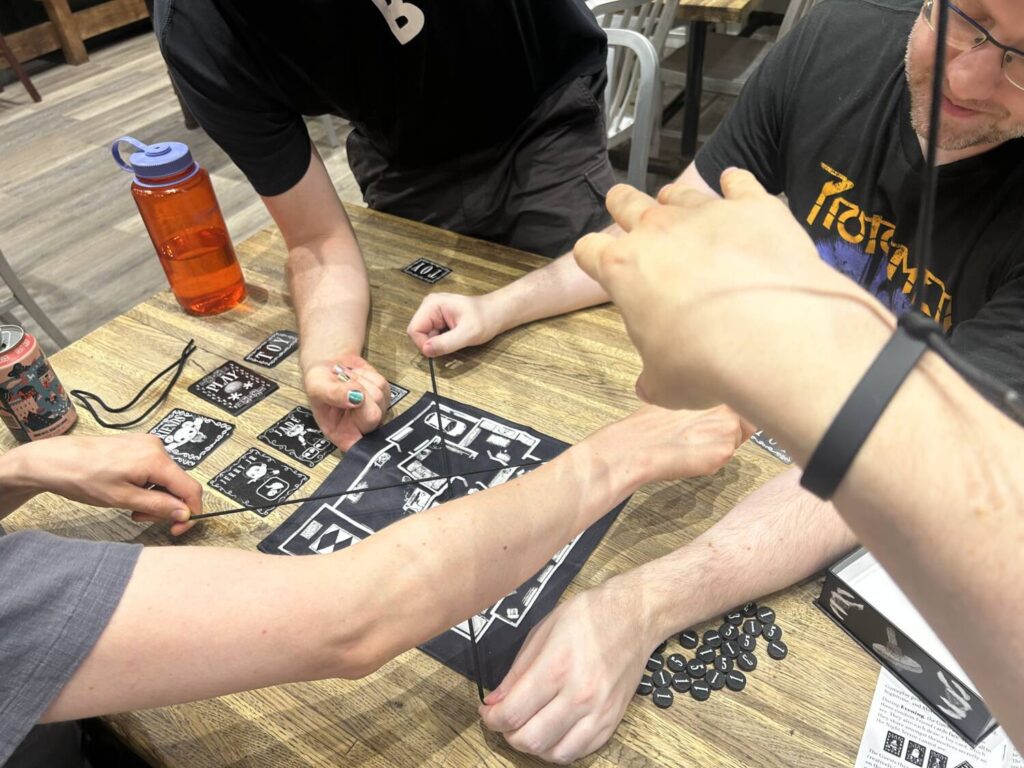
When I say Playthings is organic, I mean that it feels like something a group of Victorian children would come up with whilst whittling away the unending hours of the day. It feels improvised, even as you’re playing it. At no point does Playthings feel like something with a rulebook. It doesn’t feel developed, play tested, or processed. It feels, for better or for worse, like an entirely singular and spontaneous object.
The inclusion of Victorian children may seem like pure business on my part—business? moi?—but it really is central to how I view this latest release from DVC. Players take turns as the Night Terror, hiding children’s toys around a map of a house. As the other players sit with their eyes closed, the Night Terror announces each toy before placing it facedown in one room or another. Each player is looking for a particular toy, and when the Night Terror announces your toy, it can be difficult not to look.
You are, it should be noted, encouraged to look. Like Cheating Moth, Playthings wants you to cheat, and like Cheating Moth, it is incumbent on you the player to avoid getting caught. The children score each round by finding their toys. The Night Terror scores by correctly identifying who peaked and who didn’t.
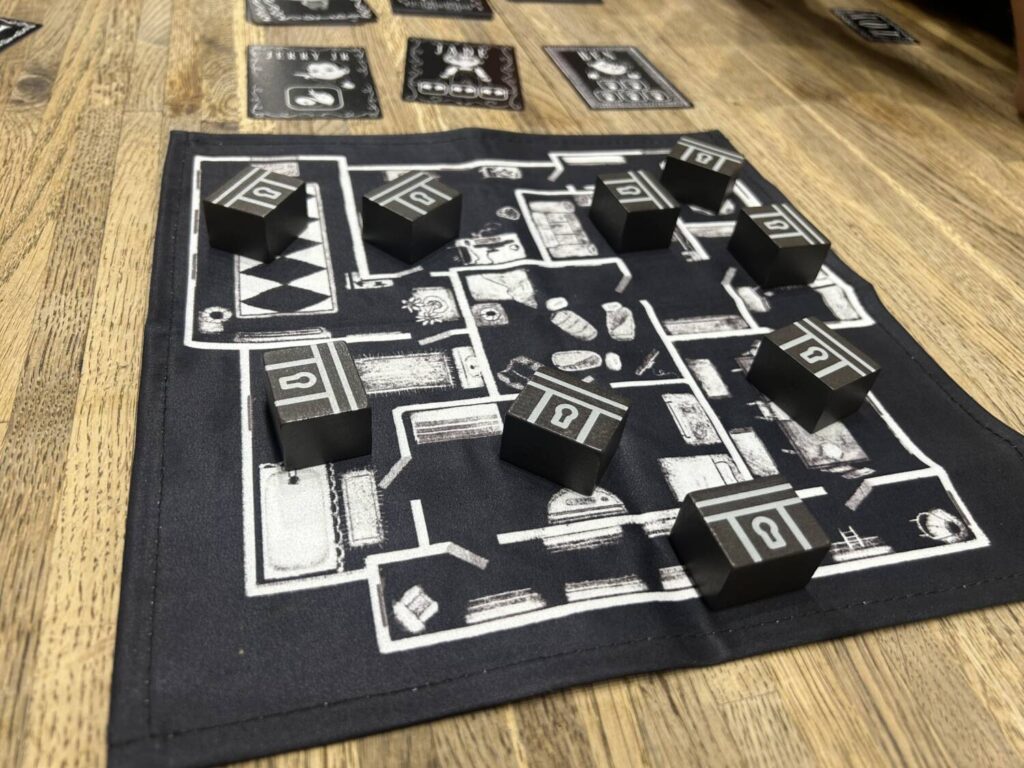
This is already a fun idea, but Playthings really hits its stride with the traps players can lay for the Night Terror. All manner of creativity is invoked here. You might get to put fingers under the game mat, or attach a rope to the Night Terror’s wrist, or place bells on the map. I was once stymied by an Entrapment-style maze of “lasers”—string—stretching to-and-fro in the air above the table.
Like many of the games I seem to prefer these days, the success Playthings finds at your table will depend in large part on the people around your table. This is a fundamentally silly exercise, a celebration of creation and shenanigans. It’s about staring your friend dead in the eye, saying, “You peaked,” and being wrong. It is blissful when played with children, who inherently understand the point of the thing. It is theatre. It is a strange sort of make-believe. Playthings feels like it grew out of the rich soil of true boredom. That may sound like an insult, but it’s a miracle; we don’t get to experience boredom nearly enough in this day and age.