
Disclosure: Meeple Mountain received a free copy of this product in exchange for an honest, unbiased review. This review is not intended to be an endorsement.

I couldn’t tell you when I first heard about Neuroshima Hex, which was originally published in 2006 and predates my time in board games by just about a full decade. At some point, though, Michał Oracz’s tactical tile-layer set up camp on the periphery of my awareness, built a large fire, threw on a stew, and did the only thing it had to do: wait.
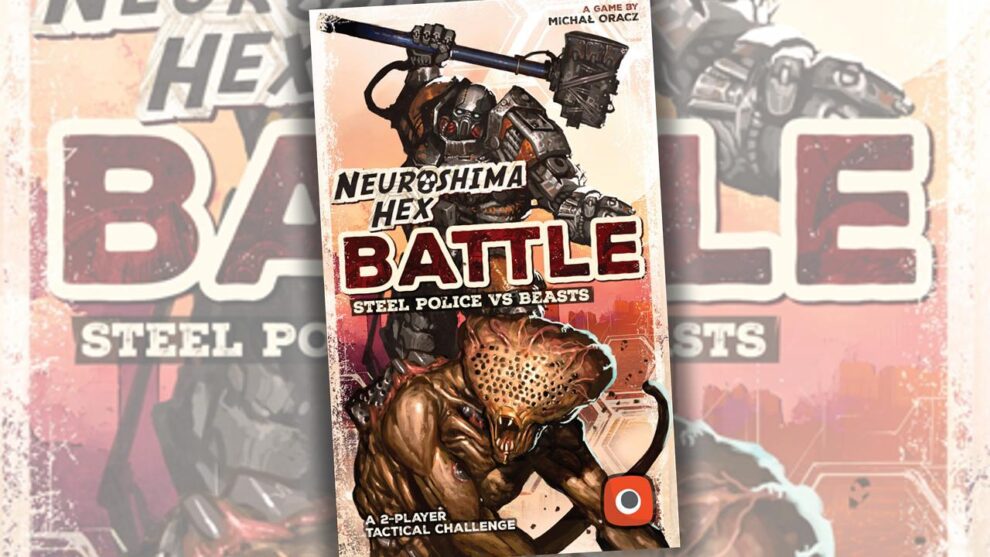
My interest in Neuroshima Hex was inevitable. The only trick? I couldn’t find a way in. There are several editions, and oodles of expansions, and it all made the game a bit daunting. Publisher Portal Games seems to recognize that themselves, so for the game’s 20th anniversary, they announced not only a new edition of the base game, but Neuroshima Hex: Battle, a starter box for two that lets the curious among us give the game a try without going all-in. $25 isn’t much in exchange for scratching a perpetual itch, is it? I couldn’t say no.
The sum of Neuroshima Hex takes place in a post-apocalyptic world in which various factions are at war for resources and supremacy. You know, that kind of thing. Each player chooses a faction and its corresponding deck of tiles, then goes about attempting to systematically obliterate their opponent. The decks are made up of varying combinations of Unit, Module, and Action tiles, the judicious use of which is necessary to win.
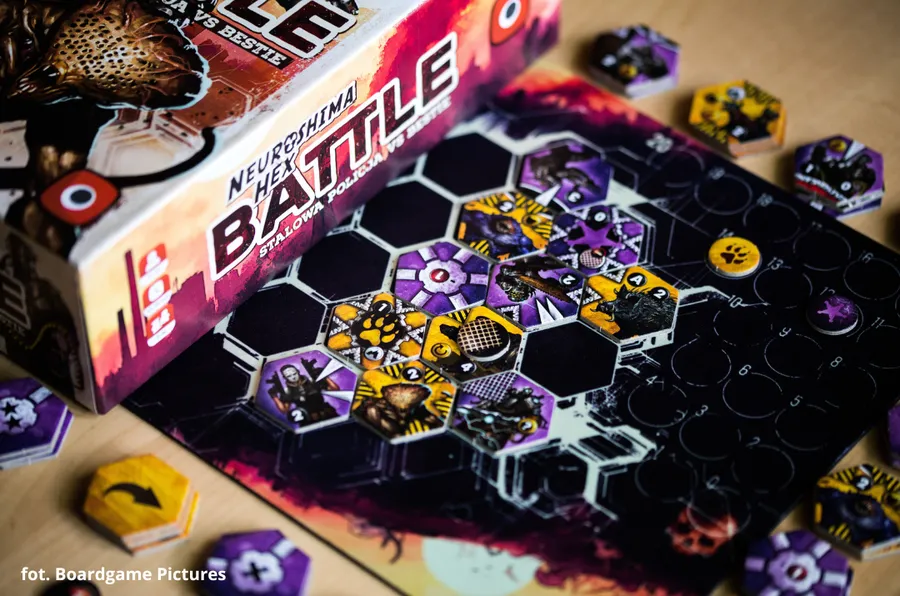
Every turn, you draw an open hand of three tiles, discard one of them, and then either use the others or hold onto them for the next round. Units are your soldiers, Modules are support structures that either buff your units’ abilities or nerf your opponent’s, and while Action tiles can be highly individuated depending on the faction, they generally move units around or start Battles, which otherwise only occur when the board is full.
The Battles are glorious. Neuroshima Hex is part tactical skirmish game and part spatial puzzle. Most units have some combination of ranged and melee attacks, which shoot off in various directions, and an initiative value between 0 and 3. Battles resolve one initiative level at a time, with everyone at that level doing damage simultaneously. If you have a 3 Initiative Unit attacking a 2 Initiative Unit I have painstakingly positioned to hit your base, my guy will never have a chance to get a shot off. One of the great joys of this game is drawing a Battle tile and just the right Unit to completely unravel the chain of events your opponent has fastidiously cobbled together.
Those are the broad strokes. The details are where Neuroshima Hex starts to get heady. Many Units have unique abilities, which are handily laid out on the faction guide cards that come with every edition of the game, but guide or no guide, you’re going to need a minute. One of the greatest arguments in favor of starting your Neuroshima Hex experience with Battle’s limited scope is that meaningful play requires familiarity. Your first game or two with any given faction is going to involve a lot of blind guesses, and an inability to plan ahead. It is only with understanding both your faction and your opponent’s faction that the game fully blossoms.
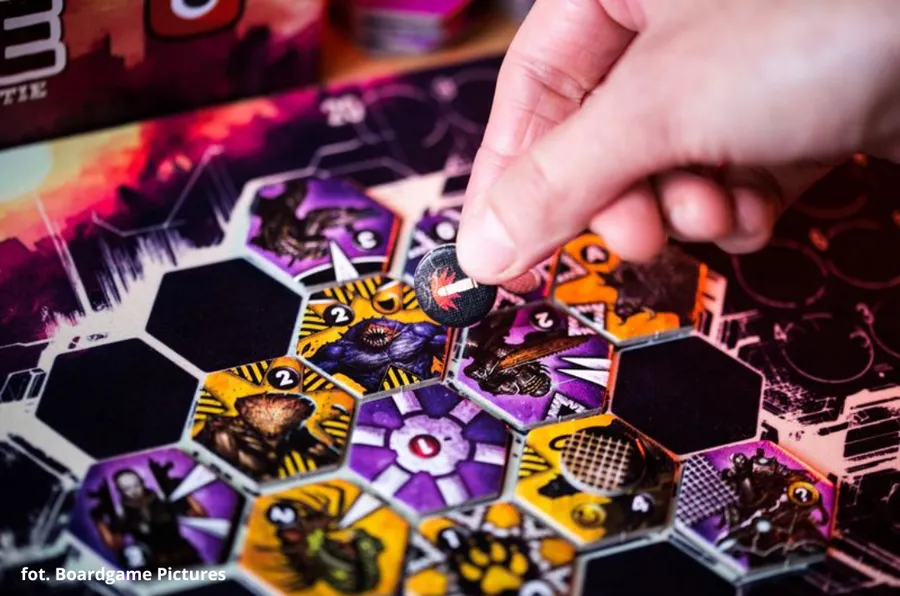
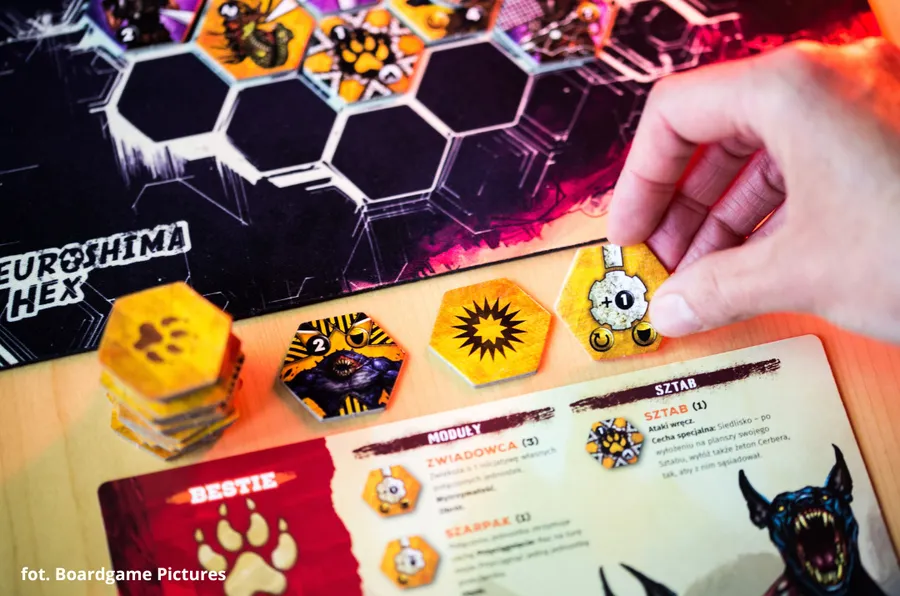
For Battle, players can choose between the feral Beasts faction or the militant Steel Police. The Beasts are all about aggression, about dealing quick and heavy damage to enemy Units. The Steel Police play a more patient, defensive game, and it has been my experience that they are much harder to play well. In the name of trying to get two different types of approachable factions into this box, it seems like Portal have also accidentally made the starter set a bit harder to get into than it otherwise might have been.
I don’t mind that, and I can’t imagine much of the prospective audience minding either. The aesthetics of Neuroshima Hex in general are not going to woo people who aren’t ready to sit down for a grinding first few games. A match between two experienced players can breeze by in about half an hour, and what a half hour it is. If you, like me, have found yourself fending off the siren’s call of Neuroshima Hex, Battle sees to it that you have no excuse. Let down your guard. Walk towards the campfire. Have some stew. It’s good for you.
Neuroshima Hex: Battle details
- Designer: Joanna Kijanka, Michał Oracz
- Artists: Hanna Kuik, Mateusz Bielski
- Publishers: Geekach LLC, Portal Games
- Release Date: 2025
- Player count : 2
- Age range : 8+
- Time range : 30 minutes
- Mechanism(s): Hand Management, Hexagon Grid, Player Elimination, Tile Placement, Variable Player Powers
- BGG Geek Rating: 8.15946 - converted to Meeple Mountain scale: 4.0.
- More articles about Neuroshima Hex: Battle.