
Disclosure: Meeple Mountain received a free copy of this product in exchange for an honest, unbiased review. This review is not intended to be an endorsement.
The toughest games to review are the ones that are right on the line. They are generally not bad, maybe even a hair better than that, and don’t really stand out. Often, games like this end with one or more players being asked what they thought, and those players doing an exaggerated shoulder shrug, as if to say “yeah, it was…good? Well, I mean, it was…alright? I’d play it again, but only if you wanted to. What are we playing next?”
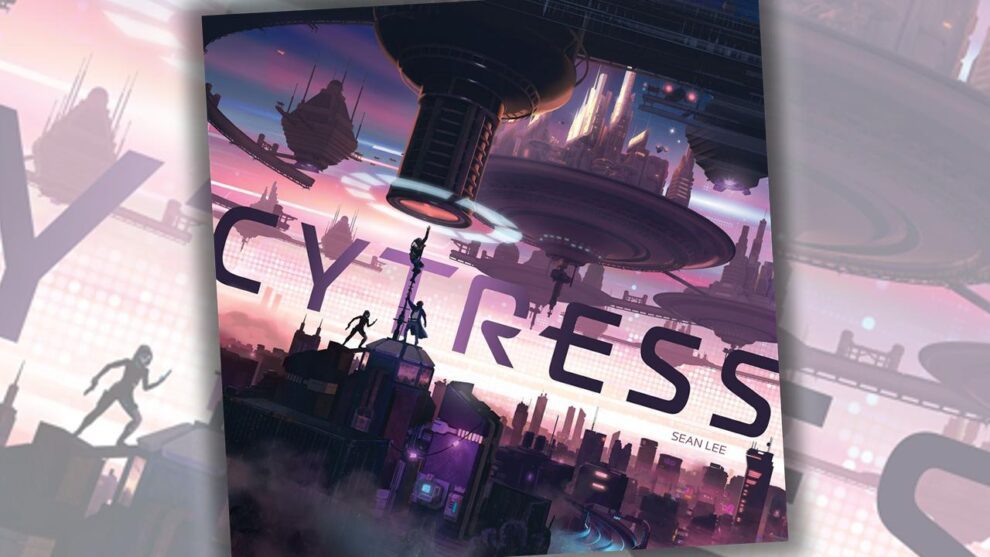
Cytress, designed by Sean Lee and published in 2025 by Good Games, broadly fits this description. Cytress is a cyberpunk-themed, engine-building worker placement game. You’ll build an engine using cards that can be purchased at one of four locations to increase your income or make trading deals progressively sexier. You’ll place a worker—either a Leader token or one of your three cute, futuristic-looking cardboard car tokens—on a space to trigger an effect. With the car spaces, any other player can also use the action, so there’s no worry or tension tied to opponents blocking the space you want.
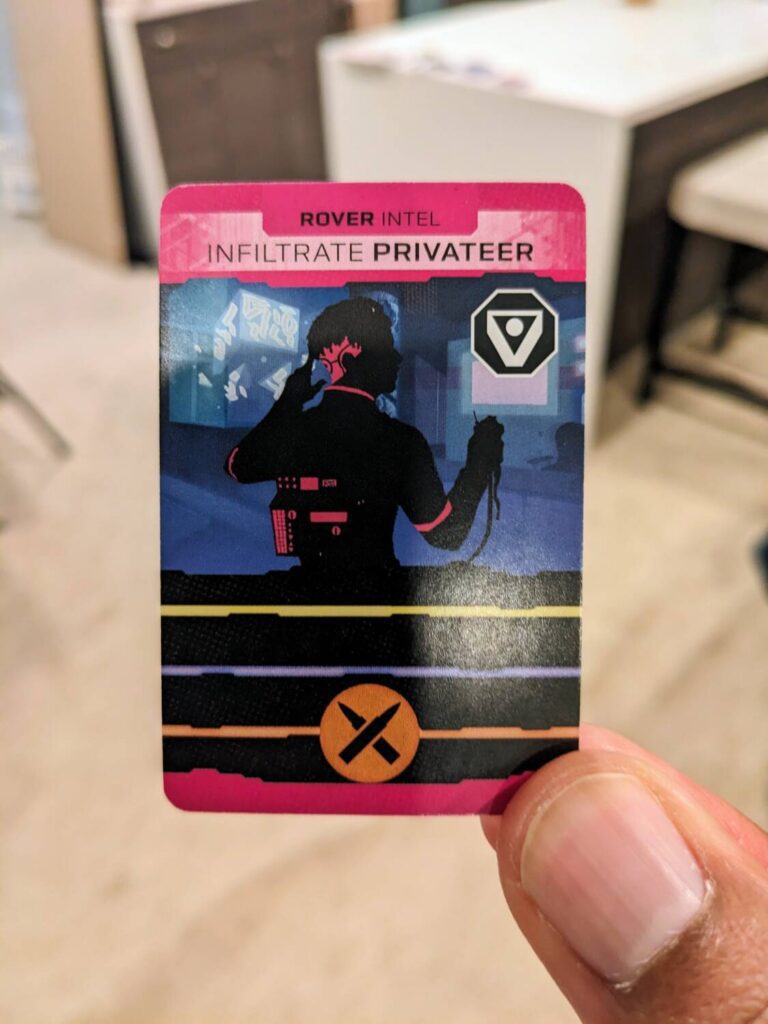
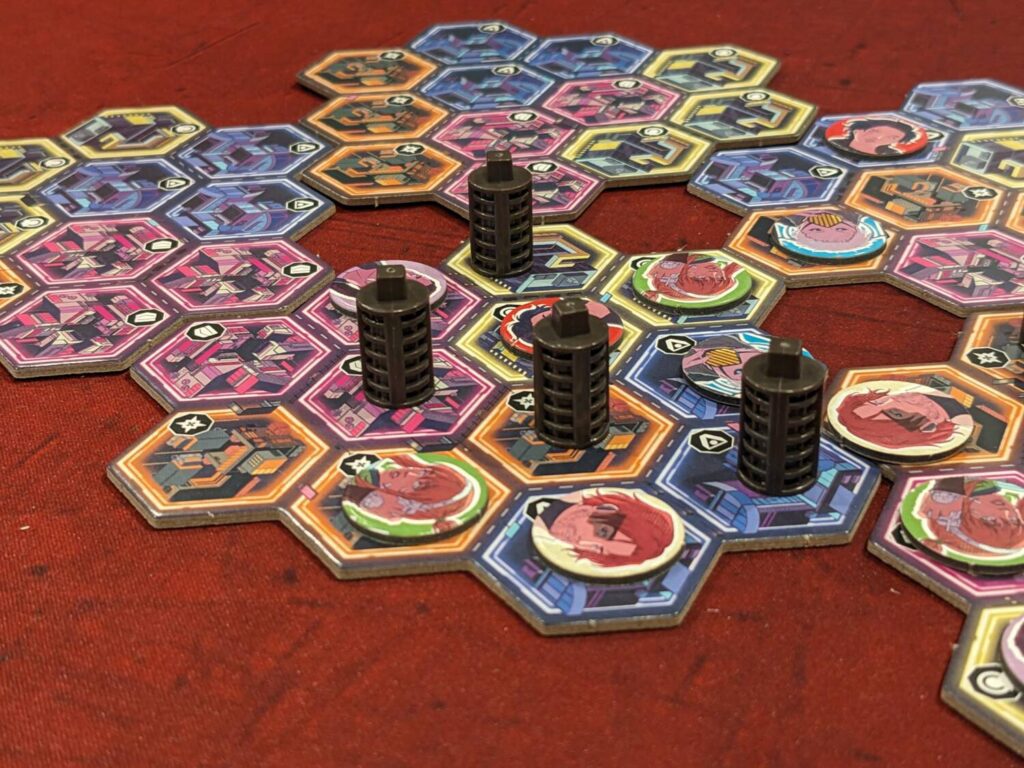
When players buy cards and add those to the engine, they also place a crew member on a mini-map, representing the area below the great city of Stratos. This placement serves to both allow the active player to “spy” on another adjacent player to take a resource or two (and that’s not even directly from the player, but from the supply instead), but to also serve as a launch point when players want to build tunnels that their underground organization members can use to infiltrate Stratos.
On later turns, players will remove crew tokens to build “waste tubes” of varying levels to seed an area majority mechanic on the three different levels of Stratos. (It’s also worth noting that players found themselves not as excited about joining the resistance movement of the future…especially if it means infiltration by means of climbing through city-wide garbage chutes. Also, I’m really hoping these waste tubes—brown in color—are only used to dump trash, and not human waste!)
Crew members who remain on the mini-map are used to generate area-control scoring there instead, based on which crews surround each waste tube.
A Tricky Balance to the Term “More is More”
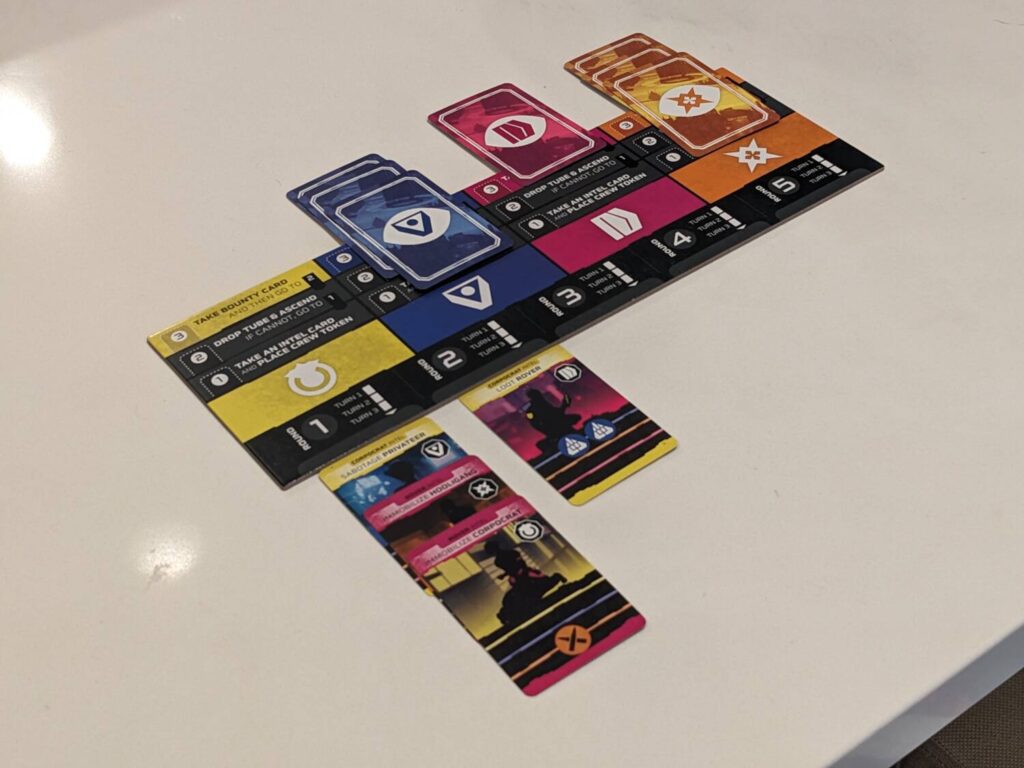
Cytress’s scoring elements were somewhat interesting, and in both my five-player game as well as my solo plays, players can get a lot of juice out of both area majority scoring areas along with “bounty” cards used to trigger set-collection scoring using the four different icons on the cards built into each player’s engine.
And, as a race to beat players to certain spaces that might yield the best scores on the mini-map, or a race to grab the bounty cards most aligned with your engine cards, Cytress isn’t bad. The lack of worker placement tension hurts it overall—not once did I struggle to find a useful income card, or an order fulfillment card when I needed to place waste tubes on the mini-map—but for many players looking for a looser, friendlier experience, Cytress might do the trick.
My main issue here: how much I enjoyed the five-player game versus the lower player count games (solo simulates a two-player game). Fighting with more players to jockey for area majorities is better than fighting with just one person. Income boosts come in a variety of ways when there are more players, because of a mechanic used during Leader placement by each opponent. But there’s less of that at a lower player count.
The flip side of this is the playtime. A solo play of Cytress can be done in 30 minutes or less, if you have a handle for the game’s AI/bot integration as a second player. But my five-player game took a hair over two hours, way too long for such a straightforward experience (particularly one where there’s nothing to do between player turns).
Add in the sheer lack of variety—cards boost one of the game’s four resources, the bounties are always the same, there is one order fulfillment card for each of the game’s 16 potential combinations of resources that can be spent to build waste tubes on a tile—and Cytress is a game where you’ve seen almost everything as soon as you begin your second play. The five playable factions come with double-sided player mats, but there’s no spicy powers or variety tied to each faction. You are blue, or you are purple, etc. There’s no advanced variant to speak of, in terms of varied mechanics.
Overall, Cytress isn’t bad; it’s a hair better than average. As a scoring race with a handsome physical presence, I was curious about Cytress and my plays have addressed that curiosity. I’d be surprised if players found the experience to be one worth repeating more than once or twice before moving on to stronger worker placement games in their collections.