
The guys in my Wednesday gaming group started a push to play more of the old, dust-covered games at the bottom and backs of our respective game closet shelves. The premise was simple: let’s try to remember why we keep all these old games when all we ever play now are the newest, shiniest things in shrink.
Right on the spot, the Dusty Euro Series was born, and I’ve enlisted multiple game groups to help me lead the charge on covering older games.
In order to share some of these experiences, I’ll be writing a piece from time to time about a game that is at least 10 years old that we haven’t already reviewed here at Meeple Mountain. In that way, these articles are not reviews. These pieces will not include a detailed rules explanation or a broad introduction to each game. All you get is what you need: my brief thoughts on what I think about each game right now, based on one or two fresh plays.
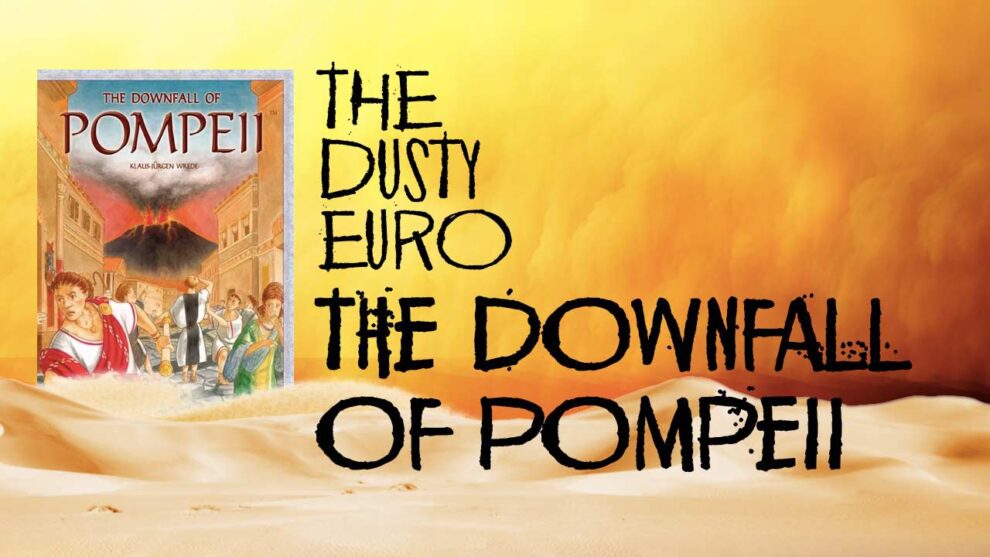
The Downfall of Pompeii: What Is It?
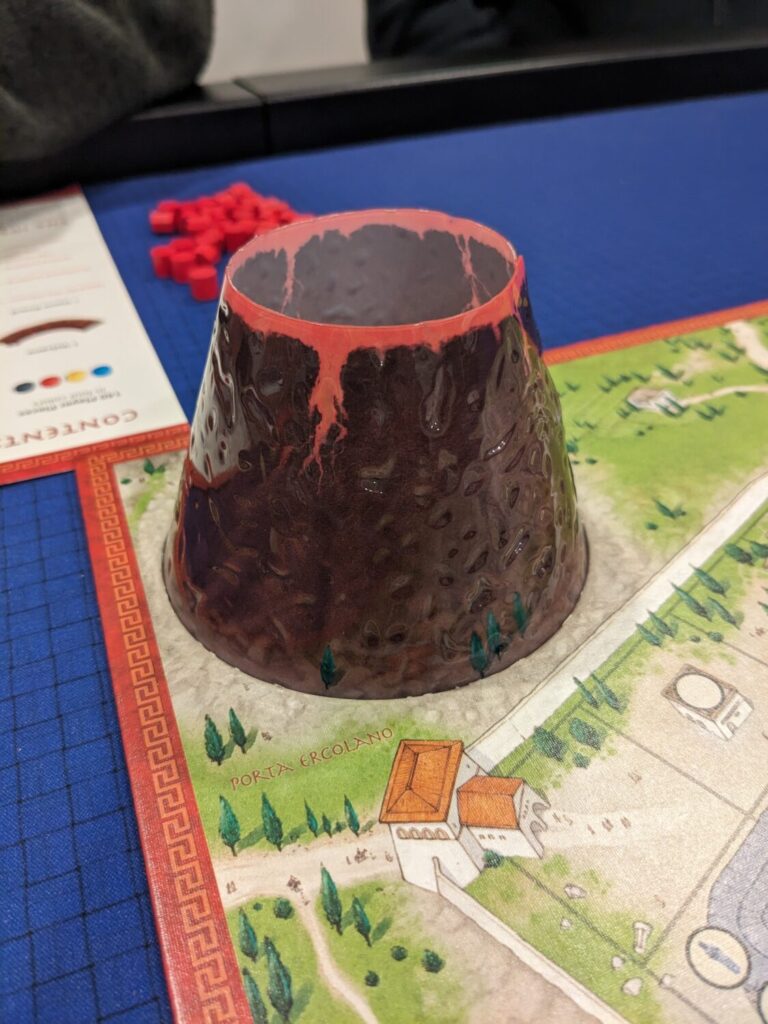
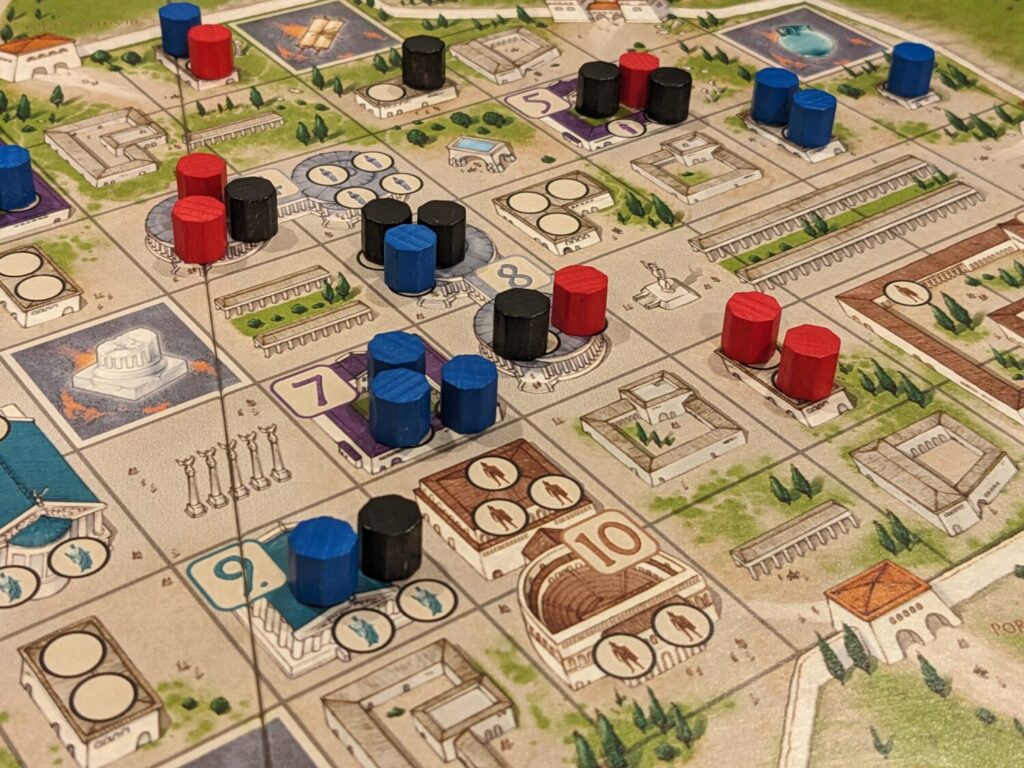
The Downfall of Pompeii is a tricky one to categorize. Broken into two halves, it begins as a hand management game as players use a small hand of cards to seed citizens and their relatives in various spaces spread across a map of Pompeii. An ominous-looking volcano is positioned in one corner of the board, with a big open space in the middle because…well, because bodies regularly get tossed into the volcano through a mix of event cards known as Omens that are randomly placed in the draw deck.
The game needs citizens because the second half of the game becomes a tense escape thriller driven by drawing tiles out of a bag, which are then placed by the active player to kill off other citizens as well as block routes out of the various exits scattered around the city.
Scoring is tied only to a player’s evacuated pieces. In the back half of the game, when a player draws a tile and places the tile in the city, they get to move one or two of their pieces towards the exits. This becomes strategically interesting because players can move farther if they are running from a location that has more pieces. Finding creative ways to get people past the lava tiles and out of town was a surprisingly engaging thrill ride.
“Chuck ‘em in the Volcano”
I’m pretty sure I played The Downfall of Pompeii when I first got into “the hobby” many years ago, mainly because I can’t remember another game where it was important to try and hose other players by placing lava tiles on opponent pieces before chucking cubes into the volcano.
Despite the fact that I know it should feel wrong to murder off other player’s grandparents by chucking their relatives into a plastic volcano, I don’t. And I did it often because I drew so many Omen cards and used tile placements to kill off as many opponent pieces as possible. (Hey, what do you want me to do? If you have fewer pieces, you have fewer chances to score!)
The Downfall of Pompeii was designed by Klaus-Jürgen Wrede, the man better known as the genius behind Carcassonne. The titles are quite different, especially when considering the first half of how The Downfall of Pompeii plays and the sheer amount of death and destruction caused during the game. But I love the playtime here, with The Downfall of Pompeii clocking a tidy 45-minute playtime in an experience that had a nice mix of tactical play and light strategy in the back half as I had to plot ways to get my folks out of town.
The Downfall of Pompeii is another reason why I love doing this series. There are hundreds of great games that keep pace with the releases of today, in packages that can be taught in about 10 minutes to nearly anyone. 2026 is gonna be a banger if The Downfall of Pompeii is any indication!