
Many of us who have been gaming for a while love to spread the joy of our hobby to others. We’re not shy about inviting others to our game nights or trying to start up new groups in town. Many times, though, we’re met with, “Nah, I’m not interested. I’d rather stay in and watch Netflix.”
But then comes the day when someone says, “Yeah, I’d like that,” and the person actually shows up at your gathering. You haven’t dragged them to your gathering; they’ve come willingly. They’ve expressed interest! They are a Potential New Gamer (PNG). Your job now is to not scare them off by giving them a subpar experience. How do you boost the chances that they’ll stick with the hobby and maybe become a permanent member of your group?
While everyone responds differently to social situations, there are some things about game gatherings that can be instant turn-offs for potential new gamers. Here are ten things that might frustrate and/or offend your fledgling gamers and tips on how to avoid them.

1. Sexist, racist, anti-LGBTQ, political, religious, or other alienating language or appearances.
Gaming has come a long way since I started way back in the 1980’s. Back then, a woman practically had to accept being offended in order to play. Not everyone intended to offend, but a lot of jokes, game artwork, and conversation just happened to also be offensive. Thankfully, things have evolved.
However, there are still times when offense occurs. It may be that the game of choice is overly sexualized, racist, or politically oriented. Perhaps some jokes go too far over the line. Maybe the game shop has some questionable posters on the wall, or attendees show up wearing attire with offensive slogans. It may not be intentional, but a potential new gamer walking into such a situation may never return. I’m not advocating for the elimination of free speech, just offering a gentle reminder that not everyone gets the jokes or is able to ignore offensive artwork or speech. Try to keep your gaming environment welcoming to all, or at least make it clear in any invitations that you will be playing a certain game if the theme or artwork is questionable.
2. Poor teaching skills.
It’s okay if you’re not a great game teacher. Not everyone excels in that area. However, if you’ve got a PNG coming to your game night, make sure you’ve either picked a game you can teach in your sleep, or appoint your best teacher to the job. A new gamer likely isn’t going to be familiar with how modern board games work, and the terminology will be new to them. You want someone who can break the game down into understandable steps and concepts. A poor teach will frustrate new gamers and make them wonder if this hobby is worth the annoyance. You want to get them up and playing quickly with minimal misunderstandings.
3. Unclear rulebooks.
Even a great game teacher can be let down by a poor rulebook. Maybe you explained everything very well, but during the game your new member has a question. They don’t want to interrupt play, so they reach over and grab the rulebook, intent on finding their own answer. If they are met by an impenetrable mess of poorly organized and illogical rules, they’re likely to get frustrated when they can’t find the answer. Or, they play by their interpretation of an unclear rule. and a fight erupts when the other players think the new person is cheating. Pick games that offer clear, organized rulebooks so that new people can feel confident when playing. There’s time for them to be disappointed by subpar rulebooks later.
4. Too much downtime.
A PNG has come to your game night to actually play a game. They’ve expressed interest, and now you need to keep them interested. This isn’t the time to showcase games that offer twenty-minute turns per player. Neither is it the time for the AP-prone members of your group to clog up the works by taking super long turns in a relatively simple game. Pick games that offer snappy turns and keep things moving. Gently remind your AP-prone members that tonight is not about optimization, it’s about showing how much fun games can be.
5. Games with take-that, player elimination, or king-making.
A new gamer isn’t likely to love being ganged-up on with take that mechanisms. Some people love it, but many people who are new to gaming find it hurtful and confusing. Also, many people who are new to a group are hesitant to give back any meanness, even if they understand the mechanism and how to deploy it. They don’t want to be “that person” at the first meeting.
Similarly, if a game allows other players to designate the winner from the jump, or if a player can spend the last half of the game knowing they’re going to lose, a new gamer is likely to feel like the whole thing is pointless.
Find games that offer gentle interaction, or try co-op games (being sure to stop any quarterbacking), or multiplayer solitaire games. Plenty of games offer tight or hidden scoring so everyone stays invested until the end. Later, if the new person is a fit for the group, you can introduce them to the more cutthroat side of gaming.

6. Games designed to embarrass people.
Some people intensely dislike anything where they are forced to perform or speak in public. Games where you have to act out a scene, perform a physical task, draw something, discuss private topics, or reveal some deep dark secret can make people uncomfortable. This is especially true when the new person doesn’t know the other group members. Save those types of games for people you know will love them and stick to standard board games when you cannot guarantee that everyone can comfortably participate.
7. Too much time or weight.
Unless you’ve hyped up the fact that you’ll be playing a three-hour heavyweight game and your PNG is excited about that, dial it back a little. Pick games that can finish in an hour at most and are no heavier than medium. Abstracts like Azul, or a game that introduces a mechanism (i.e., Dominion for deck building, or Carcassonne for tile-laying) are often good choices. You don’t have to play the simplest thing you own, but many new gamers just aren’t prepared for the beasts of our hobby. They can be intimidating and even worse, if new gamers do poorly or don’t even understand how to play, the frustrating experience could leave a bad taste. “Why did I waste three hours getting trounced? I don’t want to do that ever again,” is not the feeling you want a PNG walking away with.
8. Not letting them play.
Okay, so you brought your new hotness to game night and it only plays four players. Or you brought out the campaign game your group has been into for six months. But Joe brought along his coworker who has expressed interest in games. Don’t insist on playing the new hotness or the campaign this night. Find a game that can accommodate five people, or at least have something else on offer that plays well with two or three people, and then split into groups. I have seen exactly this scenario play out where the new player was sidelined for most of the night because the regular group insisted on playing at the expense of the extra person. Always have something to offer so that everyone can play.
9. Long setup times.
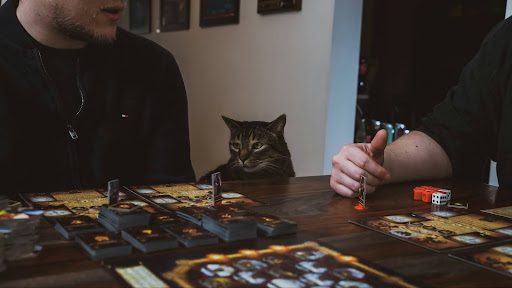
Don’t scare new people with piles of tokens, cards, and chits in baggies and organizers that take half an hour to set out on the table. While those of us who’ve been gaming for a while are perhaps more tolerant of a game that takes a while to set up, a new gamer who has only ever touched mass market fare is likely thinking, “Am I going to have to spend thirty minutes every night setting up a game if I want to join this hobby?” And, “When are we ever going to play? I’ve got to go home and get ready for work tomorrow.” Pick games that are quick to set up and get people playing quickly. If you must play a game with a long setup time, at least have it set up before the new person arrives.
10. Forcing the issue.
Even people who are interested in games may not ultimately connect with them for whatever reason. Lots of people try different hobbies only to discover they don’t enjoy them as much as they thought they would. (I’m looking at you, knitting!) If your potential new gamer says, “Thanks, but no thanks,” at the end of the evening, simply say, “Thank you for coming and we’d be happy to have you back sometime if you change your mind.” Don’t get offended or insist that they’re missing out. Don’t imply that they’re defective in some way for not liking the hobby. And don’t stalk them and keep pushing them to game if they’ve said no. There’s a chance they may come back one day and try again of their own accord, but if you insult or scare them, you can forget it.
You may do everything perfectly and your PNG may still not click with games. That’s fine. We’re all different. But if you’ve made a strong effort to engage them and avoid obvious turnoffs, you’ve at least presented The Hobby© in the best light. Even if the hobby ultimately isn’t for them, you might have made a friend who will tell another person, “Hey, maybe you want to go check out this game night. They were pretty cool people,” thus giving you another chance with a different potential new gamer.