Disclosure: Meeple Mountain received a free copy of this product in exchange for an honest, unbiased review. This review is not intended to be an endorsement.
 Witch Hunt 1649 is a bit of an unusual subject for Meeple Mountain. It is more of an educational game than anything else, which makes sense coming from Central Michigan University Press. This is not a game most are going to sit down and play with their families, nor is it likely to come up at a hobbyist night. Like Dan Bullock’s The Gods Will Have Blood, Witch Hunt 1649 is more concerned with creating a specific and rich emotion than it is with creating opportunities for decision making or laughs.
Martha McGill’s design is set during an outbreak of witchcraft accusations that plagued Scotland in the mid 17th century. Each player is a member of the community, and on every turn, some variety of misfortune befalls you. Your life is unpleasant, difficult, and neither McGill nor the event deck wants you to forget it. Even when things go well, they don’t. Your livestock have fared unusually well during a recent disease outbreak? Congratulations, people now suspect you of witchcraft. This is a game in which a lucky turn is one where it’s raining out and you decide to stay home.
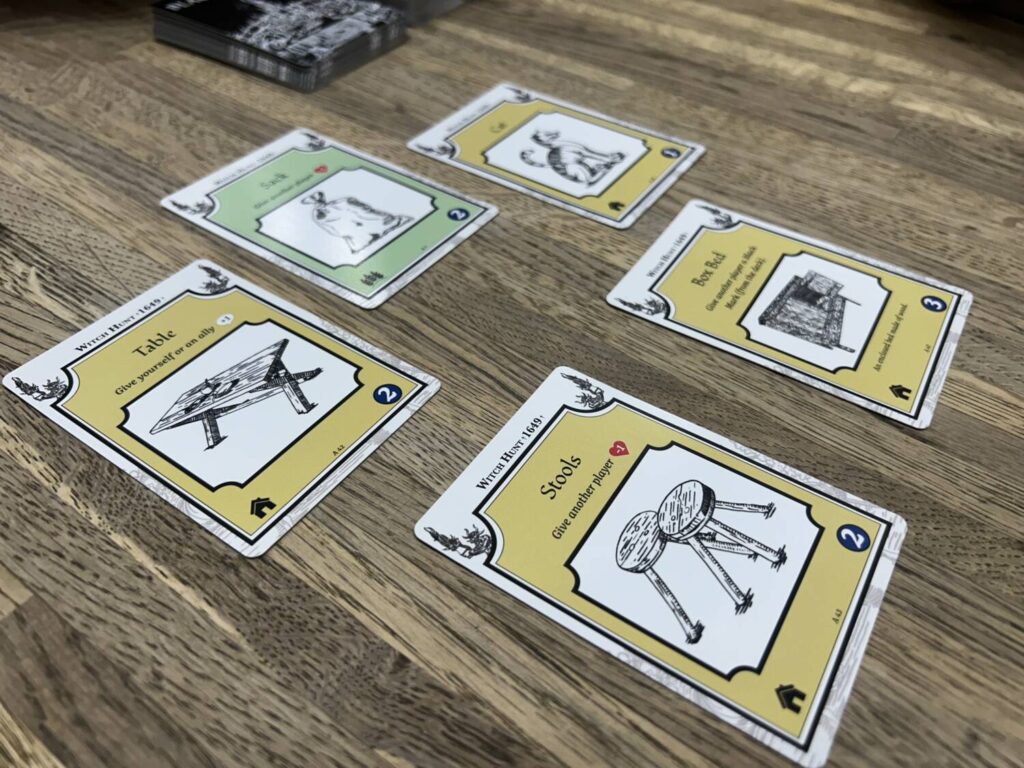
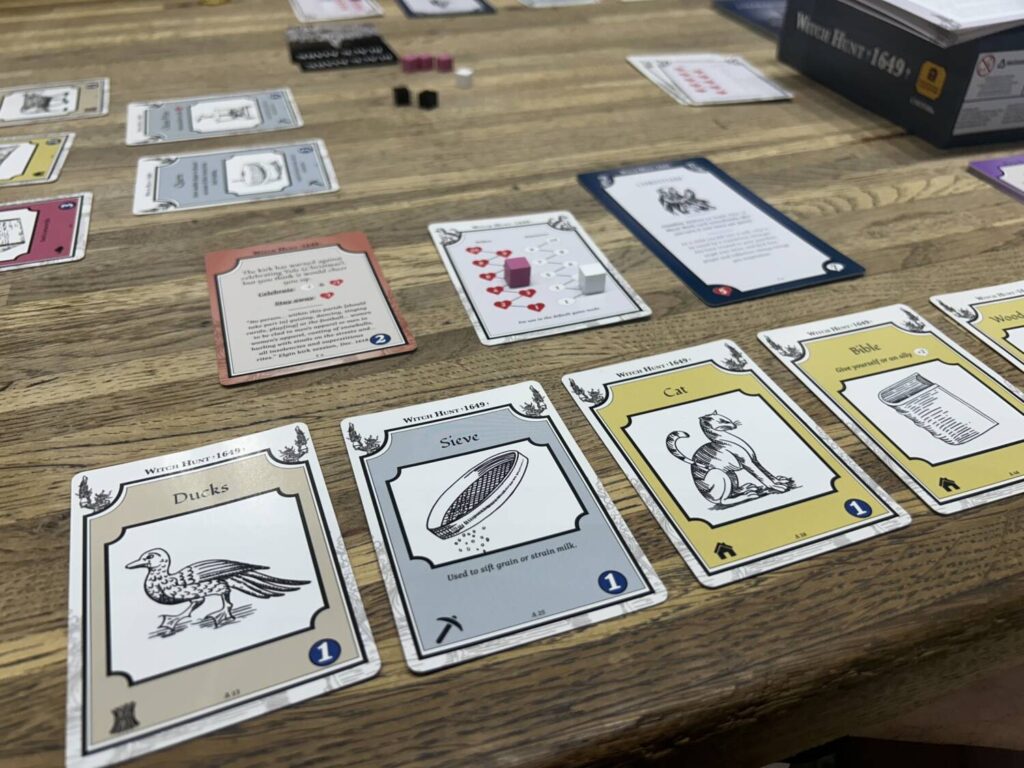
After resolving an event, which will grant you some money, you spend that money on the things that make your life more livable. Wooden cups, a rig, a boat, a plough. Mechanically, this is set collection. The winner of the game—if there is one—is the first player to collect three of one suit and four of another. There is no thematic sense to be made of this mechanic, as far as I can tell, but it works to guide the decisions players make from turn to turn.
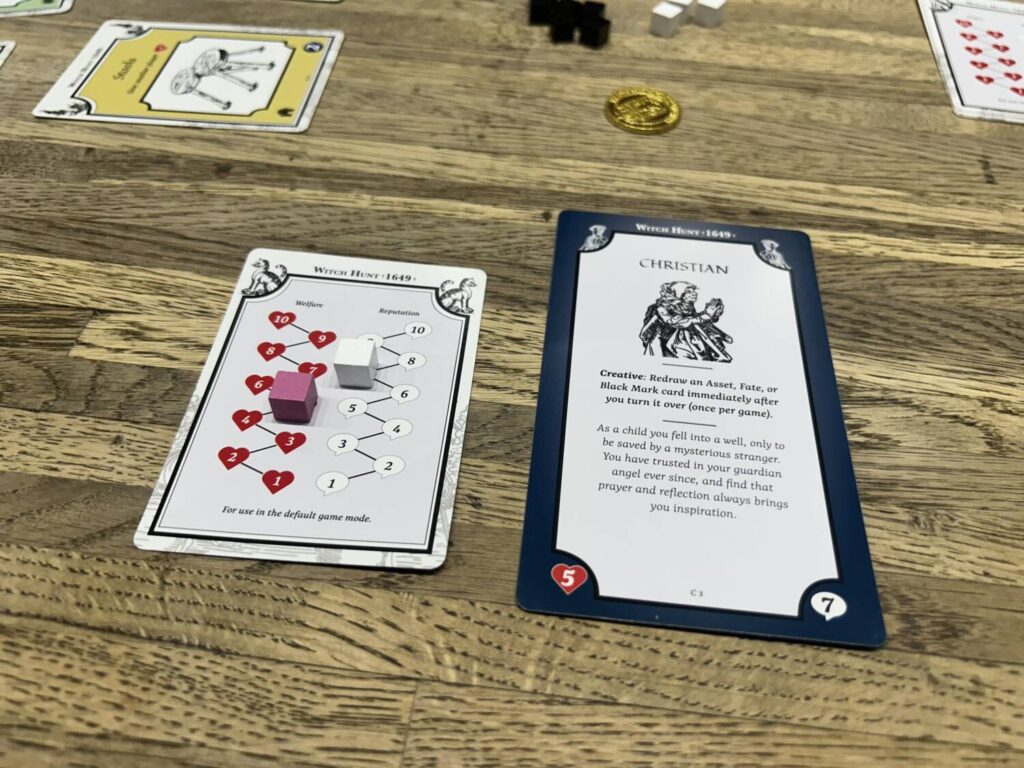 The game is more likely to produce a loser. Just about every turn costs players health and/or reputation. If and when somebody runs out of one or both, they immediately lose the game. There are also witch trials to contend with, which befall players unfortunate enough to draw sufficient attention to themselves. To survive the trial, you have to sacrifice even more of your health and reputation, though you aren’t in this alone. Players are divided into pairs for the duration of the game, and your friend can help you get through the trial by vouching for your character. It will, of course, cost them health and reputation of their own, and the process of helping one another only ensures your mutual demise.
But this is the point of Witch Hunt 1649, this depressive spiral of few meaningful choices and significant consequences. You take things turn by turn, you’re presented with scant few decisions to make, you do your best, and in the end, you get drowned in the river because your neighbor thought your chickens looked a little too healthy. You get caught up in the larger forces of history. It happens to all of us, whether we like to admit it or not. Am I going to die in a witchcraft trial? Probably not. Will I ever own a house? I buy too much avocado toast for that, I’m told. These are different degrees of awful, to be sure, but they also aren’t so different at the root.