
Disclosure: Meeple Mountain received a free copy of this product in exchange for an honest, unbiased review. This review is not intended to be an endorsement.
In the Footsteps of Darwin imagines a world where Charles Darwin is still hard at work on the book that would one day make him a household name. To shore up his theory, he has sent the players out into the world to gather additional supporting evidence. The expansion In the Footsteps of Darwin: Correspondence continues this narrative, adding some brand new elements as well as tweaking and refining some elements which already exist.
What’s New?
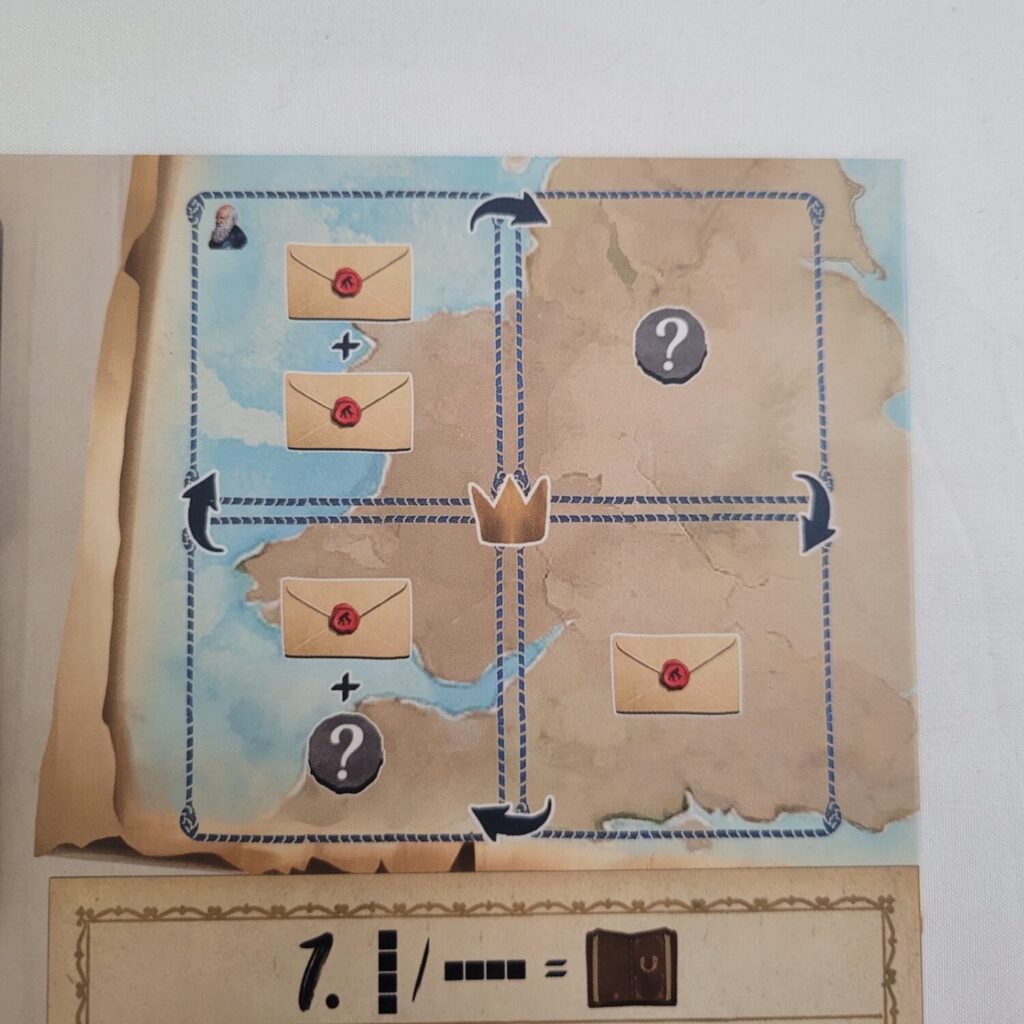
Correspondence introduces a whole host of new components and concepts, all of which reside on the new ‘England board’, which sits beside the Journey board during play. The first thing of note is that the Darwin standee is no longer in the hands of the players. Instead, it rests in its own quadrant of the England board. This quadrant is divided into four squares. As players draft tiles featuring the Darwin icon, rather than change ownership of the standee as in the base game, the Darwin standee will shift into the next square in clockwise order, doling out one (or both) of the two new resources that are introduced by the expansion: Envelope and Classification tokens.
During setup, the left side of the England board is populated with a number of face up Animal and Character tiles. Players will be able to spend the Envelope tokens they’ve earned during the game to perform the “Send a Correspondence” action, gaining one of these face up tiles to place into their Naturalist’s Notebook. This is in addition to the normal action of taking a tile from the Journey board and moving the Beagle accordingly.
Competition for the Envelope tokens is fierce. Normally, you’re at the mercy of the whims of fate when it comes to which tiles appear in the game and at what time. Being able to see exactly what you’re going to get, and being able to plan around that is a game changer, opening up new possibilities for strategizing and planning.
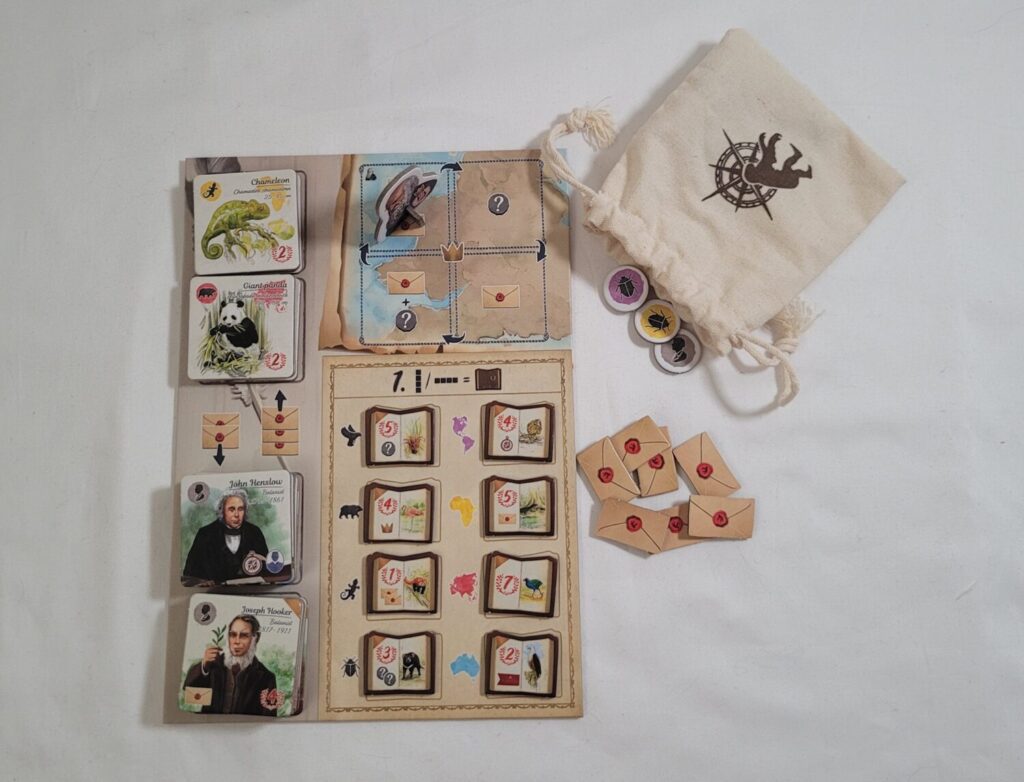
During setup, the Classification tokens are placed into a bag. Players will have the opportunity to draw these from the bag by placing specific tiles into their Naturalist’s Notebooks, collecting specific Advanced Publication tokens, or earning the reward from moving the Darwin standee. Each Classification token corresponds to a specific location in your Naturalist Notebook (Asian reptile, for example). When you draw a Classification token from the bag, you’ll place its illustrated side face up onto its matching location space unless an Animal tile already occupies the space. If that is the case, the token is placed onto the matching location space with the 2VP side face up. If an Animal tile is later placed into a space that already contains a Classification token, the token flips to its 2VP side.
Out of all the new additions, the Classification tokens are the weakest of the bunch. The base game already pressures you enough with the quest to earn Publication and Theory tiles (and everything you need to do to make those Theory tiles score). Classification tokens just add a new type of stress to the game that, in my opinion, isn’t really necessary.
Speaking of Publication tiles, the final element added by this expansion are the ‘Advanced Publication’ tiles. In the base game, filling up a row or column will earn you a Publication tile, which is worth 5VP at the game’s end. Aside from the different artwork on these tiles, they’re all functionally the same. But, in Correspondence, being the first player to earn a Publication tile for each specific row or column will earn you an Advanced Publication tile instead. These tiles are worth a variable number of points, and each comes with some extra benefit that makes it stand out from the standard Publication tiles.
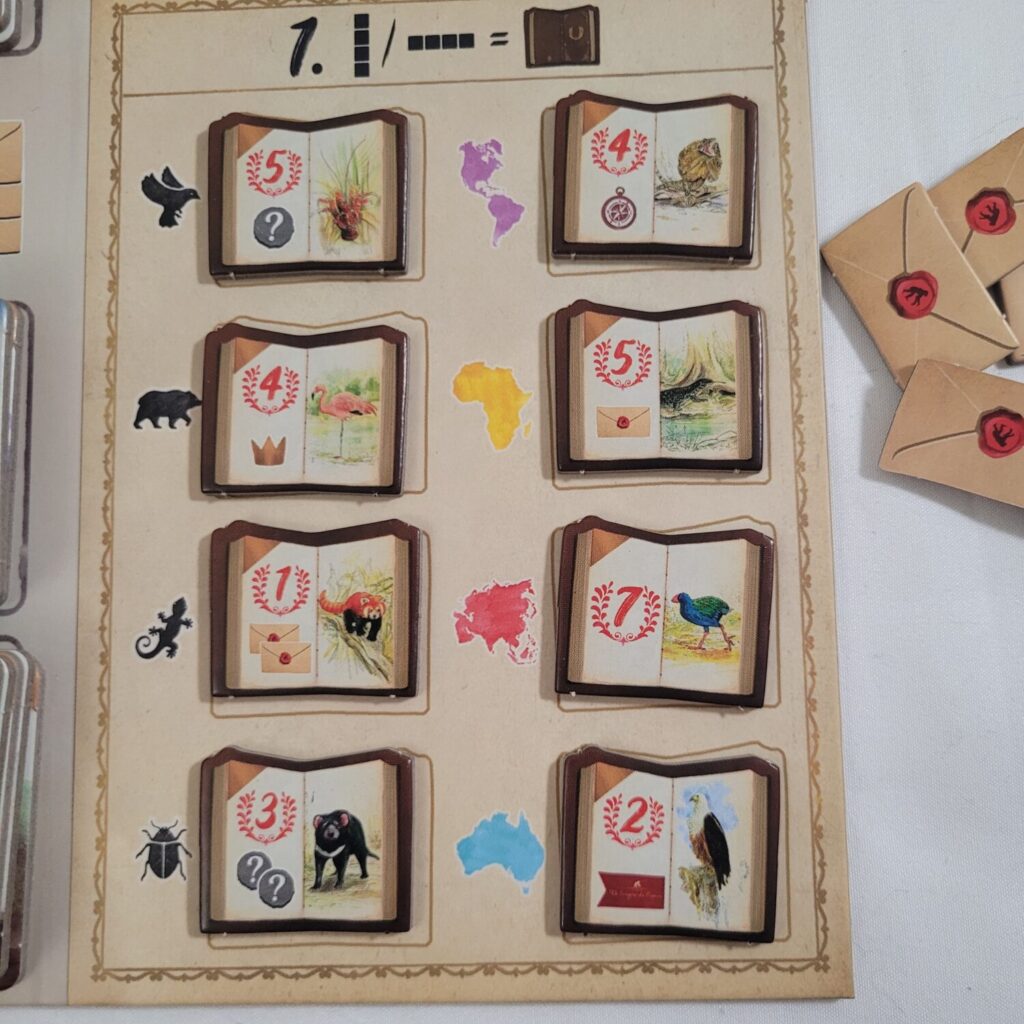
This is a great little addition to the game. Finishing up a row or a column already feels pretty good, but these tiles add just a little extra excitement and create a level of competition to complete them that just didn’t exist in the base game.
Overall, Correspondence is a delightful expansion. There are some expansions that feel unnecessary, adding too much or fiddling with the game in such a way that it makes everything feel ponderous, but this isn’t one of them. Correspondence takes what exists in an already stellar game and elevates it without adding a lot of extra overhead. I like that. And, as if that weren’t enough, you’ll be pleased to learn that it all fits effortlessly into the base game box (with room to spare!).
Correspondence is so easy to teach and incorporate that I can’t ever see myself playing the base game without it ever again.
In the Footsteps of Darwin: Correspondence details
- Designer: Grégory Grard, Matthieu Verdier
- Artists: David Sitbon, Maud Briand
- Publishers: Gém Klub Kft., Sorry We Are French
- Release Date: 2025
- Player count : 2 - 5
- Age range : 8+
- Time range : 20 - 30 minutes
- Mechanism(s): Grid Coverage, Open Drafting, Rondel, Tile Placement
- BGG Geek Rating: 8.30404 - converted to Meeple Mountain scale: 4.0.
- More articles about In the Footsteps of Darwin: Correspondence.