
Disclosure: Meeple Mountain received a free copy of this product in exchange for an honest, unbiased review. This review is not intended to be an endorsement.
Initializing: Main 2 Online
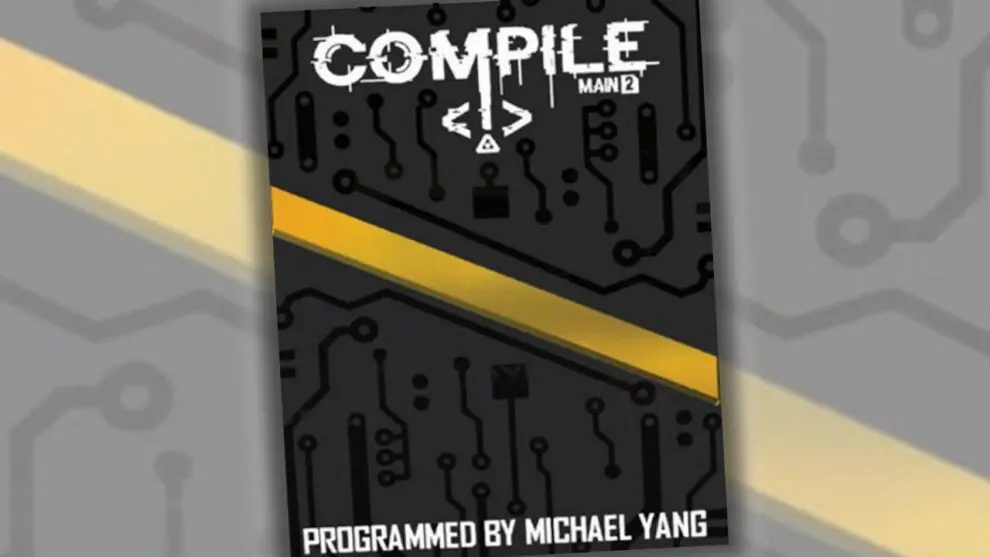
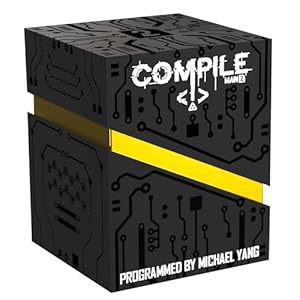
Compile: Main 2 is the follow-up standalone to Compile: Main 1, the surprise hit that took the gaming world by storm last year. I still remember my friend running up to me at Gen Con 2024 saying, “Dude, we have to play this. I saw a demo and instantly bought it.” I hadn’t even heard of the game, despite the massive banner stretched across the skybridge into the convention center. Since then, we’ve played countless duels of Main 1, and it’s quickly become one of our go-to two-player lane battlers.
Fast forward to this year, and designer Michael Yang has returned with more rogue-AI flavor and tactical toys for our lane-battling arsenal. While Main 2 is a standalone box, its protocols can be mixed with the first set to create strange and clever synergies. The theming doesn’t always line up perfectly, but Main 1 already proved that this system doesn’t rely on strict narrative cohesion to shine. Since fellow Meeple Mountaineer David McMillan covered the Compile: Main 1, this review will feel more like coverage of an expansion—albeit a very thoughtful one.
Operational Subroutines
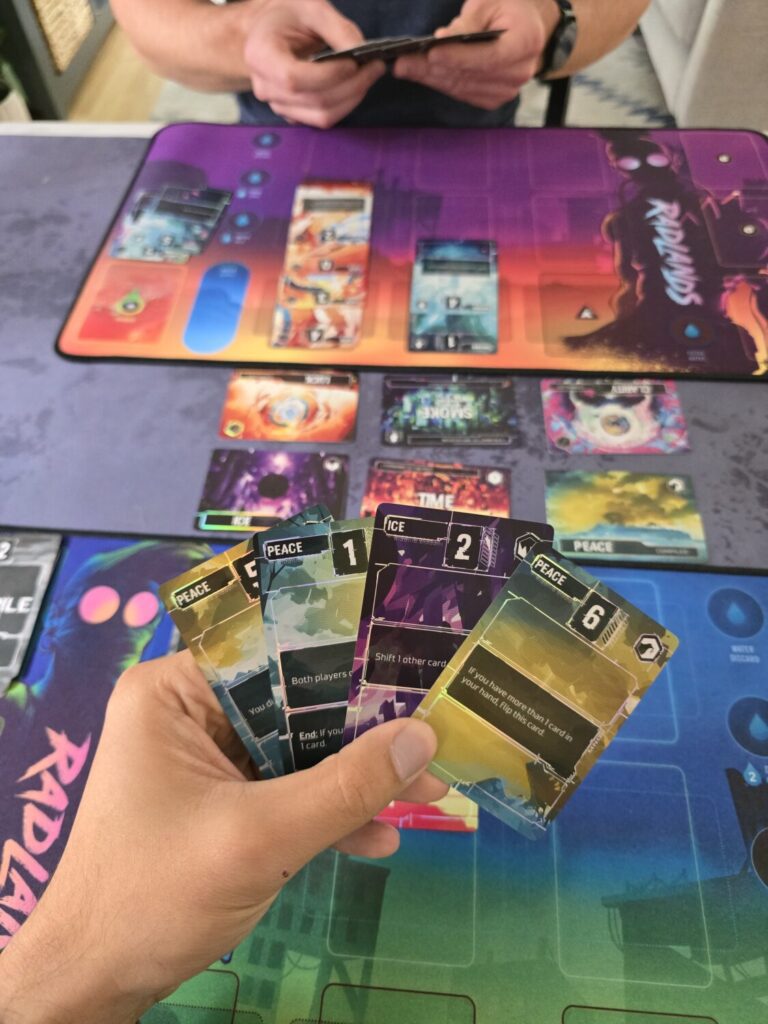
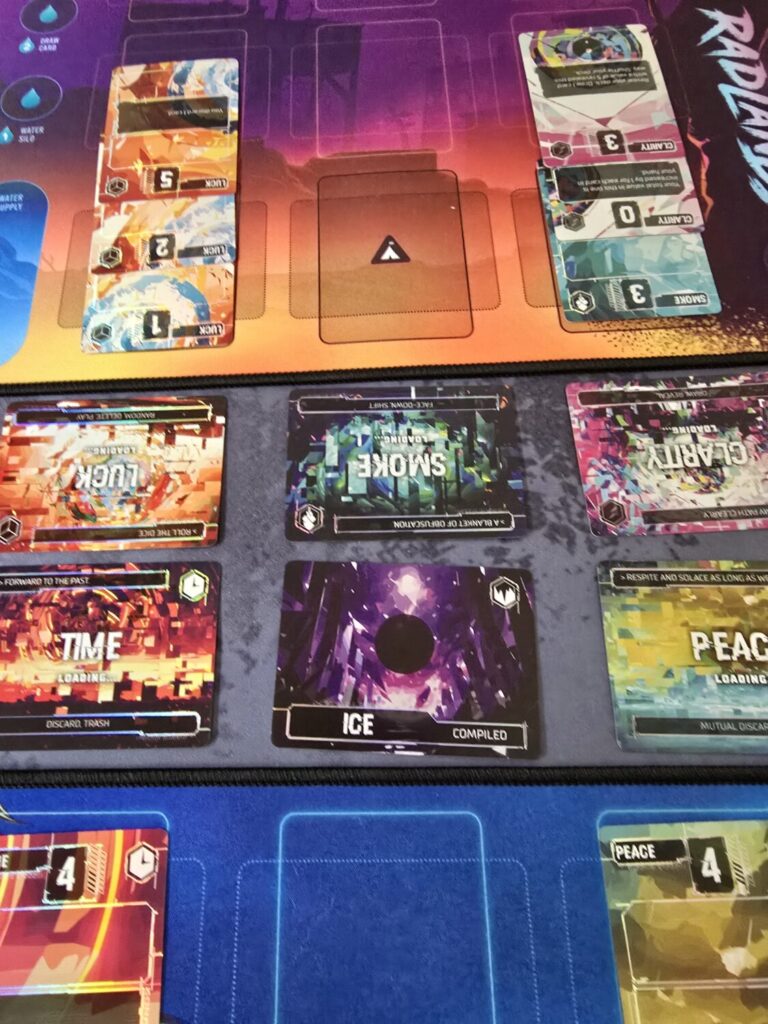
Much like Main 1, this box contains 12 unique decks, each with six cards. Players draft three protocols, shuffle them into their deck, and battle to “compile” each protocol’s lane faster than their opponent. The core loop remains wonderfully simple: play cards into lanes until the numbers on the cards in that column total 10, then compile on your next turn to inch closer to victory.
Turns offer just two choices—play a card or refill your hand—but that simplicity belies the tactical depth underneath. Cards may trigger effects instantly, at the start of a turn, or under specific conditions. Playing over an existing card suppresses its covered effects, while flipping a card face-down gives a clean value of 2 at the cost of any abilities. It’s a constant puzzle of tempo, lane pressure, and timing windows.
Control adds another layer. Whoever leads in two or more lanes holds the control token, and compiling while holding it lets that player rearrange one of the opponent’s protocols—a small twist that can have big rippled effects.
Play continues until one player compiles all three of their protocols, creating a tight, tense arc where every decision feels like it matters.
System Upgrade
I absolutely loved Compile: Main 1, and that sentiment carries over here. The system still feels cleverly designed, with each protocol’s gameplay reflecting its theme in ways that are intuitive and satisfying. It scratches the same itch as asymmetrical TCGs like Magic: The Gathering or Flesh and Blood—without the deckbuilding overhead or financial commitment.
Main 2 doesn’t reinvent the system; instead, it expands it, keeping gameplay fresh with new protocol identities. If Main 1 wasn’t your thing, this set won’t change your mind. But if you enjoyed the original, Main 2 feels like a natural and welcome evolution. Even without exploring every combination yet, I’m already hoping for a Main 3.
These new protocols clearly had care put into them. Luck introduces a push-your-luck twist to deck drawing. Smoke leans into obfuscation, letting you lay traps and surprises face-down in a way that evokes Android: Netrunner or Hubworld Aidalon. War is unabashedly aggressive, while Time manipulates the discard pile with clever recursion. They each feel like mini-games that expand the system’s expressive range.
David McMillan noted in his earlier review that not all protocols synergize smoothly, and that holds true here as well. But I don’t see synergy as necessary. Rather than a deckbuilding puzzle where cards need to combo, these protocols feel more like distinct tactical tools—air warfare for one situation, field artillery for another. In one game, I used Ice to “freeze” my opponent’s effects while Clarity let me sprint up lane values. Those two don’t naturally combo, but they contributed meaningfully to a shared plan. And honestly, that variety boosts replayability; the more you learn each protocol’s quirks, the more interesting the draft becomes.
At a convention recently, I mentioned how much I love Compile, and a friend countered that she prefers Air, Land & Sea. The comparison comes up a lot. While I enjoy that game too, Compile feels more technical, with a steeper initial learning curve but deeper tactical payoff. Even in early plays, when you’re still figuring out timing tricks, the system shows its strengths right away.
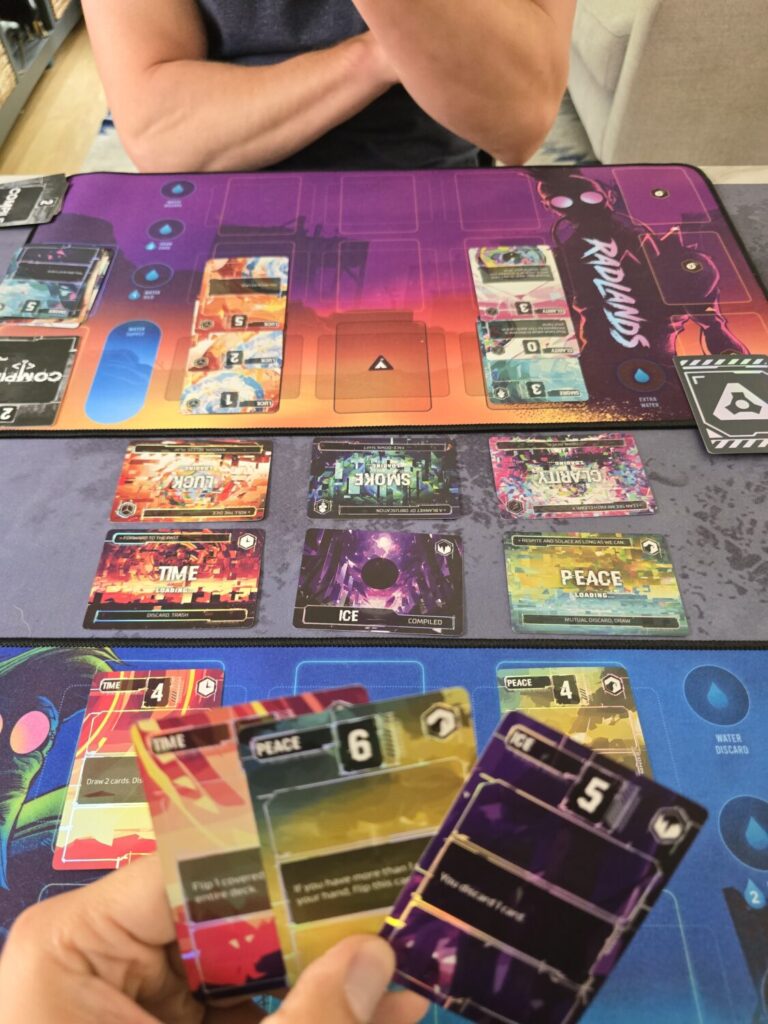
I haven’t mixed Main 2 protocols with Main 1 yet (identical card backs make this a breeze), but I’m excited to discover new synergies and edge cases. With 2,024 possible combinations now in the system, there’s plenty to explore.
If you’re new to Compile, I’d actually recommend starting with Main 2. The protocols feel more balanced and refined than the first set—not because Main 1 is worse, but because Main 2 feels more mature, with Michael Yang returning to his own ideas with sharper instincts.
Compile remains one of my top 2-player games of all time. Between the stellar art, the gorgeous production, and the surprising depth packed into just 18 cards, Compile: Main 2 is another home run. If you want a compact, tactical, asymmetric duel that rewards clever timing and adaptability, this is one of the best systems out there. And I’m already eager for whatever future Mains will bring.
Compile: Main 2 details
- Designer: Michael Yang
- Artists: Allen Panakal
- Publishers: Synapses Games
- Release Date: 2025
- Player count : 2
- Age range : 14+
- Time range : 20 - 30 minutes
- Mechanism(s): Area Majority / Influence, Card Play Conflict Resolution, Deck Construction, Hand Management, Multi-Use Cards, Open Drafting, Race
- BGG Geek Rating: 8.34554 - converted to Meeple Mountain scale: 4.0.
- More articles about Compile: Main 2.