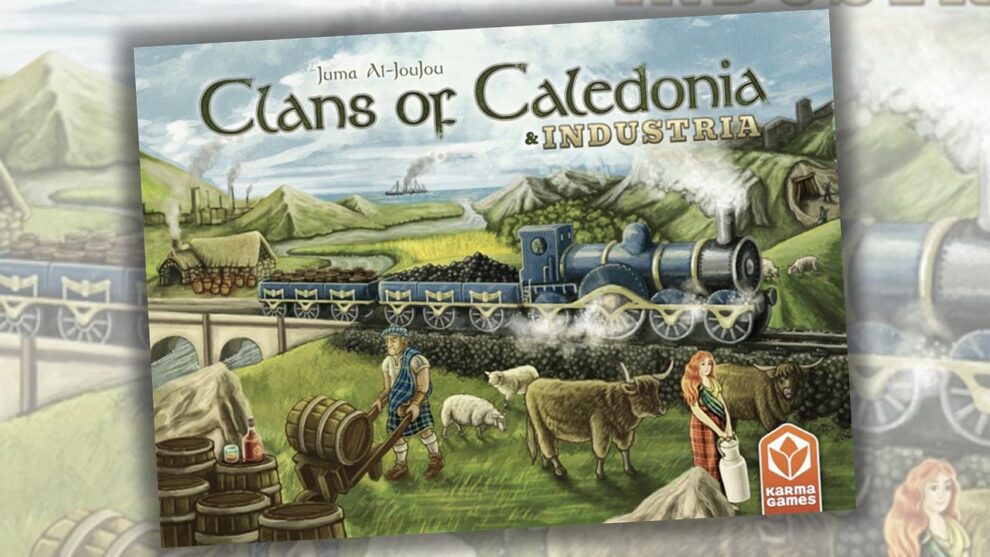

The original Clans of Caledonia, I still maintain, is a Terra Mystica riff. As the resident curmudgeon re: all things TM, I wasn’t the biggest fan. And not even because of the similarities;
You see, it was because of the contracts.
Contracts, shmontracts
If it’s been awhile since you’ve engaged with the universe of unlock-economy-via-player-board, Clans of Caledonia is a game where you build an economy that processes raw goods into processed goods, and then those goods are spent on contracts which give you a bucket of points at the end of the game. There is a variable market where you buy and sell various resources (though you cannot buy and sell the same thing in the same round unless you manage a sub-sub-economy of bonus rewards), and there are end-of-round scoring categories, though, unlike Terra Mystica, these are not-quite-so-mandatory to win.
That’s enough hyphenating. Clans of Caledonia is a build order game, where you need to precisely plan your turns to maximum effect, all with the end goal of taking as many contracts as possible and fulfilling them. These contracts can range anywhere from 5-15ish points (don’t quote me on this) and a winning score usually sees a player accomplishing 6-8 of them.
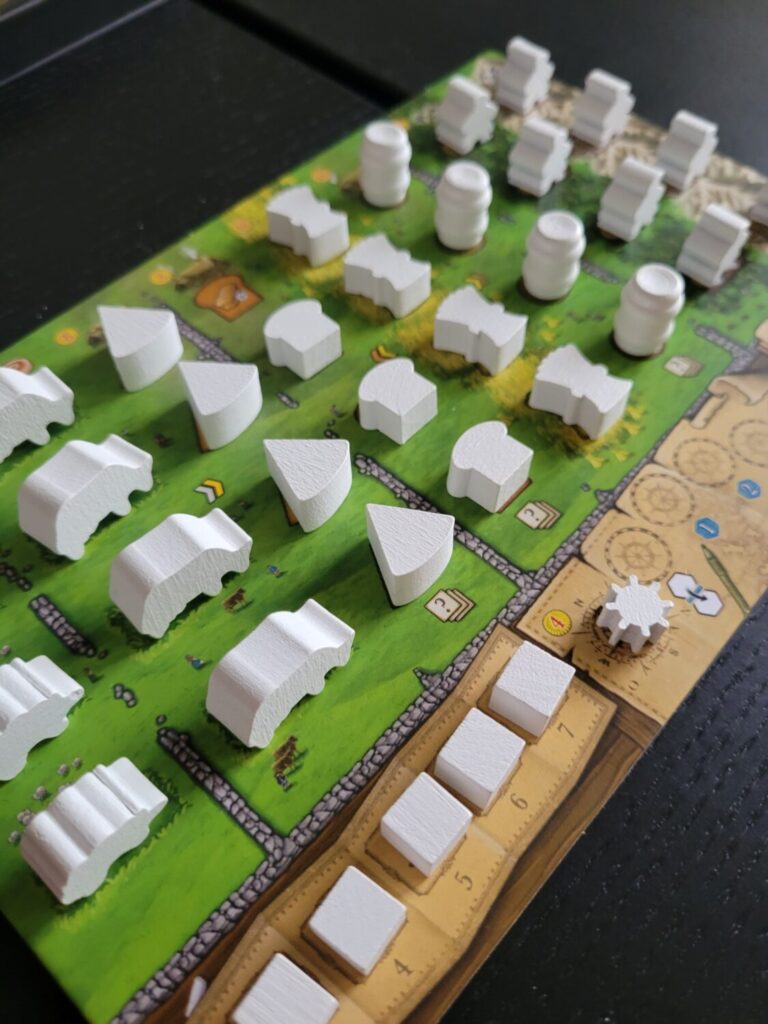
I’m talking about contracts because in spite of Clans of Caledonia having similar asymmetric factions, end game scoring conditions, area control considerations and tight build orders à la
Terra Mystica, the contracts are what win or lose you the game—they subordinate everything else.
Ultimately, turning things into other things to turn them into points and a pretty stable market with minimal manipulation made Clans of Caledonia forgettable to me. Now, with Industria, the latest expansion, it’s something I want to play almost as much, which is high praise from me, considering that I believe Terra Mystica/Age of Innovation to be some of the greatest game experiences around.
What was the fix? The exciting correction? The solution?
More contracts
Industria doubles down on contracts. Now, there’s an entire new board that’s filled with contracts. And, for some reason, this improves the game by almost an order of magnitude. It’s funny, because many of the additions to the game bear a striking similarity to the additions made to Terra Mystica by its first expansion, Fire & Ice.
Industria does the standard expansion stuff. There’s new factions, all of which are well-balanced and fun to play (though I don’t love the guys who are able to skip spaces, jury’s still out if they’re a bit too good). There is a variable market start, which could easily be incorporated into the base game if you don’t want to buy the expansion. There are more scoring categories, port tokens, an optional additional endgame scoring category, and farmers market tokens that allow you to make big money sales with a small spatial component rolled in. Most of this stuff adds a bit more richness to the experience, like gravy. I like gravy.

The trains though, the trains! I’m not even a train guy, and this is a fantastic addition. Ignore anyone who says that this is a bit too complicated to throw in on a first game—I wouldn’t play the game without them.
You have a separate shared board with locations linked by train tracks. Each location has a special action associated with it, and either a delivery token that’s shared with another location or is exclusive to the location itself. In each of the game’s five rounds, you can make a single train delivery. You move your train 1-2 spaces, paying other players that you pass through or stop on, and then deliver the goods pictured on the delivery token, receiving the special action as a reward.

And oh ho ho, do these special actions open the game up. It’s surprising how well they work, given that they’re completely randomized. Many are exchanges, some power you up with additional resources, some give you extra turns, but none of them are overpowered or completely silly. Because of the randomized distribution of contracts required to use the special actions, a really good one can sit the entire game because nobody wants to assemble the resources to do it. They balance out the demands of the game’s regular contracts, because they often take different goods, like milk, which doesn’t make appearances on normal contracts. These special actions are very similar to the innovations in Age of Innovation, but rather than just rewarding with points or some income, they springboard you into interesting positions within the game.
Ultimately, Industria has rocketed the base game into something that I will never refuse to play, and is a great and thoughtful example of how subtle changes and new additions to a game that (in my opinion) wasn’t quite there can make the whole package more robust. It takes bravery to double down on the thing that was uninteresting about the game to begin with, and color me surprised. Clans of Caledonia is now a mainstay in my collection, and I recommend it for fans of Terra Mystica and other tight economic build order games.