
Loneliness is an epidemic. And evidence shows it is not just an issue in the USA where I live, but across the developed world. For some reason, as much as it promised to unite us, the Internet seems to have found so many ways to fracture and fragment society. Longer working hours and the pace of modern life combined with the geographic mobility often finds us living hundreds or even thousands of miles from our friends and families. And if you work remotely, it can be even worse. As an educator, I find that despite interacting with hundreds of teenagers every day, and attending several compulsory meetings with adults every week, I can start feeling isolated and lonely too. To make matters worse; despite living within walking distance of John Steinbeck’s birthplace (and grave), I have only one, small, used bookstore and no board game stores nearby. Fortunately, I travel often to attend conferences, present my research and check in on family a few hours away. And this has led me to a way to feel more connected.
About three years ago, I started planning some of my travel activities and lodging around visits to board game stores. And this past year was epic for me. I visited several amazing shops in my travels including Geeky Teas & Games, in Burbank where I literally rubbed elbows with a couple minor celebrities, and took a cheesy selfie with their Dalek and Tardis display, and, of course, spent more on new games than my wife thought prudent. She was probably right, but as a psychologist I can pretty easily beat back accusations of addiction. In Phoenix, I visited several places, including Gamers Guild, Meeples and Beyond, and J & J Gaming Factory; all of whom gladly accepted about half of my discretionary income that month. And in Las Vegas this summer, I used the excuse of the 107 degree temperatures to seek the air-conditioned bliss of Knight & Day Games where the vibe was super friendly and welcoming. Sadly, we had flown in for this conference, so I was compelled to have them ship me a few titles.
But why do I do this? I do not NEED more games, certainly. My Calvinist upbringing still makes me feel a little embarrassed at the size of my collection these days. It’s under 250, so can someone please tell my wife that these are amateur numbers? (I kid, but she willingly indulges my hobby, albeit with regular ribbing, and mid-life crisis jokes). It actually took me some months to realize why I do this, because it isn’t rampant consumerism, FOMO, or an addiction (don’t test me on this – I warn you!) No, I visit game stores for the people.
I figured this out when I realized that my reading habits create a similar emotional economy. I have an eclectic taste in books, which is also somehow very niche. In other words; I am a geek. A nerd. A weirdo. So what the hell am I doing here?
In a word: connecting. Game stores let me meet the diaspora of my geeky tribe. I am well aware, for better or worse, how I present to others visually. I am a large, cisgender, over-educated,middle-aged white dude with facial hair. If you saw me, you’d probably wonder where my red hat is. But you would be way off. I love hanging out with other gamers from serious wargamers (who tend to look a lot like me), to tattooed, pierced, youngsters with dyed hair. I love all of you. And having the chance to socialize around our collective hobby, however briefly, is one of the best ways I know to spend a few hours…and more than a few dollars. I feel good about spending to support local game shops – and even chain stores that are local franchises. These oases of carboard-y goodness are a lifeline for me because just like reading, they let me know I am not alone.
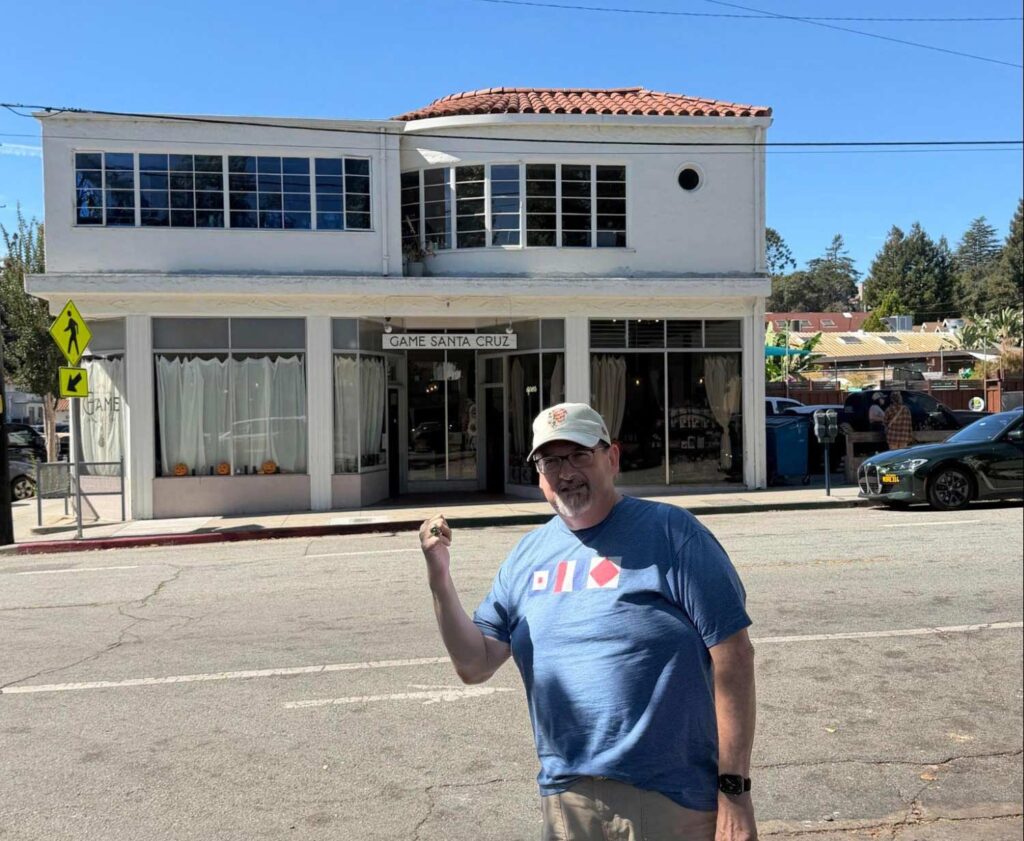
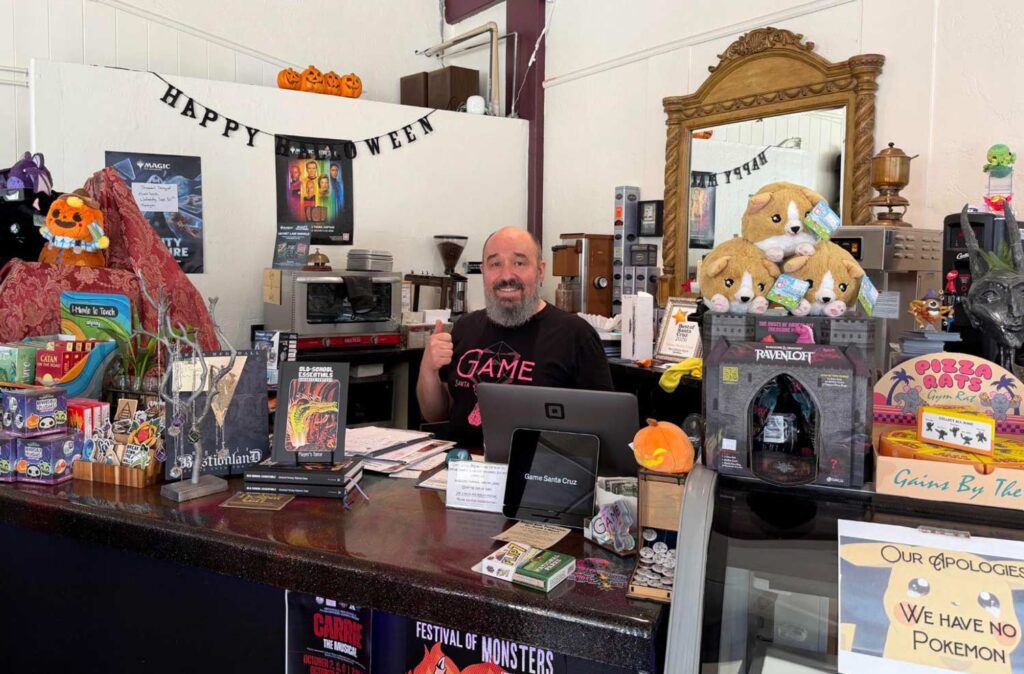
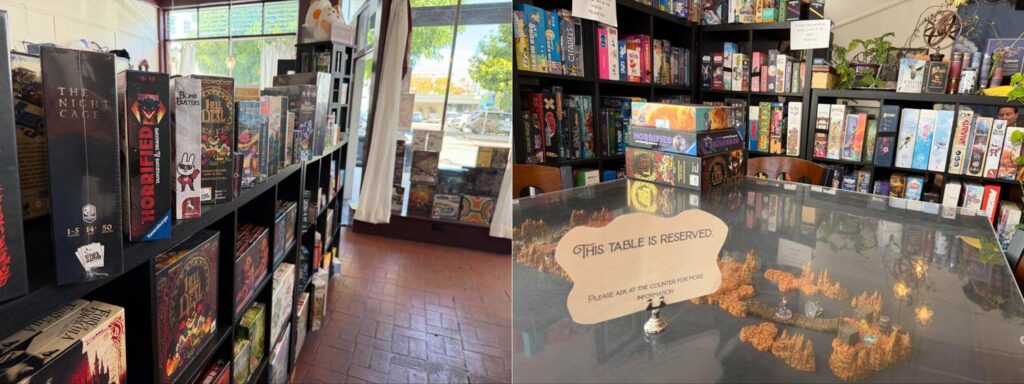
Every human is unique, and despite the ever-compounding social pressure to assimilate into some monoculture, board gaming remains a fortress of individuality in many ways. I have found that, while our fellow gamers are not universally kind and accepting, the vast majority are. I can spend an hour just chatting with my favorite game store owner, Wes at Game in Santa Cruz, even if I only see him a few times a year. And I can also convince myself, if not my spouse, that I am buying that stack of boxes so I can support a friend’s small business, and not some “habit.” Geez.
The hobby seems to be growing in volume. Even in a stagnant economy, the US spent almost $3.8 Billion on board games last year. Worldwide, the gross sales are between about $16 Billion and $22 Billion. See! My collection is small! And the reasons we play are probably as varied as the games we play. Every year, according to market research, 5,000 to 10,000 new games are published. Estimating how many board games truly exist globally is likely impossible. But 200,000 is likely a low estimate. So clearly our species likes to play.
Play allows us to meet each other in non-threatening and life-affirming ways. Our gathering around tabletops covered in cardboard, wood, and plastic provide opportunities for shared experience and joy. Modern life allows few “rights of passage.” We no longer engage in many of the rituals that H. Sapiens developed to unite us, and hold back fear and boredom. Board games to a lesser, but still significant degree, do the same things for us. Shared fun, mutual success or failure, collaborative problem solving and communal joy are the heart and soul of board gaming. And who doesn’t want more of that?
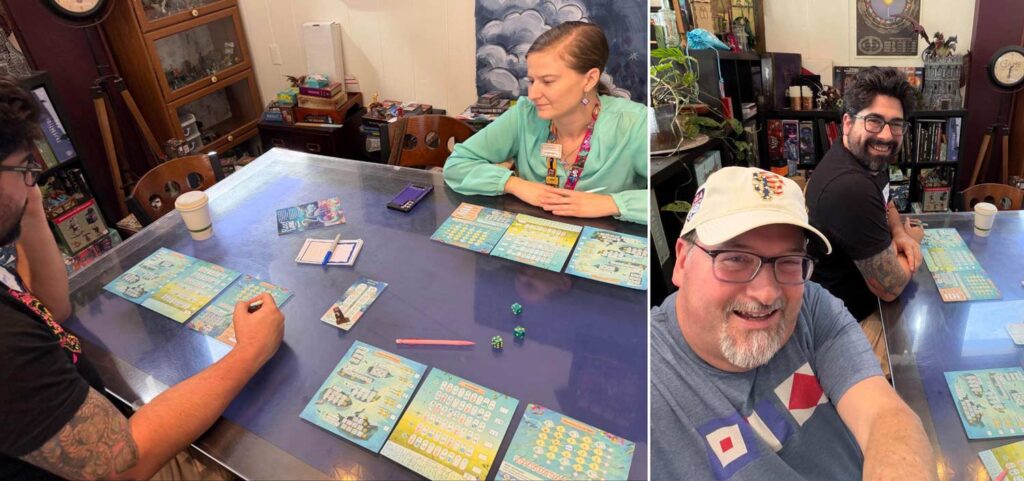
In most game stores, I meet strangers who feel familiar. I strike up conversation easily around the shared happiness of finding something new. And sometimes, I even find myself invited to play. You just cannot replicate that feeling online. And let’s be honest here, nothing online is as good as it is in real life. I play games online, too, but the experience is as different from playing in person with real humans as physical affection is different than…well, you know. I play many games solo, because my children live far away, and not many of my local friends are gamers. Those who do play have impossible schedules like mine, so game nights are rare. But I can pop into a random boardgame cafe in a new city, and often find a welcoming table. If not, I get to spend a while with other people who share my love of this hobby. And these are good people who are excited about some of the same things that I love to do. Connections form fast even if we may never see each other again.
Not to get all sciencey with everyone, but I do have a professional reputation to manage, so I must add that social interaction is key to long term happiness and brain health. This is why I donate games to assisted living facilities like the one my aunt lives in. She taught me to love games like Clue and Mastermind when I was a child. And active play with board games, especially with other people, can help slow the progression of cognitive decline. To paraphrase Gandalf, the world would be a better place if more people valued good food and drink, song, and the merriment of a good game. So get out and play people! Doctor’s orders!
– Dr Matt