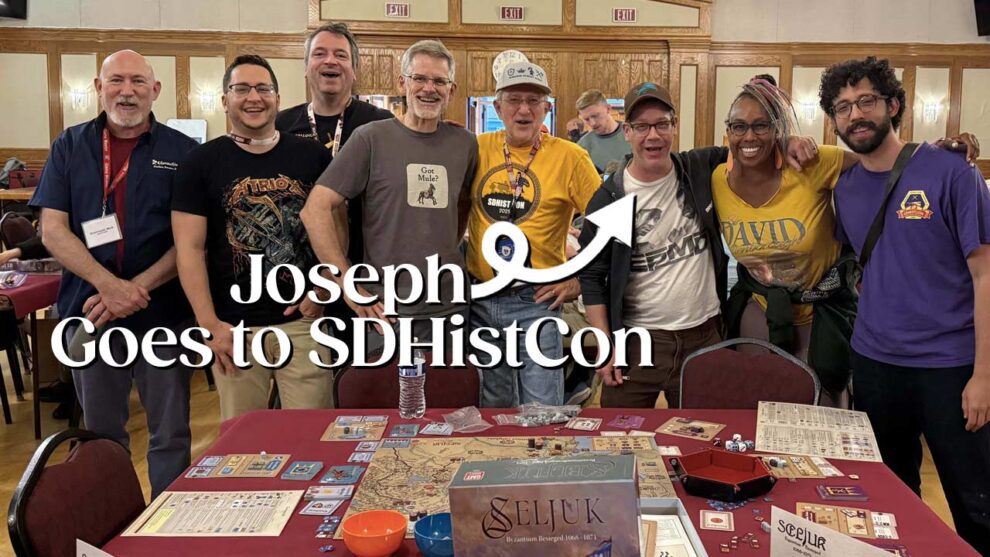

I don’t need a whole lot of coaxing to get myself out of frigid Chicago into sunny southern California in early November, but this year I had a great excuse to escape the cold: The San Diego Historical Games Convention. I’ve attended the online, summer version of the convention in past years, but this was my first time experiencing it in-person and, folks, it did not disappoint.
Something Different
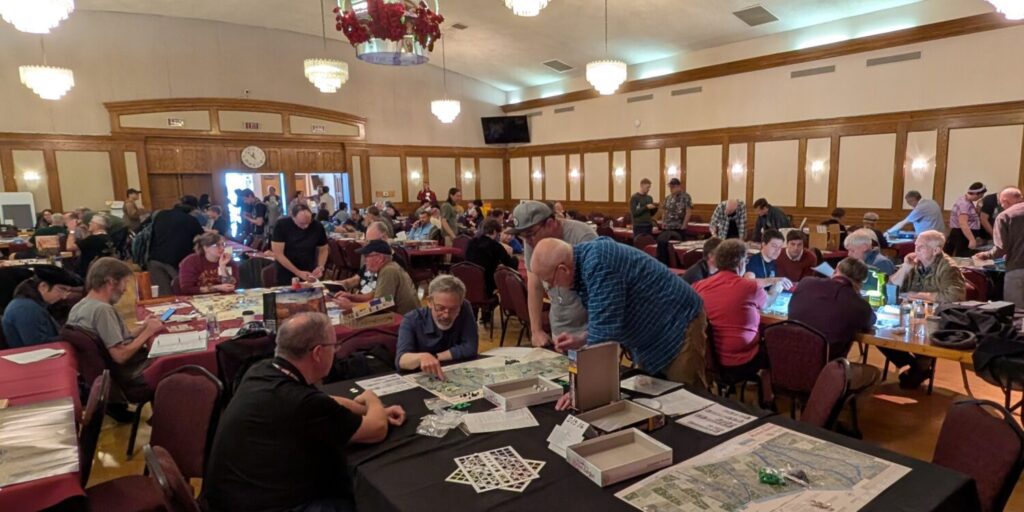
The first clue that SDHistCon would be unlike most other gaming conventions that I attend was the lack of advertising in the hall. While I’ve been to other conventions that focus on playing games rather than selling them, those are usually still bombarded with giant sponsor banners and storefronts. SDHistCon had none of it. Capped at around 150 attendees, it felt more like a larger-than-usual gathering of friends.
Another thing that stood out was the number of designers and developers who attended. From first-time designers looking to playtest their new game to longtime veterans with 20+ titles on their resume, the hall was filled with the folks responsible for creating the games we play.
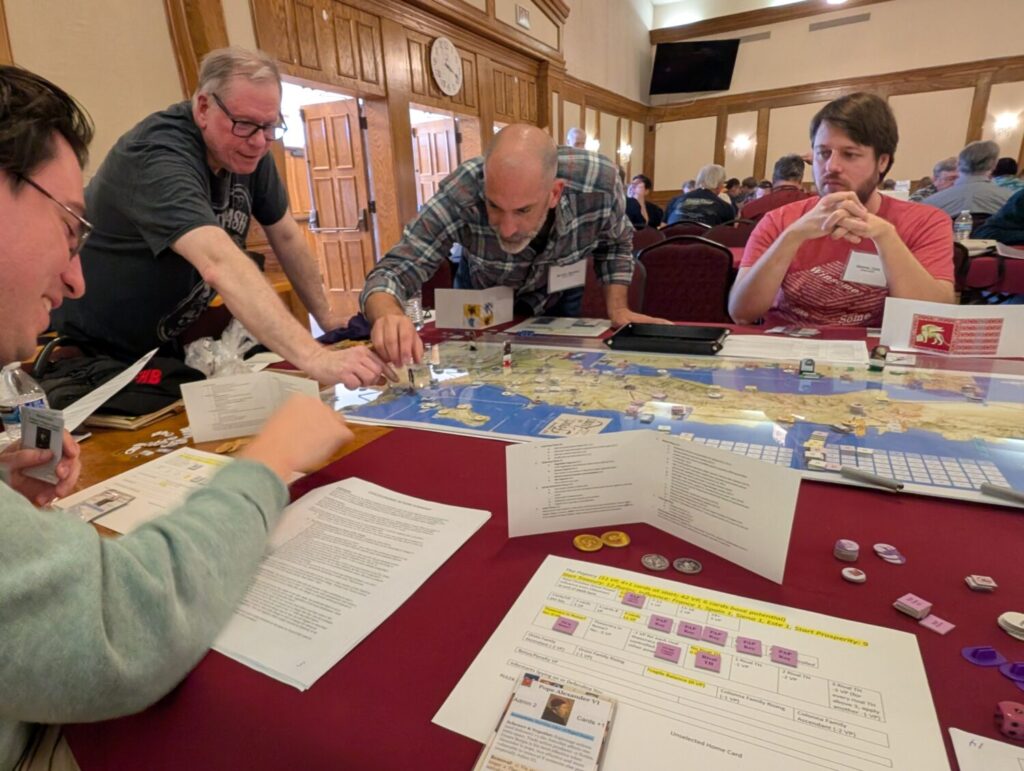
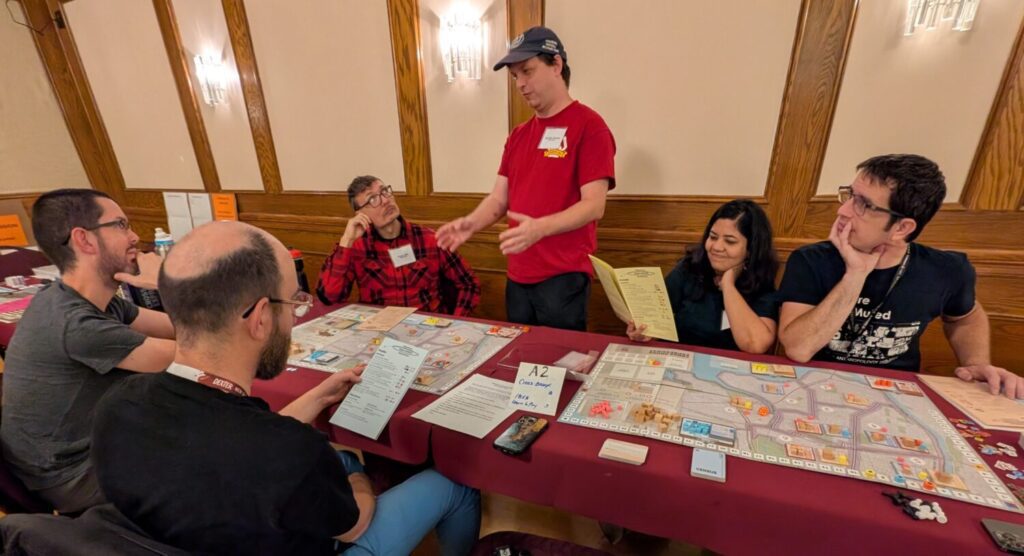
In fact, in the game I played on the first morning of the convention, Foxes and Lions–covering the Italian Wars from 1496-1559 in the vein of Here I Stand and Virgin Queen–I was the only non-designer at the table, competing against Brooks Barber, Cole Wehrle, Drew Wehrle, and Liz Davidson, who is the co-designer of the game (along with Paul Wright, who guided us through the playtest). While it was a blast for me to get a chance to play with these folks, the opportunity for designers like Liz and Paul to get direct feedback on an upcoming game from their peers is invaluable, and it’s the part of what makes this convention special.
Rebel Without a Pause
While I kept my first day on Friday a bit lighter on scheduled events so I could take in everything, my Saturday was booked solid with games. I generally tend to prefer war games that deal with lesser-known or seldom-covered historical conflicts, and the diversity of game themes offered at SDHistCon made it easy to fill my dance card with titles that scratched that itch.
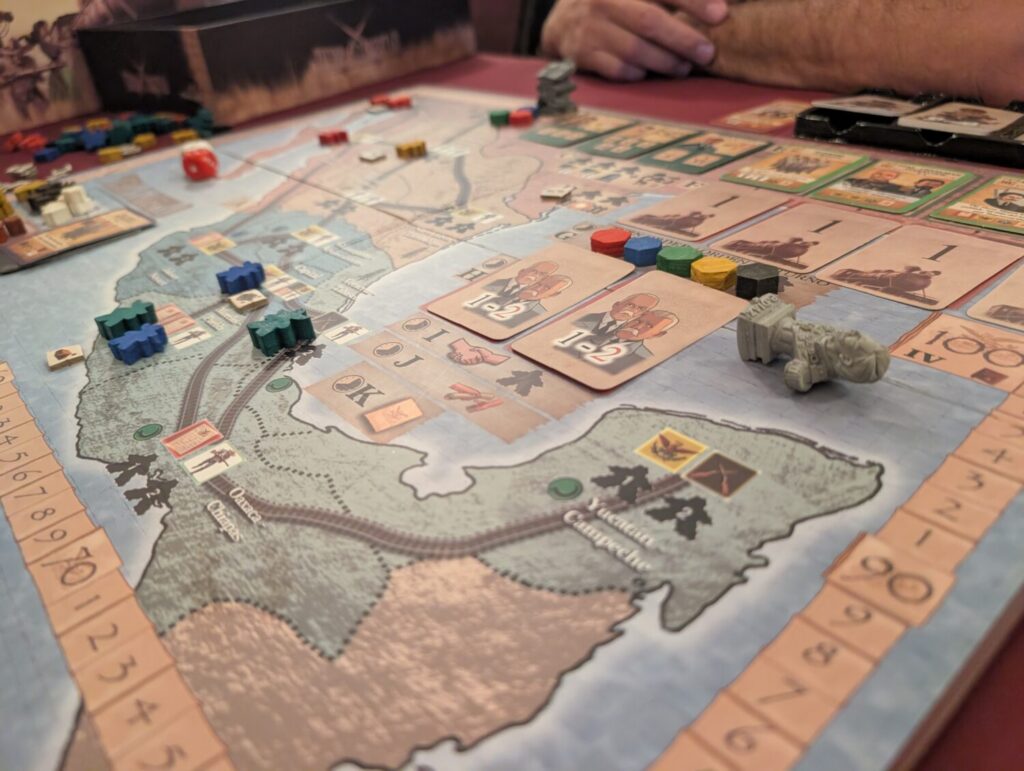
Though not planned this way, it was a day full of games about protest and revolution. In Tierra y Libertad, a game about the Mexican Revolution from designer Saul Sanchez, I worked together with other players (as rebel factions) to make changes to the Constitution by spreading influence and recruiting leaders with variable powers, all while trying to survive attacks from Porfirio Diaz’s powerful army. This second edition of the game, originally published in 2018, was quick to learn but had a good amount of strategy, as resources are tight and you must have a solid plan with your fellow revolutionaries to make it through, since all points for victory are pooled.
The recently released Chicago ’68, from The Dietz Foundation, has been on my radar for a while. A game about the protests during the 1968 Democratic National Convention in Chicago, I won’t get too deep into the details of the title (since I’ll be publishing a full review of the game for Meeple Mountain at a later date) but I can say it was a very unique experience. As someone who runs games often, I felt the pain of watching the (exceedingly patient) first-time designer, Yoni Goldstein, teaching two simultaneous games with a fairly complex ruleset, side-by-side, to a bunch of new players who all had lots of questions.
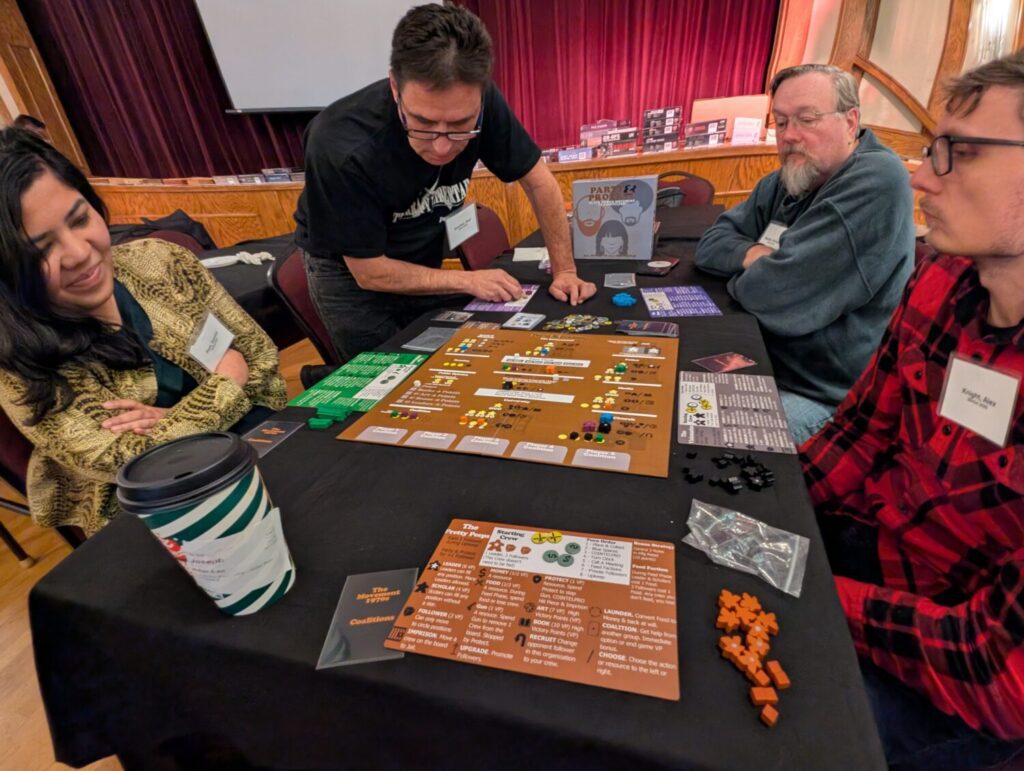
Party & Protest, a game that dealt with Black Power during the 1970’s, has players competing as different factions within the movement to spread their message and enact change in the face of constant pressure from authorities, as well as other factions. A worker placement game with increasingly limited options–each round, COINTELPRO would boot workers from some of the spaces–it had a lot of great player interaction and was tense until the final turn. Unlike most of the other prototypes I played over the weekend, Party & Protest’s designer, Moe Poplar, wasn’t looking to publish the game at retail, but instead envisioned this being sold in HBCU bookstores and available at local libraries. It’s a testament to the variety of games I encountered during the convention and a reminder of the array of impact board games can have.
Victorious in Defeat
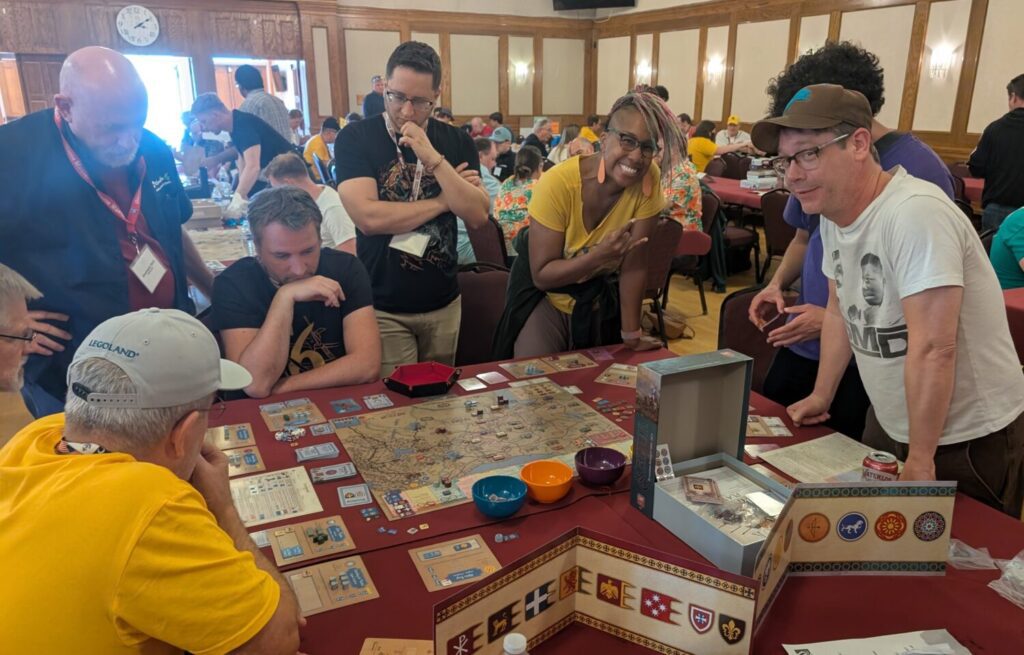
My final day at the convention was on Sunday–it actually wrapped on Monday but I had a flight to catch–and I had probably my most memorable gaming experience that afternoon. We had planned a 3 vs 3, Designers vs. Content Creators playthrough of Justin Fassino’s latest entry in the Levy & Campaign series from GMT, Seljuk, which deals with the war between the Romans and Turks from 1068-1071. I was joined on the Content Creator team by Candice Harris and Artur Carvalho, while Team Designer was headed by Levy & Campaign and COIN series creator Volko Ruhnke. It was a daunting task.
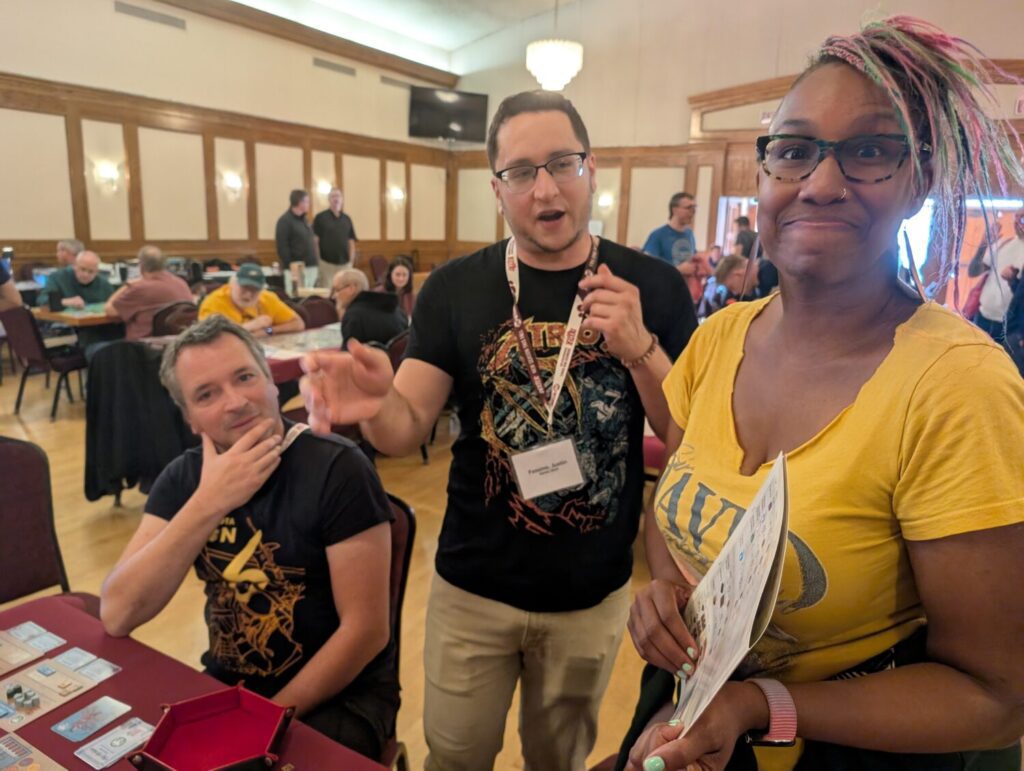
To say the final outcome was an annihilation might be an understatement. Even with Justin, who was teaching the game and clarifying rules, not-so-sneakily giving our (clearly overwhelmed) group hints and tips each round, it was still a heavy victory for the Designers. They did have the creator of the entire series on their team, so I tried not to let it get to me, but they also had an insane amount of luck rolling dice. During one particular clash, Volko was rolling four D6, each only scoring a hit by rolling a one. He rolled four of them. I’m not lying. Justin actually captured this moment and published it in his highlight video of the match. There was no such luck for Team Content Creator. It was just that kind of day for us.
I feel like this playthrough embodied everything I enjoyed about the convention. Even though my team was completely blown away, the entire table was full of energy, laughing throughout. It was a one-of-a-kind experience to play the kind of games I love, with designers and colleagues I hold in high regard, in a much more intimate setting than the large conventions I attend. It really just felt like a bunch of longtime friends getting together for a game session.
Make Piece, Not War
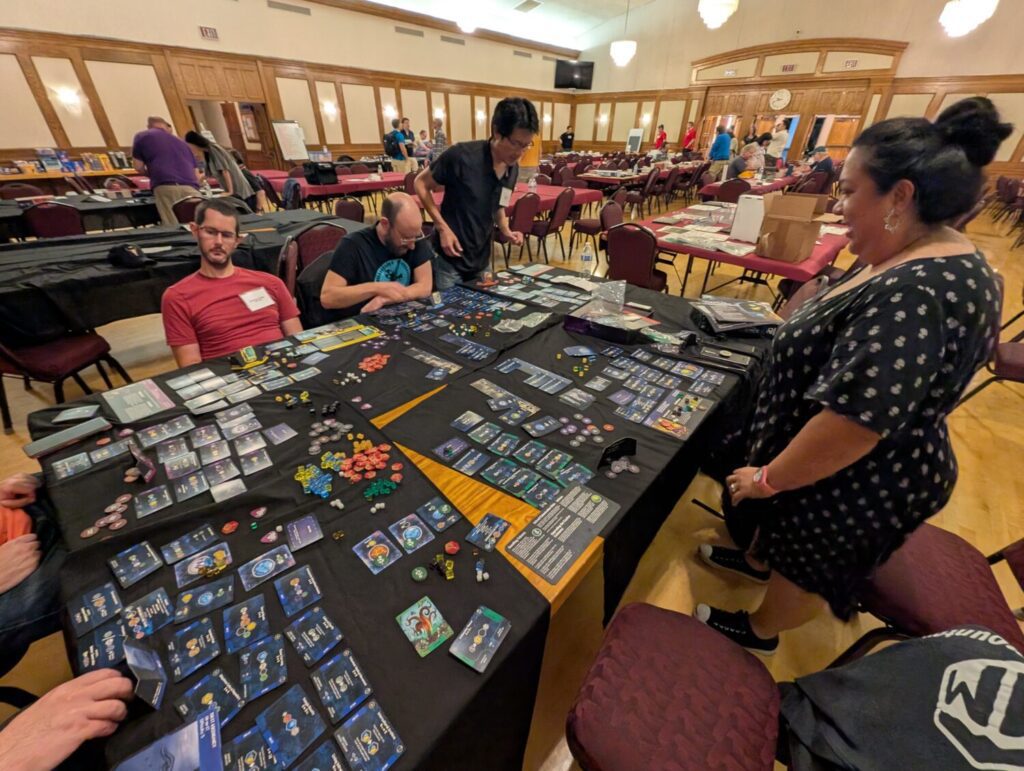
Even though this was a historical game convention, it wasn’t exclusive to war or combat games. On Friday night, Meeple Lady hosted a game of Sidereal Confluence, which I had never played before, and it was one of the other big highlights for me–and not just because it was the only game I actually won all weekend. Playing with 7, across the 4 large tables we had pushed together, the negotiation phase was completely wild as we shouted and bartered, attempting to trade resources and cards within the time limit. It got so loud that I am sure we probably annoyed a few folks in the hall trying to concentrate on deep strategy games, though everyone was kind enough not to say anything. It was an absolute blast.
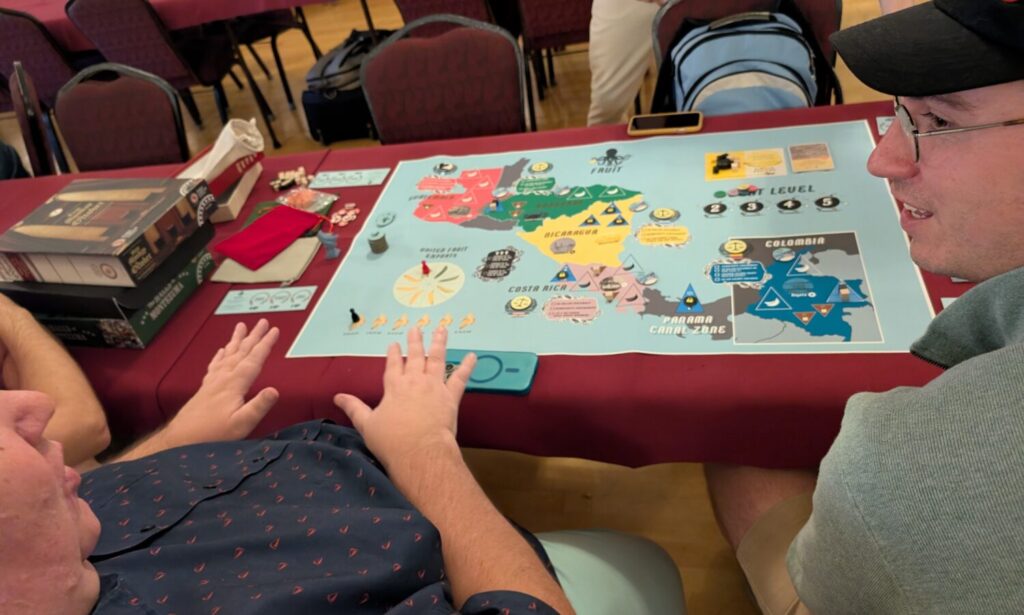
There were also several early prototypes that I was not able to fit into my schedule but made sure to stop by and watch a few rounds being played, since they fit squarely into the kind of non-traditional wargame themes that I really enjoy. Two that stood out were Brooks Barber’s Painkillers, about the American opioid epidemic, in which players take on the roles of the pharmaceutical companies that contributed to its beginning, and Fruit, dealing with neocolonialism in Latin America during the early 20th century banana trade, from designer Dan Bullock, who also has made In the Shadows and the criminally-underrated 1979: Revolution in Iran. I’ll definitely be following the progress of both titles and am excited to see how they develop.
San Diego Serenade
So much more happened over the 3 days I attended SDHistCon that I didn’t even touch on yet. From the pre-con mixer at a local brewery to the restaurants in the area around the hall to the silent auction that helps fund the convention. It was all outstanding. Designer Harold Buchanan (Liberty or Death and Flashpoint: South China Sea) who runs the convention and staff member Andrew Bucholtz, who was teaching games non-stop all weekend, could not have been more welcoming when I first arrived at the hall, and the dedication of the entire SDHistCon staff made this a terrific experience that continued all weekend. It’s a small convention that made a big impact, and I’m already saving space in my calendar for next year.