
Disclosure: Meeple Mountain received a free copy of this product in exchange for an honest, unbiased review. This review is not intended to be an endorsement.
WRASSLIN’
Growing up, I was an avid watcher of the WWE Attitude Era (controversially known as WWF back then). I’d watch in awe as the Undertaker chokeslammed Mankind at Hell in a Cell from multiple stories up, or Shane McMahon leaping off the top of the jumbotron at WrestleMania against the Big Show. I eventually grew out of that world, but it’s amazing that professional wrestling is bigger and more popular now than ever.
And yes, professional wrestling is “fake,” but I’d argue it’s a choreographed performance art. The physicality is still real, and so are the injuries. It’s meant to entertain with that hearty mix of violence and trapeze-level athleticism.
Entering the Squared Circle
Rowdy Partners is a title a bit outside the typical fare of Capstone Games, but it was a showstopper at PAX Unplugged this year. The game comes to us from veteran designers Jason Hager and Darren Reckner of Fuego, Logic & Lore, and Unmatched: Tales to Amaze fame. Both designers even dressed as characters from the game, putting on a theatrical act like none other. Props to Jason for continuing to promote and teach the game on Sunday, even after running the entire Philadelphia Marathon!
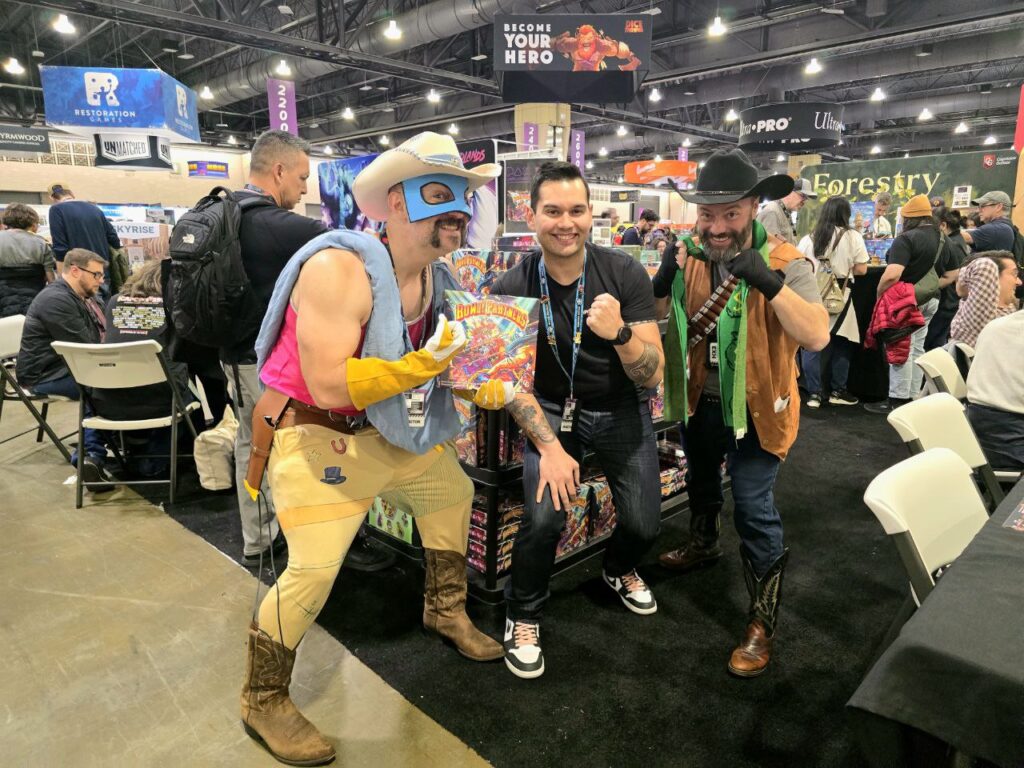
At first glance, the game looks like a flashy fighting game, but underneath the bright colors is a trick-taking duel to the finish. Thematically, it’s built on the classic “tag team” concept: a one-on-one fight with a partner waiting on the ropes to be tagged in after a beatdown from a signature move.
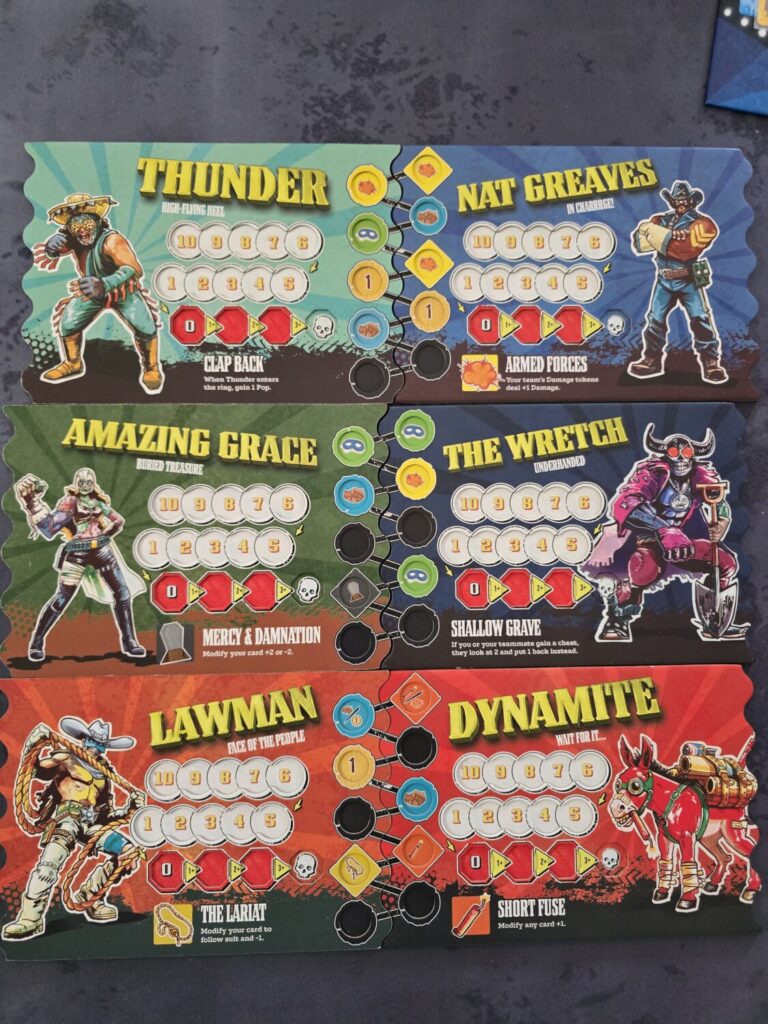
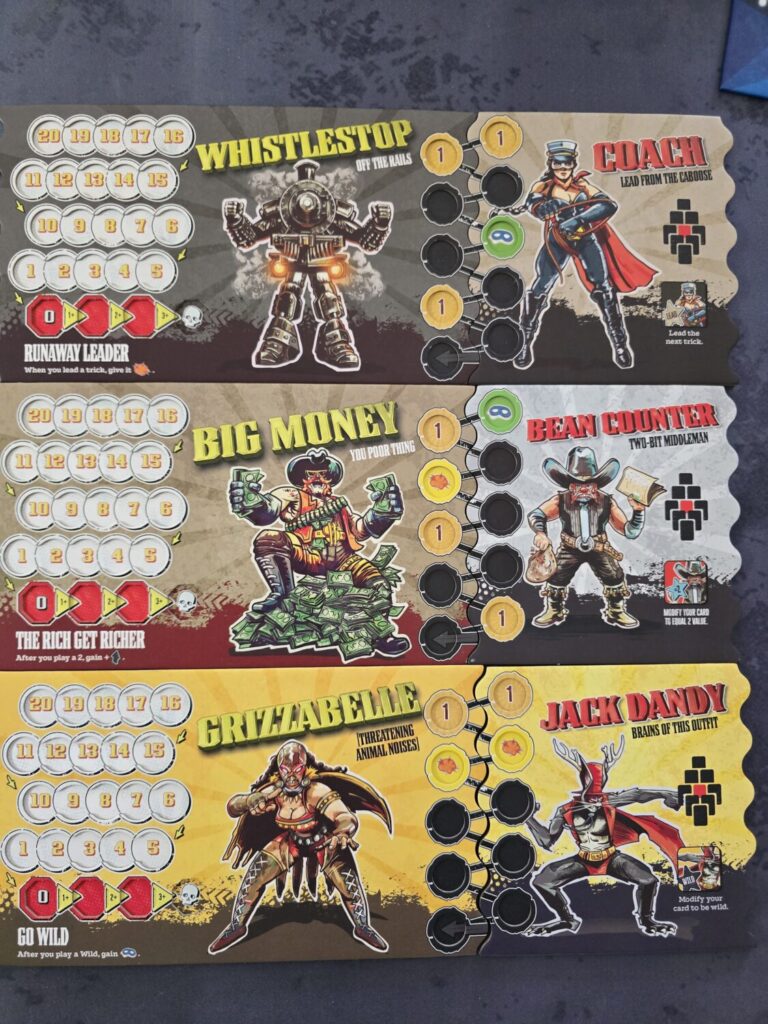
Each wrestler brings their own dynamic persona and a unique special power, donning a mask, tights, and all.
The following match is scheduled for one fall, and in this corner…
Rumble Rundown
Rowdy Partners is played over rounds until one character is defeated, at which point the other team claims victory. Though traditionally a 2v2 fight, the game can adjust to 1v1 or even 2v1 using “headliners” and “managers” (more on that shortly).
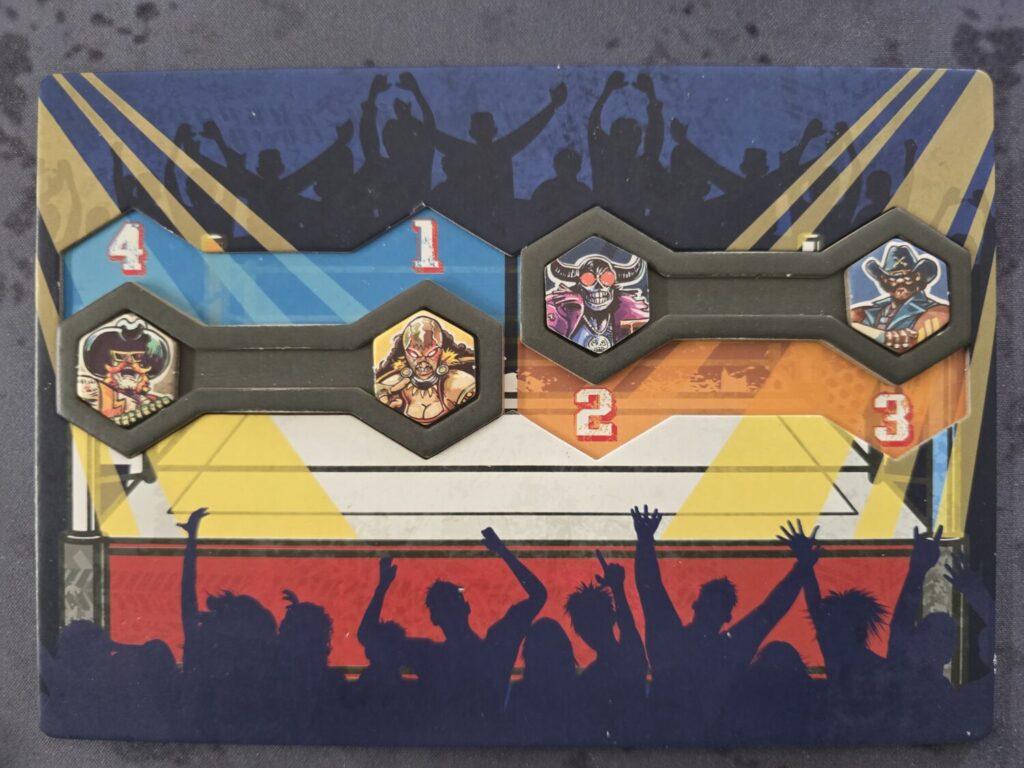
Players attach their wrestler boards to form a shared “pop” track. Each wrestler also has a health track, with their final segment split into three “stops,” mimicking a three-count pin by halting any over-damage three times.
Players are dealt a hand of move cards in four suits and play them in typical trick-taking fashion. While there’s no trump suit, players must follow suit, and the lowest value wins the trick. If a player can’t follow suit and instead plays a card of a different suit but the same value as one already played, they “counter” the move, and both cards are removed from the trick. The winning card’s value deals damage to the active wrestler, and the player who played it becomes the active wrestler if they weren’t already.
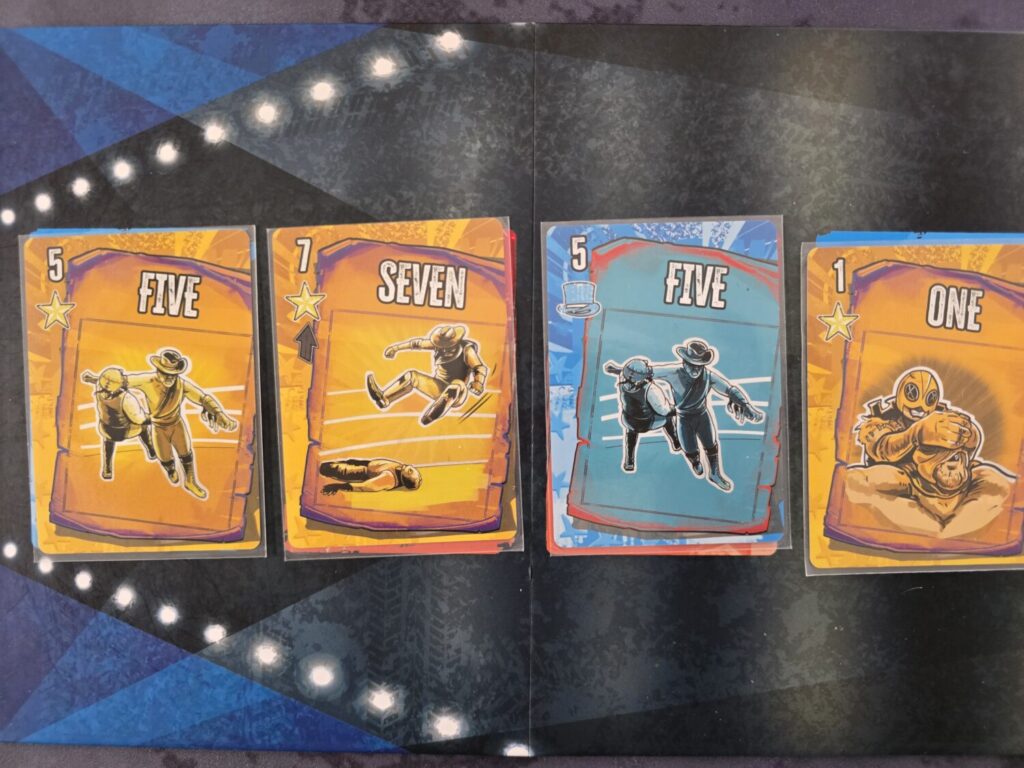
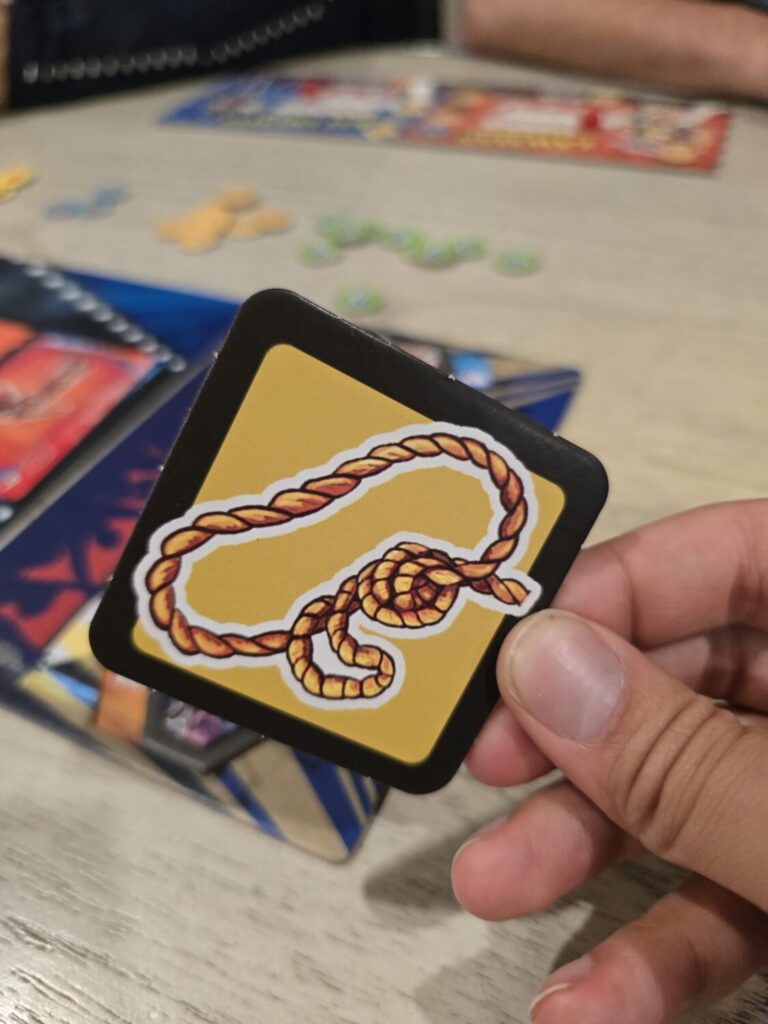
Higher-valued cards have arrows that propel players up the pop track, earning tokens like tags, coins (value modifiers), bonus damage, or cheats (suit changes).

Though it’s a team game, information can’t be freely shared—only vaguely hinted at. Players also have signature moves that trigger at different times during a round.
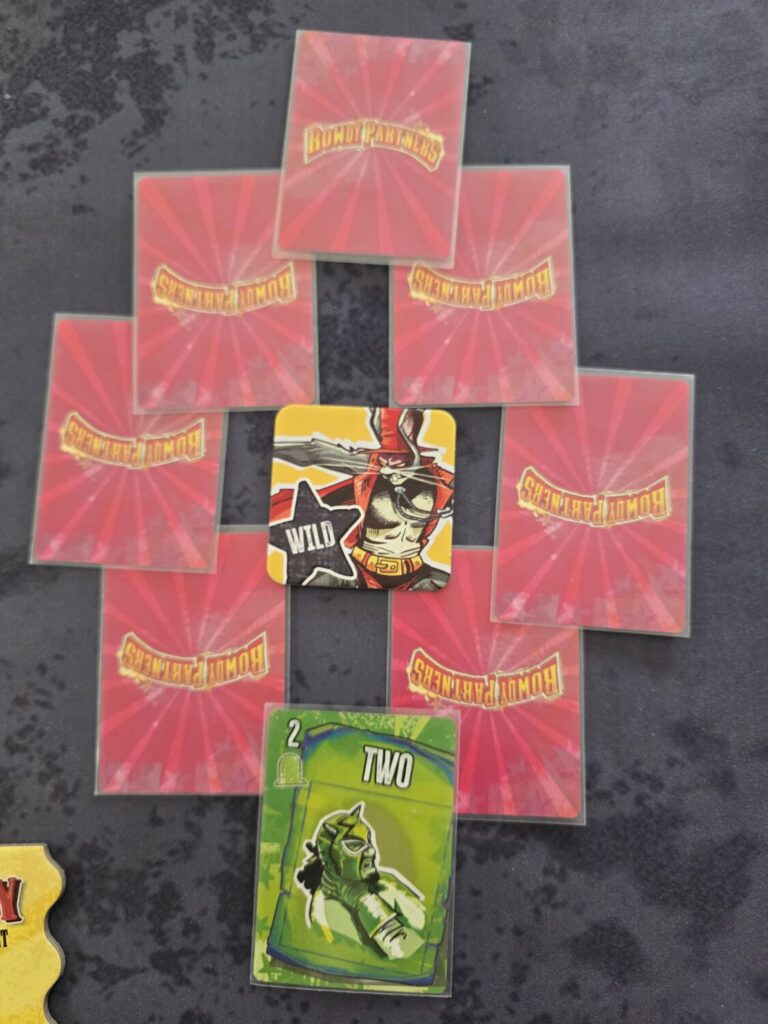
When playing with fewer than four players, one player controls a “headliner” (a wrestler with more health) and a manager, who has no health but offers a special power. The manager’s hand is represented by a tableau of facedown cards with a single face-up starter. The headliner can draw from both their own hand and the tableau, unlocking the manager’s power halfway through.
Heel or Face?
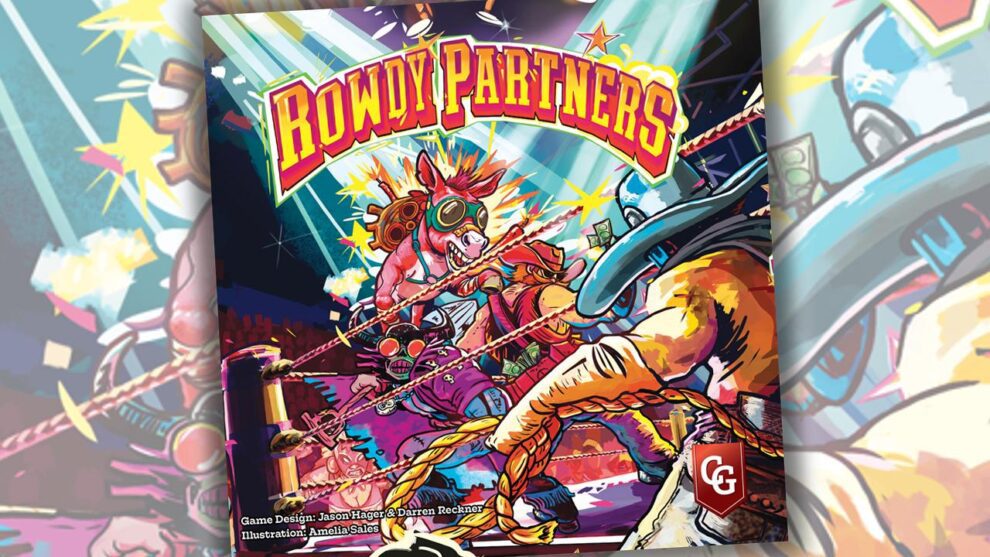
I was pleasantly surprised by Rowdy Partners, not just by its bold presentation, but by its refreshing spin on trick-taking. It takes a familiar genre and adds playful powers and subtle layers of hidden information. The box cover screams 80s neon and immediately draws you in.
But under the mask, does that charming aesthetic translate into a good game? For the most part, yes. The mechanics are thoughtfully crafted, creating an engaging joust with enough wrestler variety to fill a whole pay-per-view’s card.
The trick-taking itself is fairly standard, but the addition of “counter” cards makes playing off-suit just as tactical as dropping a low number. You might think you’re doomed when the opponent throws a one, only for your off-suit one to swoop in and take it out. It feels nice to be able to play “defense.”
Add in character powers, and the game flips on its head, delivering those joyful “ah-has!” reminiscent of Rebel Princess. The powers feel balanced and give players meaningful agency. The rulebook even includes stat sheets detailing where each wrestler specializes, whether in damage, values, suits, and more.

The play order is another interesting twist. It doesn’t follow a traditional clockwise rotation but alternates between teams: Team A, then Team B twice, then Team A again (depending on who won the trick). This allows the non-leading team to set up clever back-to-back plays.
Kick-out at 2 (Count)
As intuitive as the game is, it doesn’t always hit its stride. With incentives to play low cards and several ways to mitigate damage, it should feel like a great trick-taker, but the pacing drags. The health pools start at ten, and with low cards doing the bulk of the damage, it often feels like death by a thousand cuts rather than dramatic haymakers. Big damage can happen, just not as often as it should, given the theme.
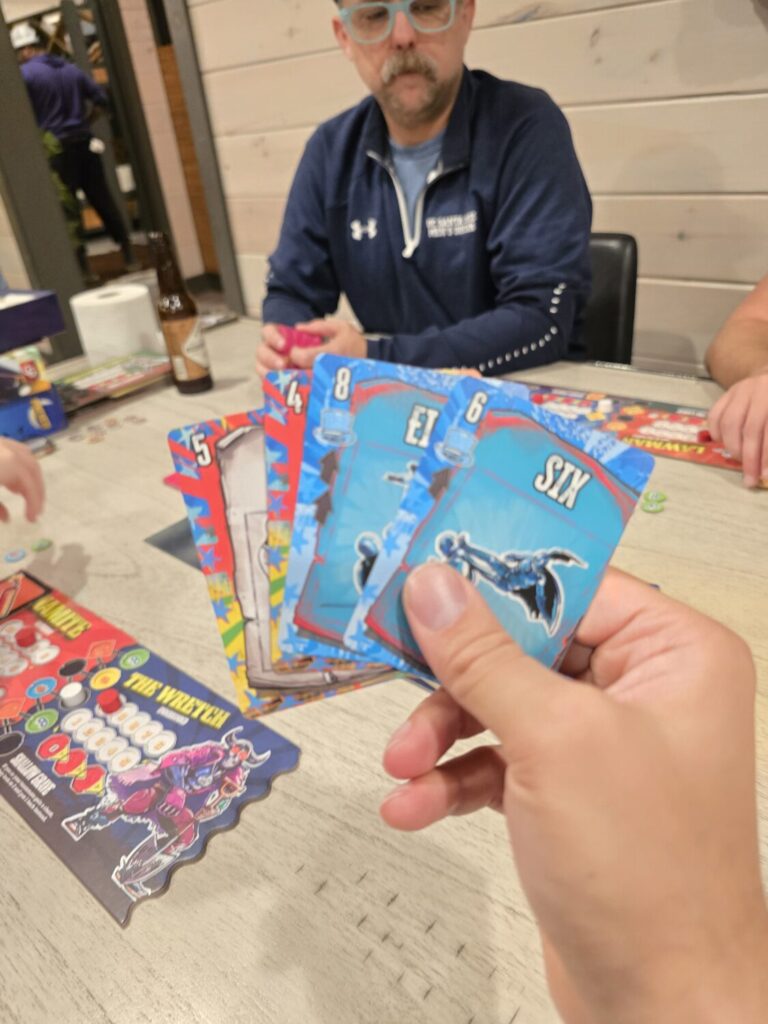
The three-count fall mechanic adds charm but also stretches the final moments of the match. The first half of the game is full of energy, but momentum dips as the game wears on, especially when the opponent is only halfway down their health track at a point where it feels like the match should be winding down.
The game also becomes harder to reset and replay—something you’d want to do, given the fun wrestler variety. But when one match takes 45–60 minutes, the appetite for immediate rematches diminishes.
The 2v1 mode is appreciated, but the headliner/manager combo feels weaker than a standard tag team. Playing with the manager’s facedown tableau brings more luck into the mix, though it’s arguably the trade-off for a headliner’s larger health pool (double a normal wrestler).
Signature Finisher
Rowdy Partners isn’t a bad game by any stretch. Its clever design and theatrical flair show the care Jason and Darren put into it. It’s especially strong as an introduction to trick-taking for newcomers. The system also feels ripe for future expansions. I’m hoping for TLC (tables, ladders, chairs), cage matches, and plenty of silly new wrestlers.
If its slightly long runtime is the only major drawback, then it’s safe to say it’s worth stepping into the ring to see whether it’s your flavor. Its interesting design and deep theme create a memorable play, high-flying straight from the top rope.