
Disclosure: Meeple Mountain received a free copy of this product in exchange for an honest, unbiased review. This review is not intended to be an endorsement.
I have more than once mentioned puzzle-maker extraordinaire Blaž Gracar’s work in the same breath as releases from Rush Hour purveyor Thinkfun. I have rarely mentioned them together as a matter of direct comparison. These are different products for different audiences. Gracar makes pencil-and-paper puzzle books that are only for the sweatiest adults, while Thinkfun cranks out charming toyetic brain teasers that keep children well-and-truly occupied. The connection comes from Gracar’s gift for imbuing his puzzles with a sense of discovery that brings me back to my childhood, when I had a massive collection of Thinkfun games under my bed. With the release of Herd, Gracar’s publisher Letibus and Thinkfun now warrant direct comparison.
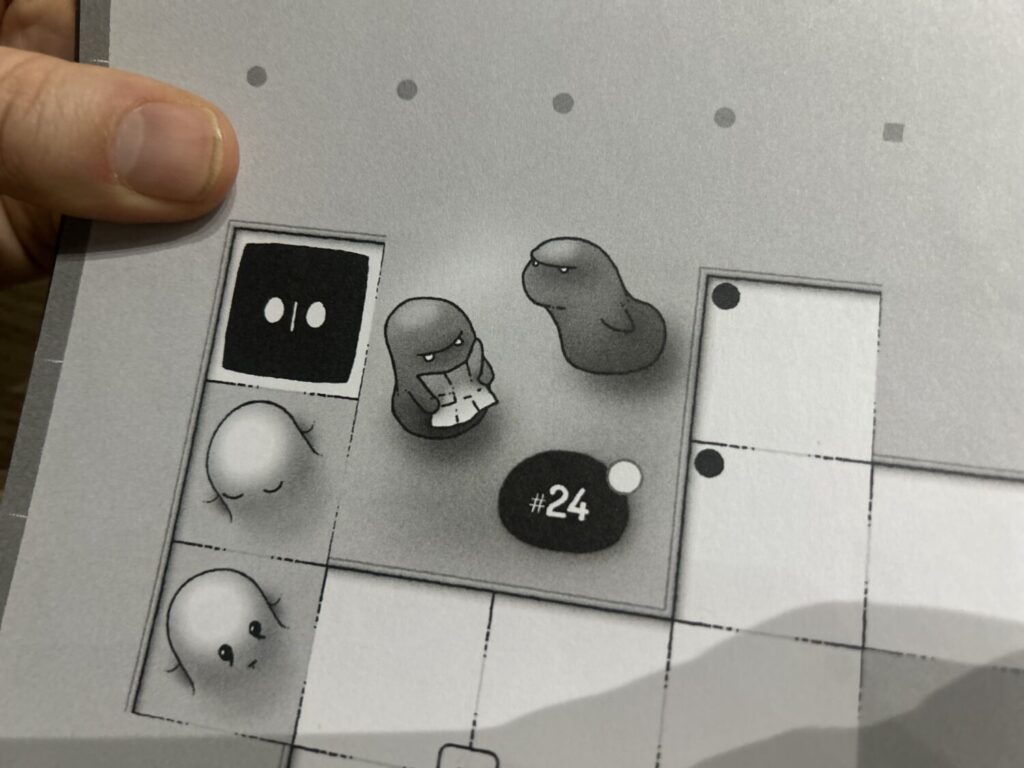
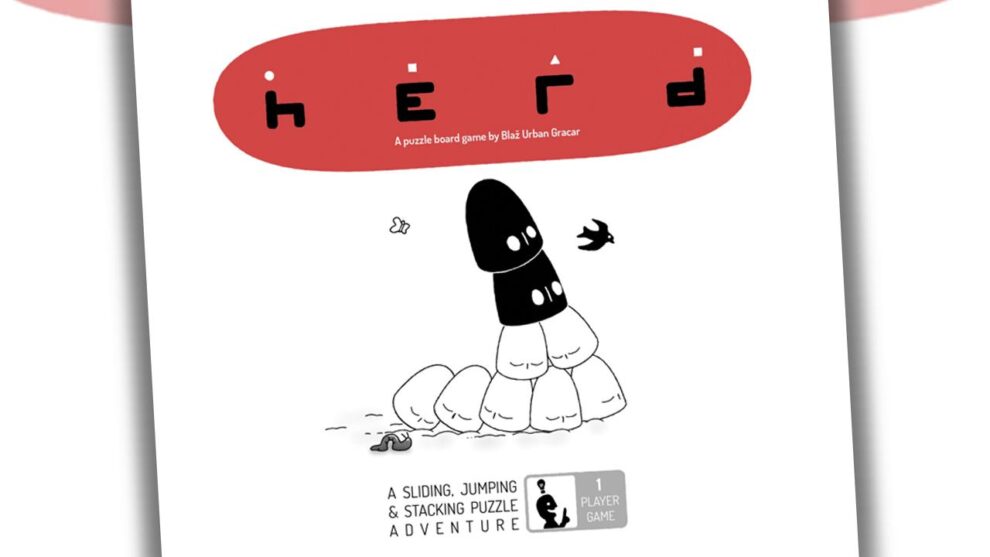
Rather than drawing lines or shading in boxes, Herd has you shifting Shepherds around a grid. These delightful, hollow black cones have wonderful neutral facial expressions and a pronounced indifference to your failures. It’s a good thing, because in trying to get them from a designated Point A to a designated Point B, you will fail often. And fail. And fail again.
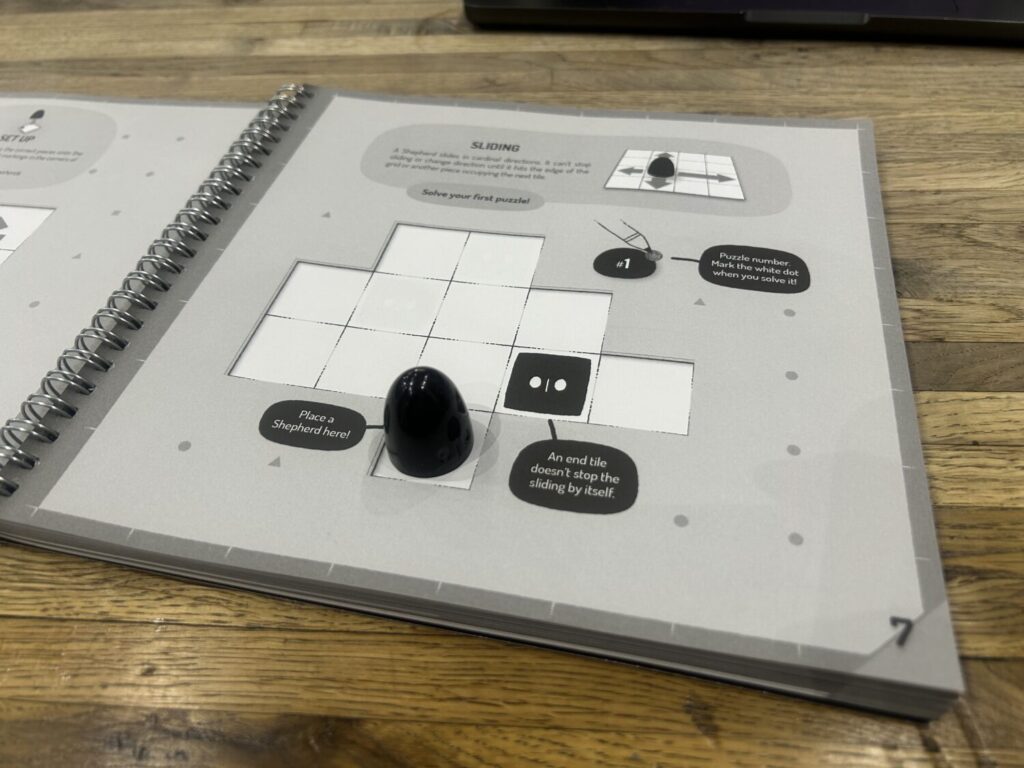
Herd is a patient exercise, though I wouldn’t necessarily call it meditative. There is a flow state to be found in moving the pieces about, but you are too often stymied, too often vaguely if pleasantly frustrated. I have had the pleasure of watching people complete some of these puzzles, to see the bursts of activity come to a sudden stop as they realize their current plan of attack isn’t going to work out. An “Ah.” A “Well.” A hand hesitating over a piece, deciding where to go next. An “I see.” A resetting of the board.
What makes Gracar’s work exceptionally exciting is that his ideas never sit idle. They’re never content to remain within their initial boundaries. They always endeavor to fully explore the promise of their premise. As you progress through Herd, in short order you learn that Shepherds can jump. Then you’re introduced to the Sheep, smaller white cones that, one might notice, fit rather perfectly inside the Shepherds. I’m sure that won’t lead to anything.
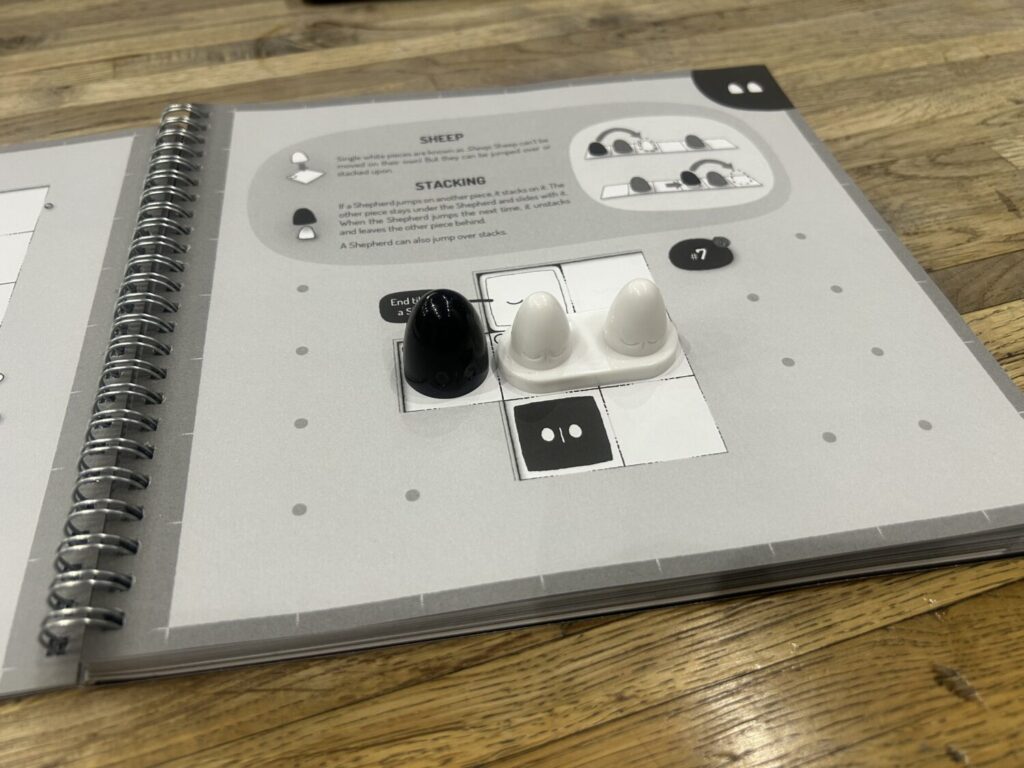
The moment you start to feel comfortable with your swing, that crafty Slovenian switches from a curveball to a forkball. Unlike his previous releases, Gracar doesn’t leave the rules of Herd to you to figure out, which makes it a more approachable collection, but the thrill of discovery is still present. This is especially true come Chapter II, when he finds a way to crack open a book-bound sliding puzzle into something much larger than the borders of its pages. “Crazy,” I muttered to myself in the midst of all the cursing.
Herd for the first time presents one of Gracar’s beautiful works as a beautiful object. May it by no means be the last. These are wonderful puzzles and we’re lucky to have them.