Over time, trends will shift in our glorious hobby. Take 2016 and the types of games hitting the table as an example. Arkham Horror was into its stride, a tense world of monsters and madness that only those who play vinyl backwards would feel cozy in. Terraforming Mars rocketed up the charts (sorry), but proved to be a challenging learn/teach, and not exactly an accessible entry to the hobby. Scythe, arguably the least conflict-heavy of these, presented a relatively grim 1920’s Europe of mechs and worker placement that was unlikely to feature in your dream holiday destinations. Excellent games? Yes. Worlds you’d want to live in? Maybe not.
Now, what are we playing today? Thick, tactile cardboard hexagons displaying sweeping rivers and lush forests cover the table. Someone pulls a screen-printed wooden token of a red panda out of a velvet bag. Instead of grim orcs or space marines, whimsical witches fly across the board on brooms as they make deliveries, or cozy pirates host high teas with fine silverware. Across from you, a player sighs with satisfaction as they tuck a beautifully illustrated card of a Cedar Waxwing underneath their player board. There is competition, sure – someone took the bear token you wanted three turns ago – but nobody is angry. We are chill.
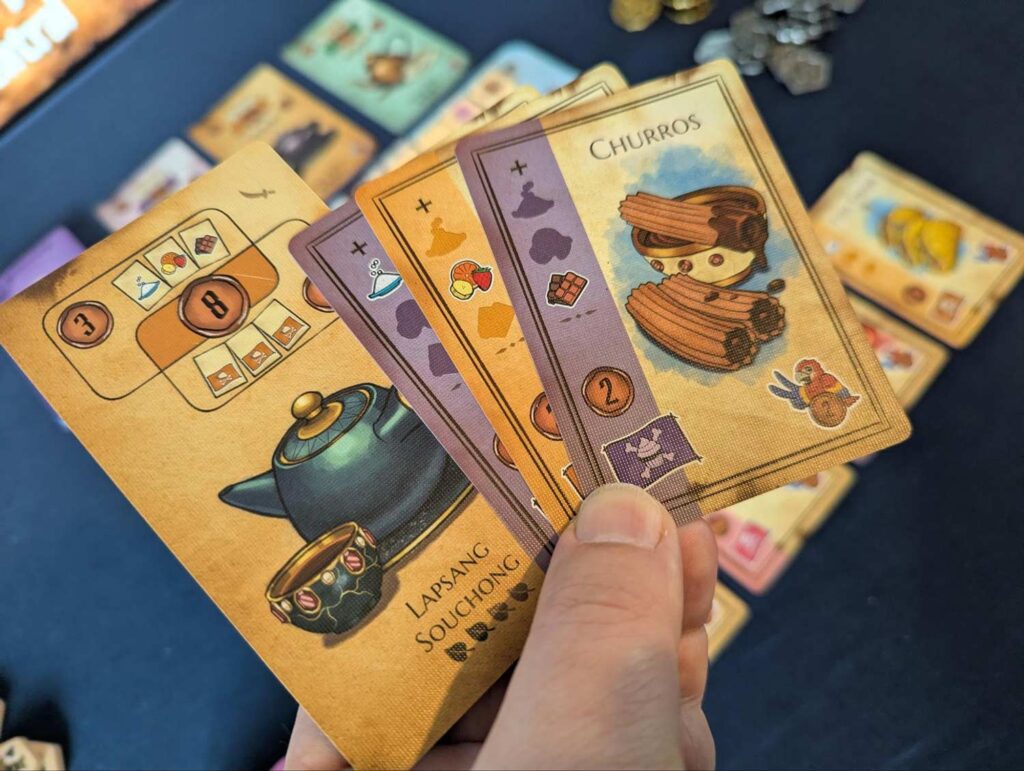
The hobby is in the midst of a cultural and mechanical vibe shift, prompted in no small part by the pandemic. A new vanguard of design has arrived: the cozy board game. You’ll be taking care of a coffee shop or running a farm or collecting sets of flora or fauna. You’re not likely to get shot or be attacked. You’re probably an animal, a witch, or a pirate. These are worlds you’ll want to live in. You’re less likely to be in conflict with others, and more likely to be building or exploring. Sounds alright, doesn’t it? Low stress, low aggression, it beats this life by a fair few degrees.
From mainstream crossovers like Wingspan to critical darlings like Cascadia and Flamecraft, the games defining our current era traded aggression for comfort and hostility for harmony. This isn’t a random shift in consumer aesthetics. It is a design evolution answering a fundamental need. To understand why these games are dominating our tables, we have to look at how they are built—and what they are protecting us from (spoiler alert: it’s ourselves).
The Comfort Blueprint
To understand the cozy board game, we first have to understand how it re-engineers competition. Late twentieth century, and tabletop design took one of two angles. On one side stood high-conflict, ‘take-that’ games rooted in direct aggression, where victory is achieved by actively dismantling what someone else built. On the other side stood ‘multiplayer solitaire’ – games where players sit at the same table but essentially solve isolated parallel puzzles, entirely unbothered by anyone else’s presence. The 00’s brought us Carcassonne, Puerto Rico, Agricola and so many more classics that pulled new players into the hobby. There’s a growing thematic diversity in this decade, and no denying their influence upon today’s board game scene. These three Eurogame examples differ significantly from the cozy games of the 2020’s in several key ways; they hold a capacity for player ruthlessness that does not exist in the modern cozy; they usually have a historical or clinical-feeling theme which has been replaced with whimsy and cuteness; and bottlenecks and storage limits are replaced with abundance and elasticity.
Today’s cozy games operate in a harmonious (you’ll get the joke in a moment) middle ground: indirect, low-friction competition. In a game like Cascadia or Harmonies (told you), you are absolutely competing. You are looking at a shared central market, calculating scoring percentages, and racing to secure the best patterns before your opponents do. If an opponent drafts the specific river tile or canopy token you need to complete a high-scoring wildlife feature, then they have actively hindered your optimal strategy.
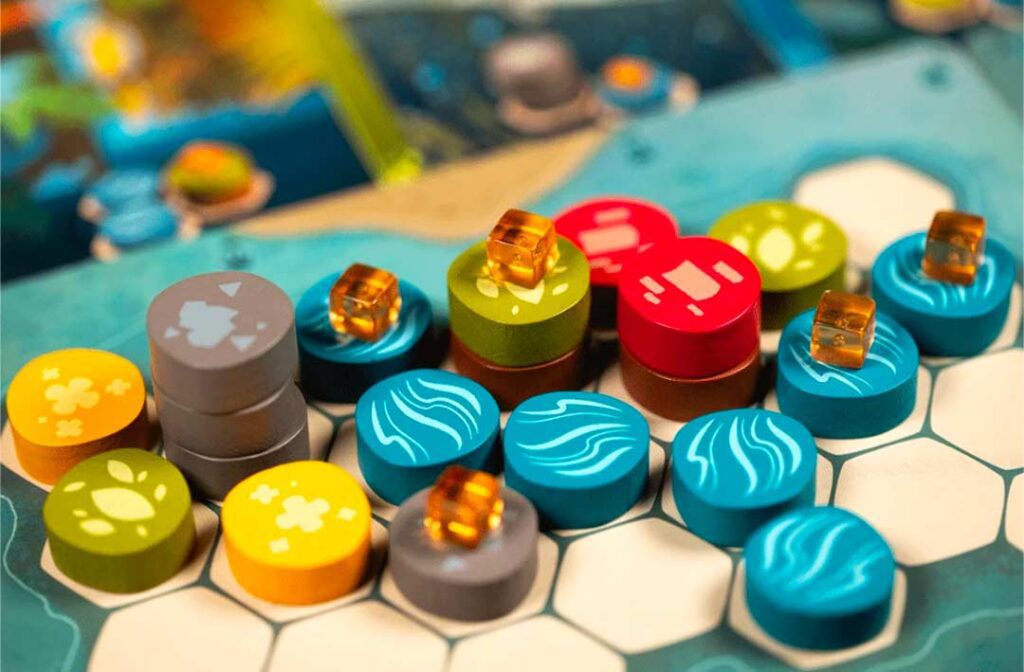
But notice the psychological difference in how that hindrance feels. They didn’t burn down your forest. They didn’t march plastic miniatures into your territory and wipe out your progress. They simply took an item from a public shop before you could get there. The design ensures that while your efficiency might be throttled, the physical fruits of your labor remain present. You still get to keep the beautiful landscape you’ve spent forty-five minutes curating. The emotional climax shifts away from the thrill of destruction and toward the pride of creation.
These games lean into the joy of the personal canvas. When you play Wingspan, the core satisfaction doesn’t come from defeating the person to your left; it comes from watching your personal aviary slowly transform from a barren grid into a self-sustaining ecosystem. Even if you come in last place, you are still left with a unique, beautiful engine that you built yourself. The game rewards you with a sense of completion regardless of the final score.
Case Studies in Cardboard Serotonin
To see this design philosophy in action, let’s take a look at the titles that have captured the collective imagination of the hobby. Each approaches the concept of comfort from a slightly different design angle.
Wingspan Takes Flight
Before Wingspan, the board gaming industry was (generally speaking) obsessed with a few safe, well-worn thematic tropes: trading economic goods in the Mediterranean, colonizing alien planets, or fighting fantastical monsters. Tokaido paved the way for this success, with its invitation to take a walk and gain worthwhile memories, but it was Elizabeth Hargrave’s masterpiece which proved that a theme rooted in quiet, real-world observation could dominate the global market. This is a game which featured in the UK’s grand dame of soap operas, Coronation Street back in 2022. The production team could have easily used Monopoly for the characters to pretend to play.
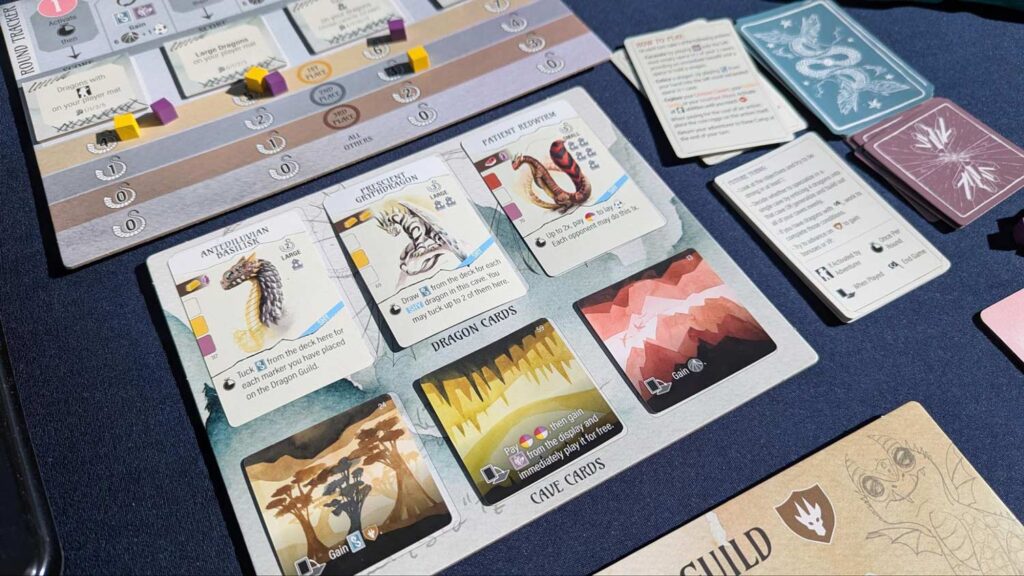
Wingspan introduced millions of players to a world of muted earth tones, gorgeous scientific illustrations, and tactile pastel eggs. It’s a game that sparked an entire franchise of gentle curation, leading to successors like Wyrmspan—which traded real-world aviculture for the gentle breeding of mythical dragons—and Finspan, which took us into the deeps and spawned (get it) a wealth of social media jokes: Spamspan anyone? It set the baseline for the modern cozy game, proving that players were keen for themes that reflected life, preservation, and quiet curation rather than warfare.
Cascadia & Harmonies: The Visual Oasis
Both titles are masterclasses in spatial puzzle optimization, but their secret weapon is their visual and tactile presence. In Cascadia, you arrange sprawling habitats of the Pacific Northwest; in Harmonies, you stack vibrant wooden cylinders to create three-dimensional landscapes for animals to inhabit. Both games use clean, natural iconography that makes the simple act of looking at the table inherently therapeutic, triggering the same mental pathways as organizing a bookshelf or tidying a garden.
Parks: Nostalgia and Sanctuary
Utilizing the iconic artwork of the Fifty-Nine Parks Print Series, Parks (and Parks 2nd edition) transforms a worker-placement loop into a literal hike through US National Parks. The actions you take aren’t ‘exploit’ or ‘conquer’—they are ‘trek,’ ‘photograph,’ and ‘visit’, and the custom wooden wildlife tokens and metal campfire markers evoke a sense of rustic nostalgia. Rather than a corporate logistical puzzle, this game feels like a weekend getaway captured in a box.
Flamecraft: The Art of Shared Prosperity
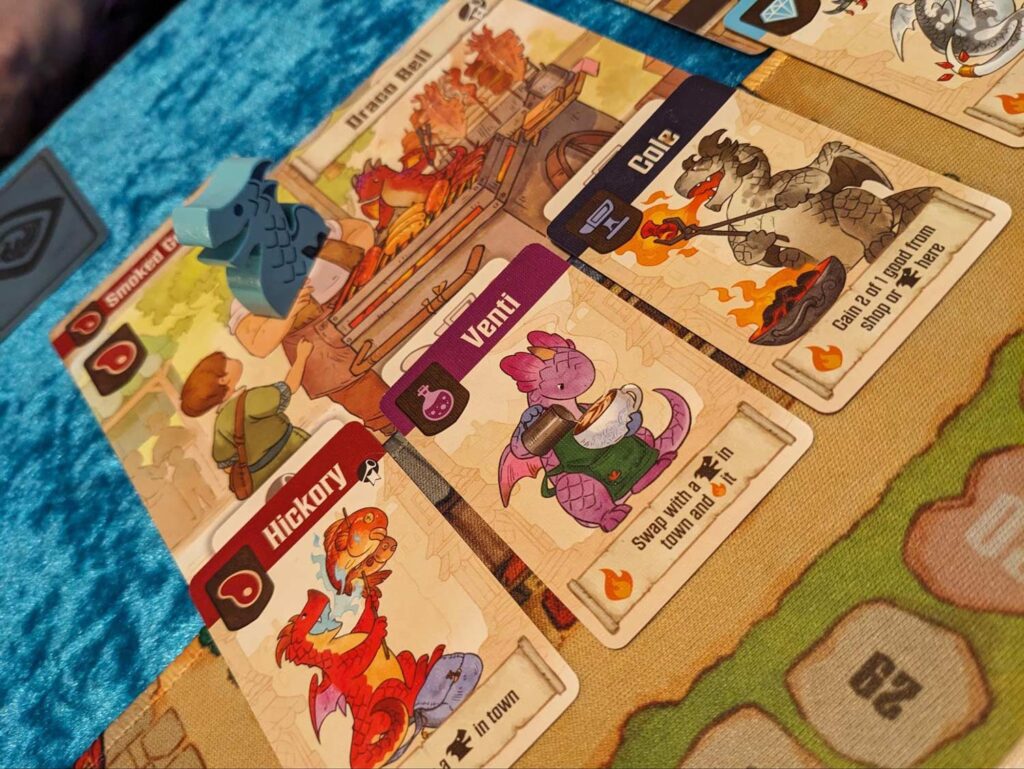
If traditional worker-placement games are built around blocking your opponents and starving them of resources, Flamecraft turns the mechanic into a festival of mutual aid. Set in a whimsical town where artisan dragons bake bread and brew coffee (please let me live there), the game functions on shared prosperity. Activating a new shop certainly furthers your own efforts, but it also helps every other player. It demonstrates how a game can feature point-scoring competition while maintaining a warm, generous, and collaborative table atmosphere.
The Cultural ‘Why’: Tabletop as an Antidote
It would be easy to dismiss this trend as a superficial preference for ‘cozy’ aesthetics. The sudden demand for cozy board games, however, is a reaction to the structural stresses of modern life and a hangover from pandemic panic. It isn’t only board games where cozy has become a big deal. Check out the fantasy section of your local bookshop. Coffee shops and cats are taking over, they’re popping up in people’s TikTok feed. And if those people happen to spot Flamecraft or Cozy Cat Cafe in a shop window, then we’ve got a new member of our broad community.
Foremost, these games serve as an antidote to digital exhaustion. We got too much time on too many screens, people. We bounce from professional Slack channels to mind-numbing social media feeds. To get away from it, we need something grounding. Pulling a screen-printed wooden token from a velvet bag in Harmonies, shuffling the thick cards of Wingspan, or snapping a cardboard hexagon into place in Cascadia provides that grounding, physical ritual. These tactile loops cannot be replicated by an app, even if the digital adaptations of some of these games are great. Wingspan is fun on a phone, but I’d much rather play and feel the real deal.
Secondly, this trend is a direct response to burnout culture. Modern life comes with constant demands. Are you in the right career, pursuing the right side hustle, the right fitness routines (that last one is so not me)? Cozy board games offer a safe harbor. You can engage in strategic optimization, but with entirely low stakes. If your ecosystem in Cascadia falls apart, nobody loses a job. Count up your modest points, admire the pretty landscape you built anyway, and pack up the box. That’s it. Great fun, no stress. This movement parallels the broader rise of slow hobbies across global culture—think pottery, embroidery, and cozy video games—where communities choose experiences that prioritize the journey over the destination.
Finally, we cannot ignore the ongoing loneliness epidemic. The way we socialize has changed, leaving many with a fragile social battery. We want to gather and connect, but we often lack the bandwidth for high-tension, argumentative social spaces. A high-conflict game can exacerbate social friction, adding stress where it isn’t wanted. A cozy board game does the exact opposite. Because the mechanics are smooth and low-aggression, the game acts as a soothing middleman, filling the quiet spaces in the room with gentle puzzle-solving energy.
The Safe Harbor on the Shelf
Historically, there is a tendency among hardcore hobbyists to look down on these lighter, gentler designs. Terms like ‘multiplayer solitaire’ or ‘gateway games’ are often used with a whiff of condescension, implying that these titles are perhaps not ‘real’ games. But the enduring success of cozy board games proves that this perspective is out of touch. These games aren’t a dumbing down of the tabletop hobby; they are a maturation of it. They prove that a tabletop experience doesn’t need to provoke anxiety, anger, or hostility to offer a deep and satisfying strategic challenge.
The rise of cozy board games invites more people to sit at the table, and breaks down barriers of age, experience, and cognitive energy. They remind us that at its absolute best, board gaming is a ritual of restoration. So the next time life feels a little too loud, the screen feels a little too bright, and your social battery tips a little too close to zero, get a game to the table. It might be a competitive battle on a far-off planet, maybe steal your opponents’ land out from under them. Or it could invite you to build a forest, feed some birds, and remember how good it feels to simply sit across from the people you care about, safe within the quiet sanctuary of a game. The rise of cozy is the rise of board gaming in general, and that’s something to celebrate.