
The year 2025 marks the 40th anniversary of Dr Reiner Knizia’s career as a board game designer – his first published game, Complica, was released in a magazine in 1985 (although he’d self-published games before then as well).
Since then, Knizia has designed and published over 800 games and expansions, many of which are critically acclaimed. Put simply, Reiner Knizia is the landscape on which all other modern designers build their houses.
To celebrate Knizia’s career and back catalogue, Meeple Mountain are taking things back to basics to consider the ABC of Reiner Knizia: one game for each of the 26 letters of the alphabet.
This time: The Letter ‘Y’.
Y – Yellow & Yangtze (2018)
Sequels get a bad rep.
Often the derision is deserved (*cough* Star Wars sequel trilogy *cough*). Most are simply inoffensive, not doing anything wrong but not distinguishing themselves either. Sometimes, however, lightning strikes twice. Yellow & Yangtze is one of those times; the ground of its arrival scorched from the impact. There’s no doubt that it was a significant early ripple in the surge of Knizia games that returned him to the heights of popularity after a decade out of the hobby spotlight.
First there was Tigris & Euphrates. Well, first there was Euphrat & Tigris, as we found out with the Letter ‘E’, but we’ll stick to referring to it by its English name for the rest of this article. Released in 1997, it charts the rise and occasionally brutal fall of civilisations. Uncompromising, devastating and magical, it’s widely regarded as Knizia’s masterpiece. It’s also the first game in his ‘tile-laying trilogy’, a term given to the three highly respected tile-laying games released in 1997 and 1998: Tigris & Euphrates, Through the Desert and Samurai.
Knizia himself has never regarded the three as a trilogy, and in fairness they’re mostly just connected by their release date, the involvement of tile laying and their high quality. There’s a nice symmetry to Yellow & Yangtze’s release, which, along with Blue Lagoon and Babylonia, forms a tile-laying trifecta from 2018 to 2019 that has been labelled as a sequel trilogy. Knizia, of course, denies that they are a trilogy and has outright stated that Blue Lagoon and Babylonia are not sequels. Yellow & Yangtze, on the other hand, was a conscious decision to create a sequel.
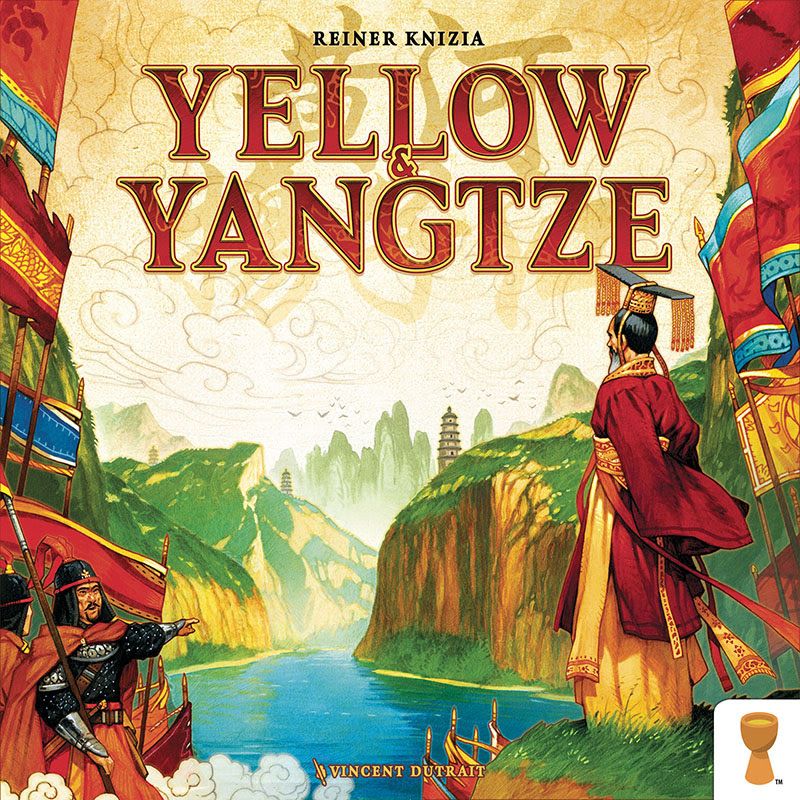
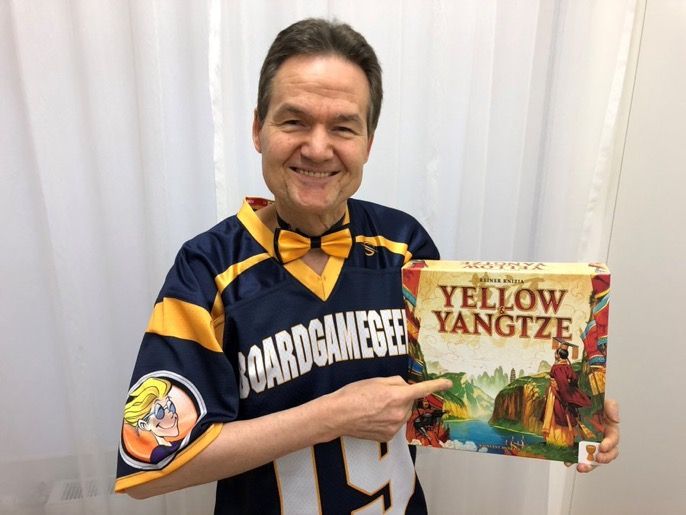
Recognising the legacy and success of Tigris & Euphrates, Knizia wanted to build the brand. I wanted to see if “I can come up with something which is in the vicinity of it [Tigris & Euphrates],” he told Nick Murray of Bitewing Games, “which has a similar approach, uses a similar system but on the other hand is completely different.” Arguably, he succeeded in doing more than simply changing the theme. “The core elements are there,” he told Brian Muller and Chris George at the World Series of Board Gaming in 2023, “but the feeling for the game is quite different and the challenges are quite different, and possibly Yellow & Yangtze is a little bit deeper.”
So what is Yellow & Yangtze? Where Tigris & Euphrates spanned two thousand years of Sumarian city-states, Yellow & Yangtze covers the period of the Warring States, two and a half centuries of wars between seven rival states. The period ended in 221 BCE with the founding of the Qin dynasty, the first time China was united under a single imperial state and emperor.
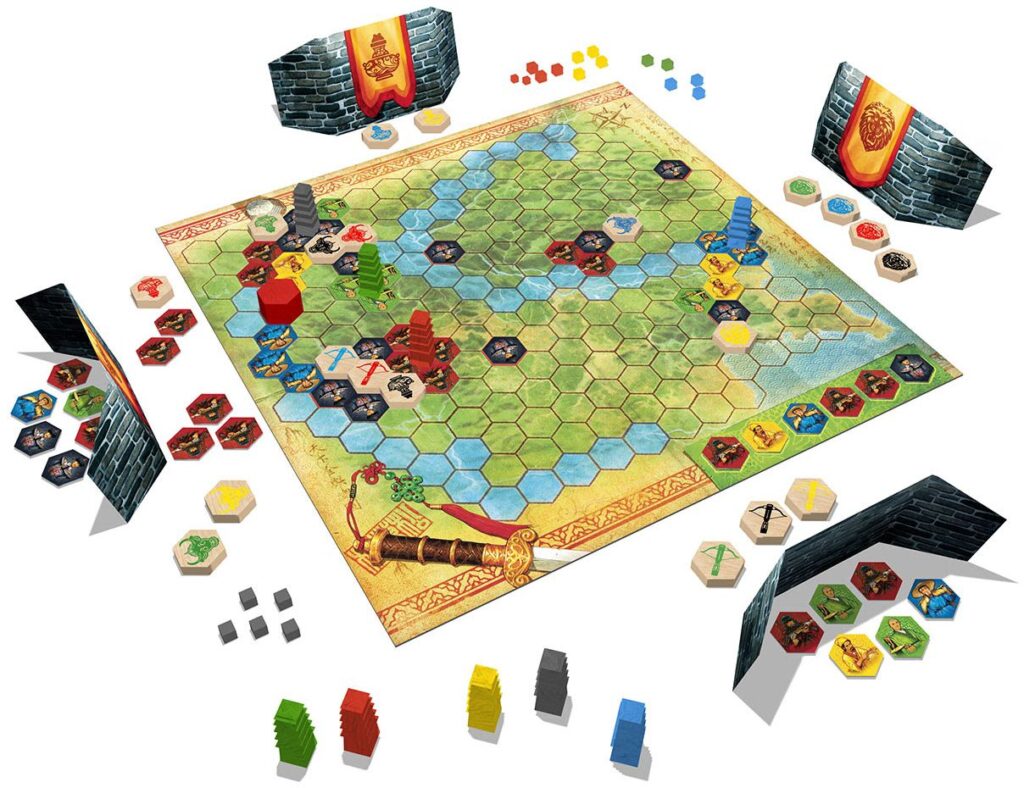
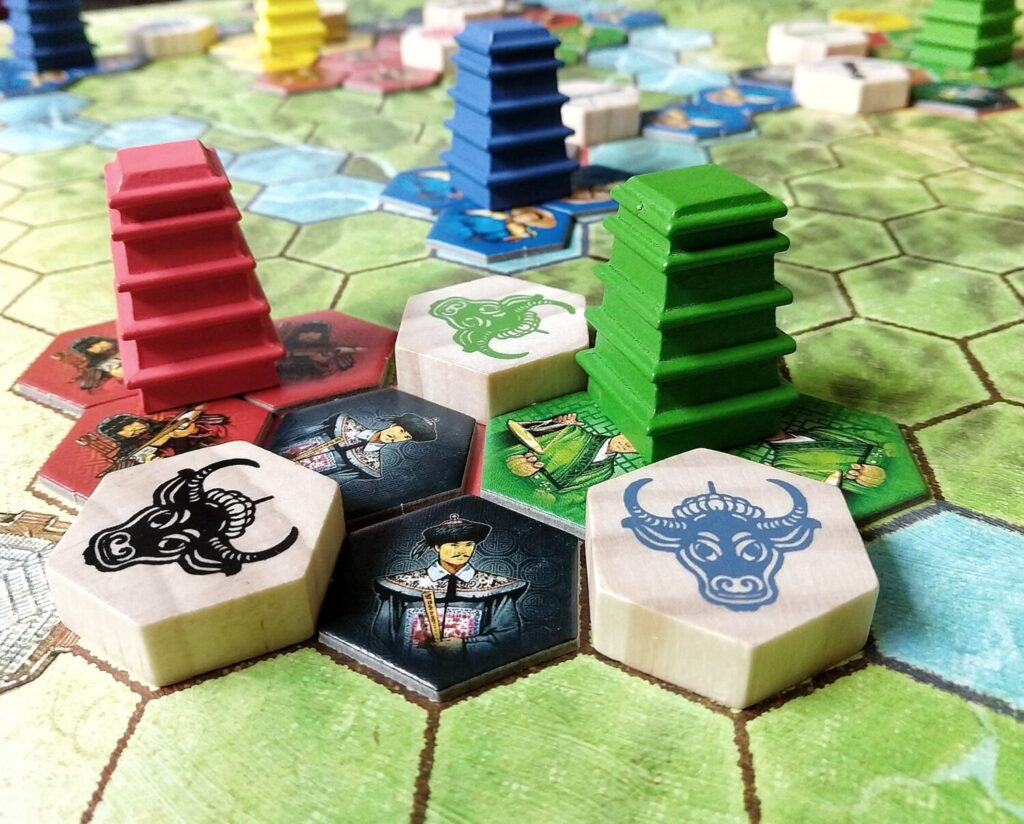
Published by Grail Games, the game takes place on a map of China with the Yangtze and Yellow rivers. The most obvious difference between Yellow & Yangtze and Tigris & Euphrates is the switch from a square grid to a hexagonal one. Many elements are similar between the games. You’re still playing tiles representing different spheres of influence: governors, soldiers, farmers, traders and artisans. You’re still using leaders to claim groups of tiles, still trying to get points in each area of influence and your final score is still the lowest of your influence scores. There are still structures you can build (here called pagodas), the control of tiles can still fluctuate and the wars can still be devastating.
Despite the similarities, however, there are differences throughout every element of the game that fundamentally change the experience. Wars work very differently and everyone can play a role, even if not directly involved. The tiles all have abilities when placed. Pagodas can be stolen. There’s even a tile market. In every way, Yellow & Yangtze is a modernisation of Tigris & Euphrates. “Yellow & Yangtze takes some of [Tigris & Euphrates’] edges off by learning the lessons of games designed in the 25 or 30 years between,” said Meeple Mountain’s Andrew Lynch in his review of HUANG, “Knizia smoothed the corners without sacrificing much in the way of depth.”
The result is a game that appears similar but feels different. “Yellow & Yangtze is easily one of the best titles I’ve played from 2018,” says Wade Monnig at There Will Be Games, “it is more than worthy to be mentioned in the same sentence as Tigris & Euphrates and that is no small feat.” Tom Vasel of The Dice Tower notes that it’s unusual in its hostile tile laying. “It keeps you on edge in a way that I haven’t experienced in many other games,” he said in his review, “It’s delicious stress!”
This oxymoronic description ‘delicious stress’ highlights the direction that Yellow & Yangtze is moving. Yes, there are wars and chaos and destruction, but over the couple of hundred years the game represents China moving from warring states to unification. “As wars are fought and dynasties deposed, civilization continues to spread far and wide until at last there’s hardly any isolated spot worth battling over,” says Dan Thurot of Space Biff, “for such an enthusiastically bitter game, it’s strangely optimistic.”
We discussed in the Letter ‘E’ how Knizia used his historical knowledge to create Tigris & Euphrates, how it reflects its subject matter and “feels sweeping, like watching the slow churn of history unfold on your tabletop” (a quote from Michael Heron’s review on Meeple Like Us). Knizia repeats the trick here. “From interviewing Knizia, I know that he tends to dive into an area of history or design,” said W. Eric Martin when Yellow & Yangtze was first announced. When publisher David Harding of Grail Games received the prototype it was accompanied by historical notes from the research Knizia had been doing.
Yellow & Yangtze moves at a faster pace, is more flexible and incremental. “Both designs are exceptional thematic works. They condense many many years of historical upheaval into a gripping hour,” says Charlie Theel of Player Elimination, “Tigris & Euphrates represents many centuries of development and strife. It’s a wide slice of history as civilizations spring from the bones of their forefathers… Yellow & Yangtze, however, presents a more narrow view of geo-political instability, it’s capturing a thematic tone that’s altogether different.” In spite of that instability there is progress, two steps forward despite one step back.
This difference in gameplay and theme makes for a more approachable design than its predecessor. “Tigris & Euphrates is certainly the more confrontational and dramatic of the two, where conflict is more punishing, rewarding, and impactful,” says Murray, who placed both games at the top of his Top 100 Games and Top Tile Laying Games lists. “Yellow & Yangtze is the more tactical, flexible, incremental, opportunistic, and forgiving design.”
The success of Yellow & Yangtze led to the release of an app published by Dire Wolf Digital in 2019. It’s very well regarded in the realm of board game apps, and for the solo player includes a campaign that allows you to play a story of nine scenarios. “The app is stellar throughout,” says Chris Mack at Pixelated Cardboard. “One of the most complete, polished digital board games out there, it’s a must-have for fans of the game or those interested in trying it.”
The success also led to the announcement of an expansion in 2000 (The Royal Palace) alongside Yellow & Yangtze: The Card Game, a reimplementation of 2006’s Great Wall of China. The expansion includes three modules, introducing 18 starting capitals, bandits that need to be removed from the board and the titular royal palace, which requires more effort to build but provides the player controlling it with the ability to draw extra tiles.
Sadly, neither the expansion nor the card game were ever created thanks to a disagreement between Knizia and Grail Games in 2021 stemming from either poor sales (according to the publisher) or a breach of contract (according to Knizia). It was a sad end to a very fruitful collaboration between the publisher and designer that had resulted in ten new or updated Knizia games, starting with the updated edition of Circus Flohcati in 2016 and ending with Whale Riders and Whale Riders: The Card Game in 2021.
Whilst that might have spelled the end for Yellow & Yangtze, good designs never die, and in 2023 publisher PHALANX crowdfunded a new edition of the game called HUANG. It’s a name that references the Mandarin for both the Yellow River (Huánghé) and the word ‘emperor’ (Huángdì). Whilst the production and graphic design are different, the gameplay is identical. The Grail Games expansion announced back in 2020 was also split, with the Rogue Bandits and Eighteen Kingdoms additions included with the base game as optional variants, and the royal palace released as an expansion titled, unsurprisingly, The Royal Palace.
Whilst the production history of Yellow & Yangtze isn’t entirely positive, the game and design are undeniably a success, comfortably standing outside the long shadow of its famous forebear. It’s something that Knizia himself is happy about. “I’m trying to present excitement in different ways,” he told Murray. “Some people say the old one is their favourite and some people say the new one is their favourite, so that’s the best answer you can get.”
Knizia’s Yield of Yesteryear
You know, we’ve been yabbering about Yellow & Yangtze, yet there are other ‘Y’ games yonder:
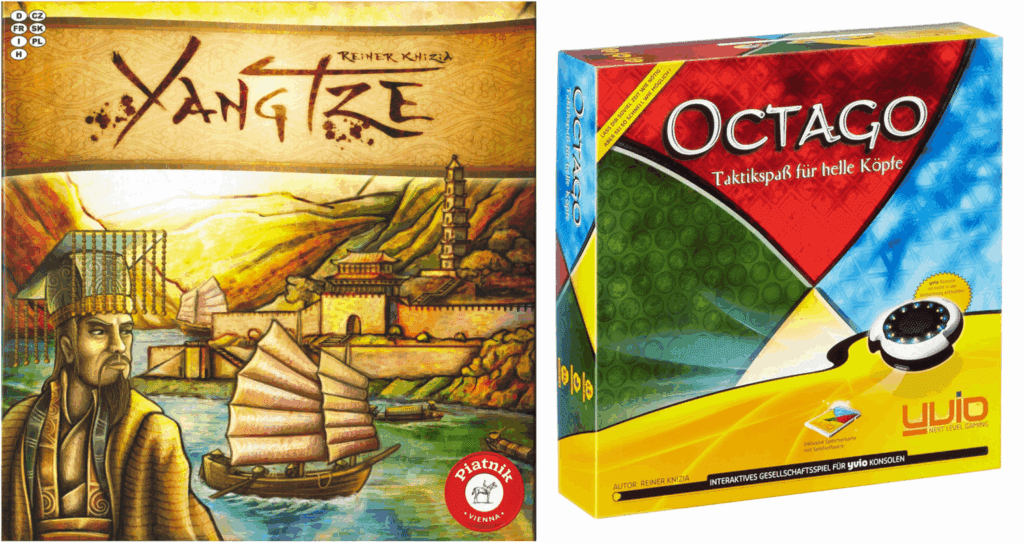
Yangtze – An auction and set collection game released only a couple of years before the geographically similar but thematically very different Yellow & Yangtze. Players of Yangtze are trying to collect bundles of goods by purchasing them as they pass down the Yangtze River. Prices decrease as the goods move further downstream, making much of the game a slow motion Dutch auction, punctuated by occasional ascending-bid auctions when ‘Branch’ tokens are drawn instead of goods. Whilst neither his strongest auction game nor set collection game, and coming in far too big a box, Yangtze is plenty enjoyable if your expectations aren’t too high.
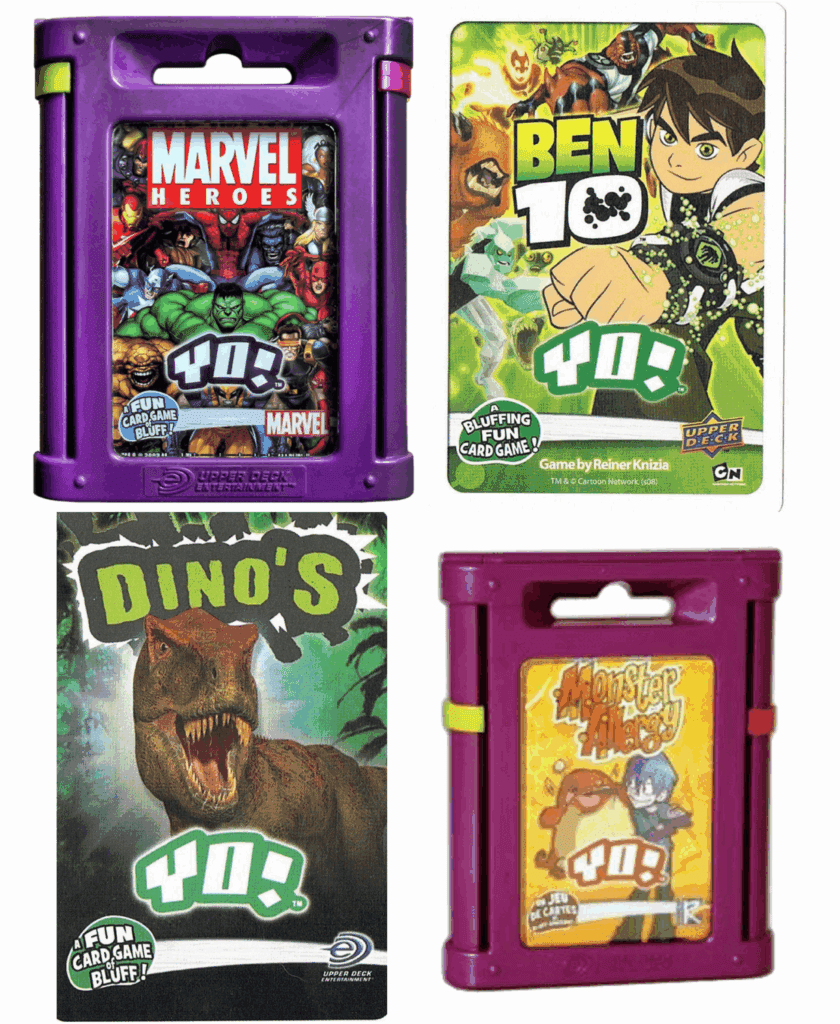
Yo! series – There’s nothing especially remarkable about this game series from 2007 and 2008 but there is something about it that is unique in Knizia’s oeuvre. It’s essentially a card game version of Perudo, with players trying to guess whether the player next to them is telling the truth about the number and colour of the cards they’ve just handed them. The game comes in a plastic hang box reminiscent of Top Trumps, and there are seven different themes to choose from: Marvel Heroes, Ben 10, Baby Animals, Horses, Monster Jam, Dinos and Monster Allergy. They’re almost identical apart from their themes and facts, the only difference being the number composition in Marvel Heroes to allow the number 4 to represent the Fantastic Four.
Yvio: Octago – We’ve talked before about Knizia’s interest in technology and in particular the hybrid designs he’s created (see the Letter ‘W’). Yvio: Octago is another example of Knizia#s technophilia, Octago being a game played with the Yvio console. Released in 2008, the console was claimed to be the ‘best of both worlds’ of electronic and digital gaming. Each game would provide a memory card (on which the game programme was stored), an overlay for the console itself and a board onto which the console is placed. By using ‘Yvies’ (player discs) your moves on the board were recognised by the console, which acted like a game master for the various games. Octago was Knizia’s only game for the console and is a memory-based movement game for 1 to 4 players. Sadly, the best of both worlds meant having to buy both software and physical components, and to the best of our knowledge there were only 9 games published for the console, with releases ending in 2009.
–
Yes, we have finally yomped through ‘Y’. Did our yacking make you yearn for your youth? Or did our yabbering yuck your yum, yank your yarn and make you yak? What ‘Y’ would you yoke yourself to? Tell us yourself in the comments below and explore the rest of the Reiner Knizia Alphabet here!