
Like many people, my first game of Warhammer 40,000 (40K) was played at a local game store. It wasn’t particularly organized. Armies weren’t optimized, rules were misunderstood or misremembered, and “take-backs” were given freely and without hesitation. The atmosphere was relaxed, social, and forgiving.
Games stretched on for hours and were rarely uninterrupted. Curious onlookers stopped by to watch or chat, breaks were taken for food and drinks, and plenty of conversation had nothing to do with the game itself. Most games didn’t even finish, and no one cared. Those hours were filled with laughter, questionable decisions, and learning. That casual environment is where I fell in love with Warhammer and the hobby as a whole.
Among my group of friends, armies were built around what people enjoyed playing or painting, not what was considered optimal. Some of us played to win, but nothing was on the line. The outcome mattered far less than the experience and the stories the games created.
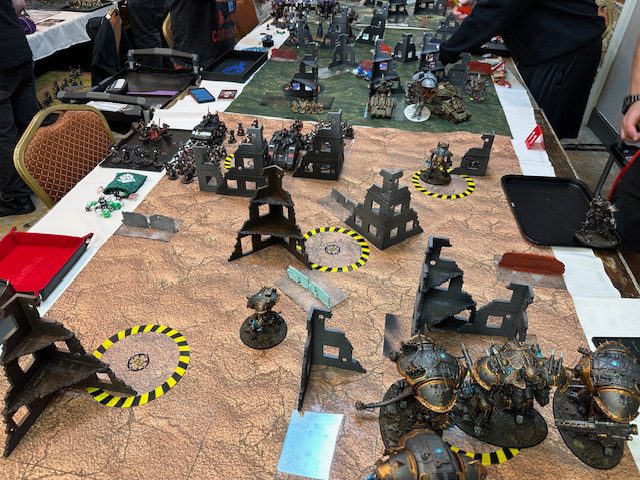
Fast forward several years, and I found myself stepping into a very different environment – competitive Warhammer 40,000. Instead of a local store table, I was now under bright convention lights, surrounded by rows of identical tables laid out with carefully planned, symmetrical terrain. Don’t get me wrong, this environment is still incredibly enjoyable. The people are welcoming and the stories are just as memorable. The difference is that players are here to win, and they approach the game with a higher level of focus, structure, and intent. While this may sound intimidating, let me share my perspective on why taking the plunge was worth it to me.
Stepping into Singles Competitive Tournaments
So, what exactly is competitive Warhammer 40,000?
Competitive singles play is generally organized into two main formats: Rogue Trader Tournaments (RTTs) and Grand Tournaments (GTs). The primary difference between them is scale, both in the number of players attending and the number of games played.
RTTs are typically held at local game stores or gaming clubs. They consist of three rounds played in a single day and can range in size from 8 to 32 players, depending on size of the gaming space and local community. GTs are larger and less frequent events, often hosted by regional gaming communities or as part of large gaming conventions. These events run five to seven rounds over two to three days and can attract 100 or more players.
The name Rogue Trader Tournament comes from Warhammer 40,000: Rogue Trader, the original first edition of the game. It’s a nod to the hobby’s competitive roots, smaller-scale events organized by local communities, echoing the early days of skirmishes in a faraway galaxy.
Any game of Warhammer 40,000 is a commitment. A standard 2,000-point game often lasts three or more hours whether played casually or competitively. Like many players, my first step into competitive play was at a local RTT. Playing three full five-turn games in a single day was exhausting at first, especially because each round was timed and had to be completed within three hours, including setup and deployment.
RTTs are an incredible learning tool. They force you to engage deeply with mission structure, secondary selection, terrain usage, and rules interactions. By the end of that first event, my record wasn’t impressive. I finished the day 0–3, but my understanding of the game had improved dramatically. I had fun, met helpful and supportive players, and realized that with limited time to play, RTTs were the best way for me to enjoy Warhammer regularly.
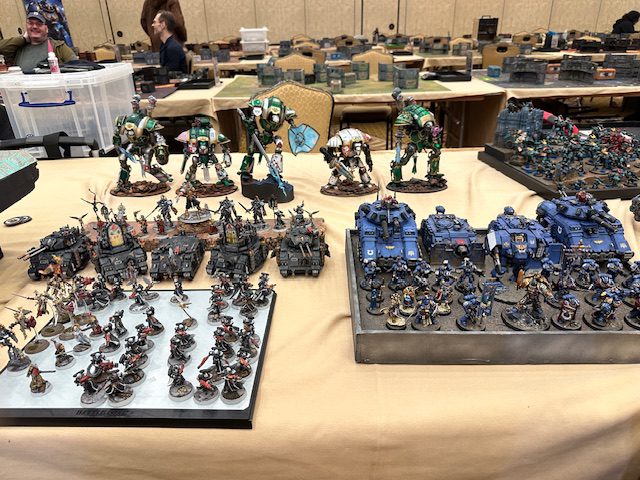
What Stood Out After My First RTT
There were several things I hadn’t expected going into my first competitive event.
Game Speed
Completing pre-game discussions, setup, deployment, and a full five-turn game in three hours feels rushed if you’ve never played against a clock before. Speed improves with experience, but the adjustment can be challenging at first.
Playing by Intent
Intent-based play is a collaborative approach where players clearly communicate what they are trying to do, such as: “This unit is here to be in cover and on the objective.” Both players acknowledge the intent, helping avoid misunderstandings later in the game.
Helpfulness of the Community
Despite wanting to win, every opponent I played wanted to win fairly. Competitive players are often stereotyped as ruthless or overly focused on rules enforcement, but in my experience, organizers and players have worked hard to make events welcoming and inclusive. I’ve made many friends through competitive play.
Avoiding ‘Gotcha’ Moments
“Gotcha” moments happen when a player suffers a negative outcome because of a rule they didn’t know existed, rather than a tactical mistake. To avoid these feel-bad situations, players often discuss key army rules before the game and remind each other when certain actions might trigger them.
Scoring, Not Destruction Wins Games
I initially believed that winning meant destroying my opponent’s army. Warhammer is a game of points. You can still win while being tabled (fully destroyed) if you outscore your opponent through mission play.
Fatigue Is Real
Playing three games over ten or more hours, mostly standing, takes a toll. Mental fatigue leads to missed rules, poor decisions, and time mismanagement. Preparation and the right tools become increasingly important as exhaustion sets in. Tip: Start with a familiar army and less complicated army list.
A First-Timers Checklist for RTTs and GTs
This is the checklist I wish I’d had before attending my first competitive event.
Before the Event
Sign Up
- Download the Best Coast Pairings (BCP) app
- Find and register for tournaments through the app
Learn Your Army
- Know your datasheets, key stratagems, and common interactions
- Focus on core mechanics and statistics
- Watch battle reports or strategy videos to reinforce learning
Prepare Your Tools
- Bring a printed or digital army list and game tracker
- Use apps like the Warhammer 40K App or New Recruit
- Highlight key rules and reminders
- Use a scoring app such as Tabletop Battles
Practice Deployment
- Deployment can decide games before the first dice roll
- Identify your key units and optimal starting positions
Study the Missions
- Missions are posted in advance, learn them
- Know which units score objectives and which units engage the enemy
Pack for a Long Day
- Dice (bring extras)
- Measuring tools
- Objective markers (if not supplied)
- Tokens for marking effects
- A way of transporting your army from table to table
- Phone chargers
- Water and snacks (seriously)
- Deodorant
During the Event
Communicate Clearly
- Declare intent: “This unit is in shooting range,” “These models can’t be seen.”
Track Everything Visibly
- Command Points, missions, and scoring
- Ensure your opponent sees scoring updates at the end of each turn
Manage Your Time
- Plan your turn, then execute
- Running out of time can affect the game outcome
Ask Questions
- Clarify your opponent’s rules and abilities
- Call a judge if needed. They are there to help, not punish
After Each Game
Maximize Learning
- Ask your opponent for feedback
- Write down one lesson learned
- Hydrate and reset before the next round
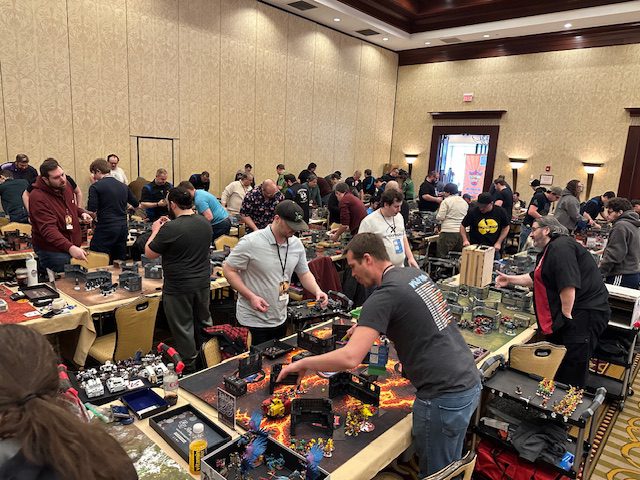
Building the Courage to Join a Grand Tournament
Before attempting a GT, I played several RTTs. I improved my game speed, won my first competitive game (it took three tournaments), and became confident enough that I wasn’t checking my rules app every two minutes. As my experience grew, friends encouraged me to take the next step.
Signing up for my first Grand Tournament was intimidating. It felt like a much bigger commitment, with more players, more games, and often travel and overnight stays. At most GTs in my area, Warhammer 40,000 is just one of many systems being played at a large gaming convention. The scale adds layers you don’t fully appreciate until you’re there.
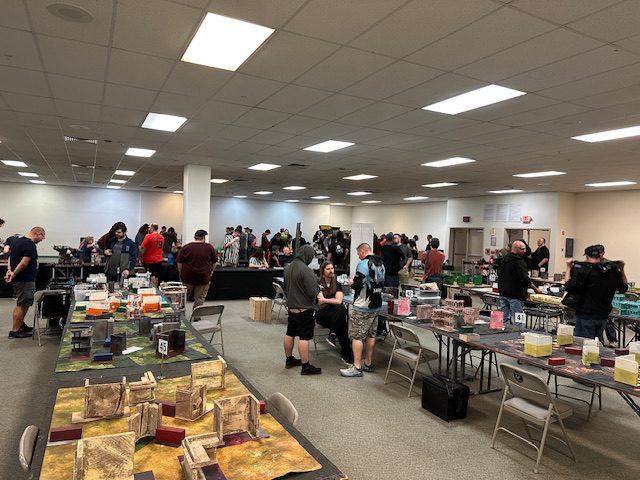
Walking into a Grand Tournament
My first GT was Everwinter in Boston, MA. Walking into the 40K hall for the first time was intimidating. Forty identical tables filled a large room, each numbered and prepared with purpose. A dedicated live-stream table stood ready for top-bracket matches, where players would compete in front of hundreds of online viewers.
The atmosphere was friendly but focused. Compliments about well-painted armies were common, but questions about experience and army choices hinted at strategic thinking beneath the surface.
In my first game, I felt the skill gap immediately. Everything was measured precisely. The focus was on scoring points efficiently. Intent mattered. Timing mattered. But none of it felt hostile. My opponents were calm, welcoming, and often helpful, even pointing out rules interactions I might have missed.
I finished day one 0–3 but felt myself improving with every round. Day two felt lighter. Once the brackets split, the pressure eased. Players in the lower bracket were still competing seriously, but also playing for pride, enjoyment, and a wide range of awards, from best general and sportsmanship to last place and painting accolades.
I finished the event 2–4 overall and was thrilled. I achieved my goals: fun games, new opponents, and real improvement as a player.
Why Competitive Play Works for Me
Competitive play fits where I am in life. With limited free time, monthly RTTs give me the opportunity to play three meaningful games of 40K in a single day. Once or twice a year, GTs offer something special: a weekend away with friends, testing myself against highly skilled players, and fully immersing myself in the hobby.
This year at CaptainCon in Warwick, RI, I along with 70 other players competed for a Golden Ticket, an invitation to the Warhammer World Championships, the pinnacle of competitive Warhammer. The convention was lively, and filled with people passionate about a wide variety of games and hobbies. The 40K competition was once again buzzing with excitement, players eager to see other armies and converse about the new meta army lists. While I didn’t win, I reconnected with friends, met new ones, and spent a weekend doing something I genuinely love.
Once you’ve played under those lights, it becomes easier to understand the appeal of competitive Warhammer, and to let go of old stereotypes by meeting people who care about the game just as much as you do.
And for anyone wondering whether they should give it a try: you don’t need to be an expert. You just need curiosity, preparation, a good attitude, and a willingness to learn.
Bibliography
Player Resources
- Best Coast Pairings – https://www.bestcoastpairings.com/play/events
- Warhammer 40K app – https://www.warhammer-community.com/en-gb/articles/hcTX6nh9/download-the-all-new-warhammer-40000-app-for-free/
- New Recruit – https://www.newrecruit.eu/
- Tabletop Battles – Apps on Google Play
- Tabletop Battles App – App Store
Gaming Conventions
- Everwinter – https://wickeddicey.com/events/everwinter/
- CaptainCon – https://www.captaincon.com/
- Warhammer World Championship – World Championships of Warhammer 2025 LIVE: Latest updates from Atlanta