
Disclosure: Meeple Mountain received a free copy of this product in exchange for an honest, unbiased review. This review is not intended to be an endorsement.
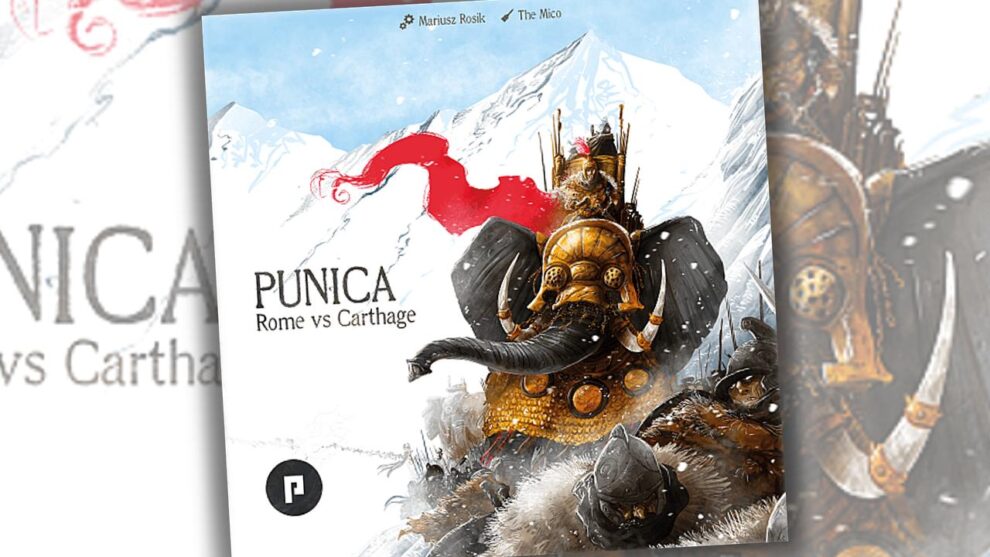
The cover for Punica: Rome vs Carthage is one of the best I’ve ever seen. You can feel the sting of the wind, hear the steady tread of the elephant and the grumbling of soldiers echo around the mountain pass. You might find yourself reaching to hold your cloak tight to your body. This is how you set a stage and suggest a story.
Punica concerns the Punic Wars, the eighty-year stretch when nobody not nobody could stop those crazy kids Rome and Carthage from fighting. One player suits up as Hannibal astride his armored elephant, while the other plays as Rome, I guess. Look. Rome doesn’t have an elephant. Further specifics feel irrelevant. The goal of the game is either to crush your enemies, see them driven before you, and to claim control of Areas of Influence marked on the board. Three anywhere or the Capital in and of itself will get the job done.
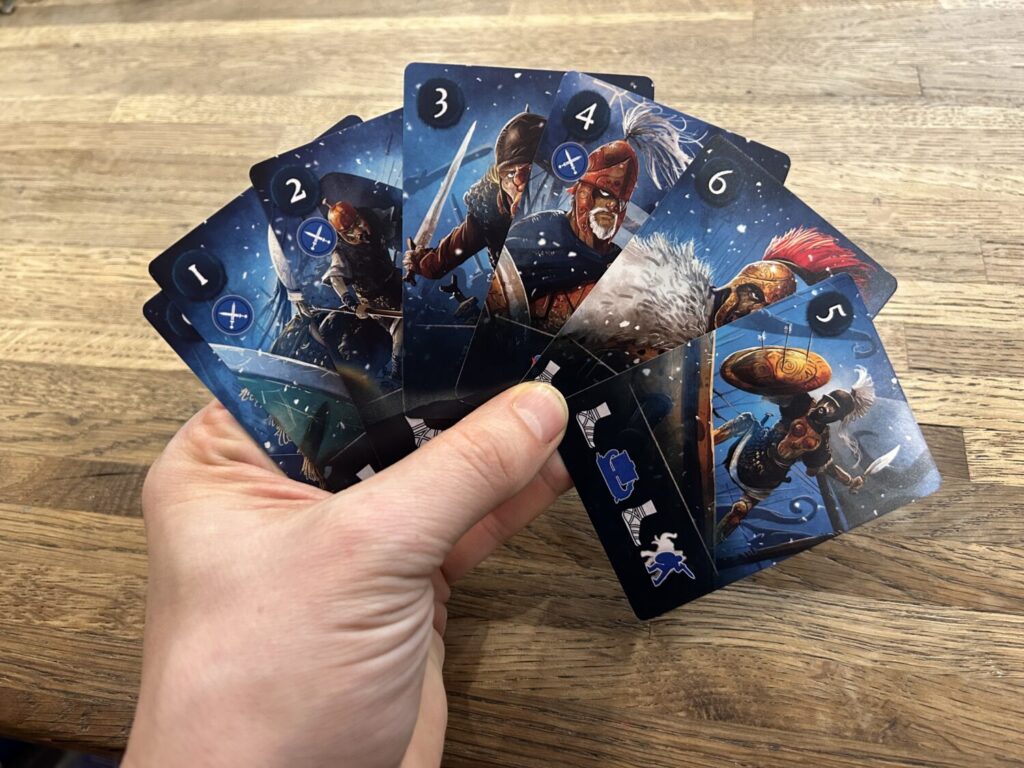
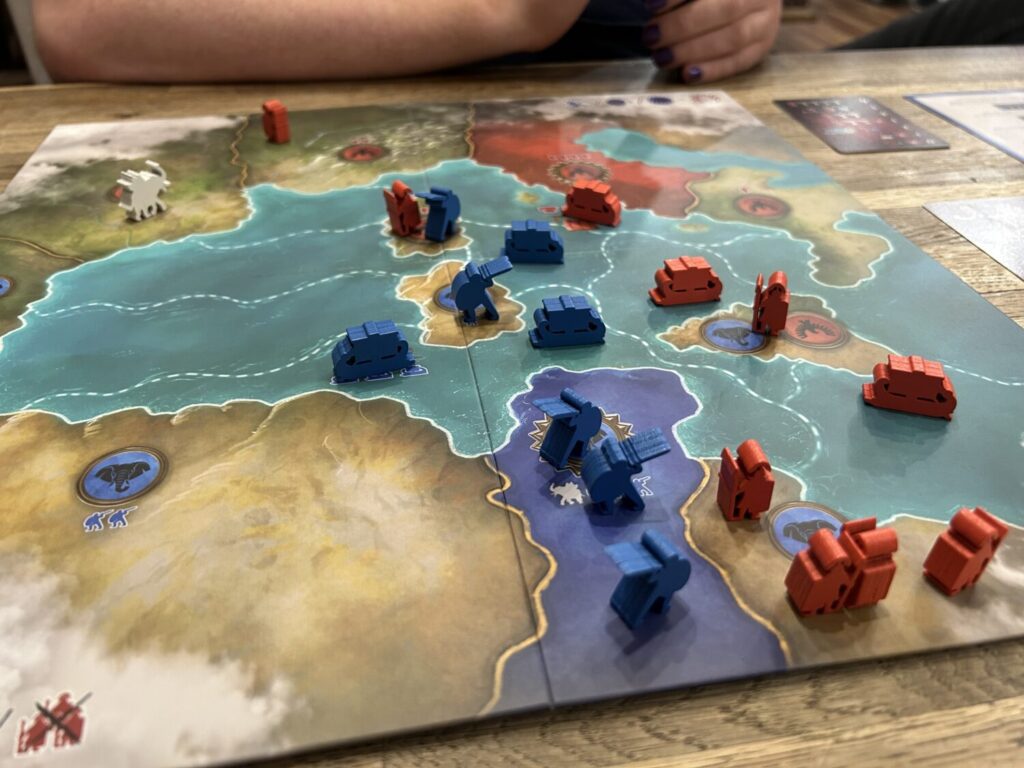 On your turn, you take an action. You either move units you have on the board or play an action card from your hand. The actions are movement on steroids, so the temptation to use them is constant, but timing here is important. Each action card in your hand doubles as a show of military might. During combat, which happens any time you and your opponent occupy the same location, the units you have are added together with the value of a card you choose from your hand.
Here we have a classic board gaming conundrum: using that 6 to perform three or four movements in a single turn is huge, but it can leave you vulnerable. Time it just wrong and your opponent can run you through. That Capital is looking prime for sacking, if you ask this guy. With time, Punica reveals itself to be a hand management game first and foremost, and a pretty good one at that.
 There’s even asymmetry for the freaks in the back, though I admit that I have a hard time with games in which the asymmetry is as slight as this. With something like Root, where gameplay is so asymmetrical that I might as well be playing Risk while you play Boggle, the differences in mechanics suggest the changes in approach. My small army of Otters inherently tells me, “Hey, maybe don’t start out swinging sticks left and right,” whereas your swarm of Rats makes it clear that you aren’t here to engage in mercantilism.
In a game like Punica: Rome vs Carthage, the differences between the factions are comparatively slight. That makes the game much easier to learn, but, for a dumdum like me, that also makes the game much more difficult to grok. I don’t know how to shift gears when playing as one side or the other. The best I can manage is an unerring belief that the side with the elephant is going to win. That hasn’t held true yet, but I choose to believe.