
One of the best discoveries I made last year in my town was a silent book club. It seems like an oxymoron, but for us introverts it’s an easy, low stakes way to meet new people without being overwhelmed.
The premise is this: everyone brings a book to read to the event. (Unlike a regular book club, this is a book of your choosing. Not everyone is reading the same book.) Most events follow a similar structure: Thirty minutes of chit-chat at the beginning, an hour or so of silent reading, and then some more chit-chat at the end. The chit-chat can be structured so that each person talks a little about the book they’ve chosen, or it can just be a discussion of “whatever.” Some people don’t even stay for the after-chat, preferring to just read and go. Events are held at restaurants or bars. Others are held in libraries, bookstores, or private homes.
The biggest positive I hear over and over about the silent book club is that, in a busy world, the meetings provide a guaranteed chance to slow down and get some reading done. Meeting new people in a real-life, low-stress environment is a close second.
After loving my local silent book club, a light bulb went off in my head. Why wouldn’t the same thing work for board games? There are so many solo board games these days, surely it would be easy to start such a club.
Why Start a Silent Board Gaming Club?
I saw a silent board game club as overcoming the two biggest obstacles people cite about playing boardgames: No time, and no available opponents. Solo gaming is already an antidote to the second problem, but many of us still have the time problem because life gets in the way. However, when you make something into an appointment, it tends to be taken more seriously. You go to the thing because you’ve scheduled it on your calendar (and maybe you’ve told other people to expect you). You’re more likely to make arrangements and actually go, rather than letting life just ooze into and over your gaming time.
There’s a third obstacle to gaming, as well, that I felt a silent game club could overcome. It’s often difficult for introverts to simply show up at a game store or a meetup, especially if they don’t know anyone. It’s hard to make yourself vulnerable and risk just showing up. What if the people aren’t nice? What if they’re too cliquish? What if you don’t like the games they’re playing? The what-ifs can be so crippling that you never make it out the door.
A silent outing changes that. You’re bringing a game of your choice. You aren’t forced to interact with anyone. You can participate in the chatter or simply observe. If you see someone you think you’ll get along with, it’s much easier to speak to them one on one rather than trying to engage over a crowded table.
So I drew up a plan to start a silent board gaming club. I “stole” the same format from the silent book club. We would open with some small talk (this could also be done while people were setting up their games), everyone would play their game, and then we’d end with a freeform discussion about what people liked and disliked about their chosen games. Or just talk about “whatever.”
Easy peasy, right? Well, sort of.
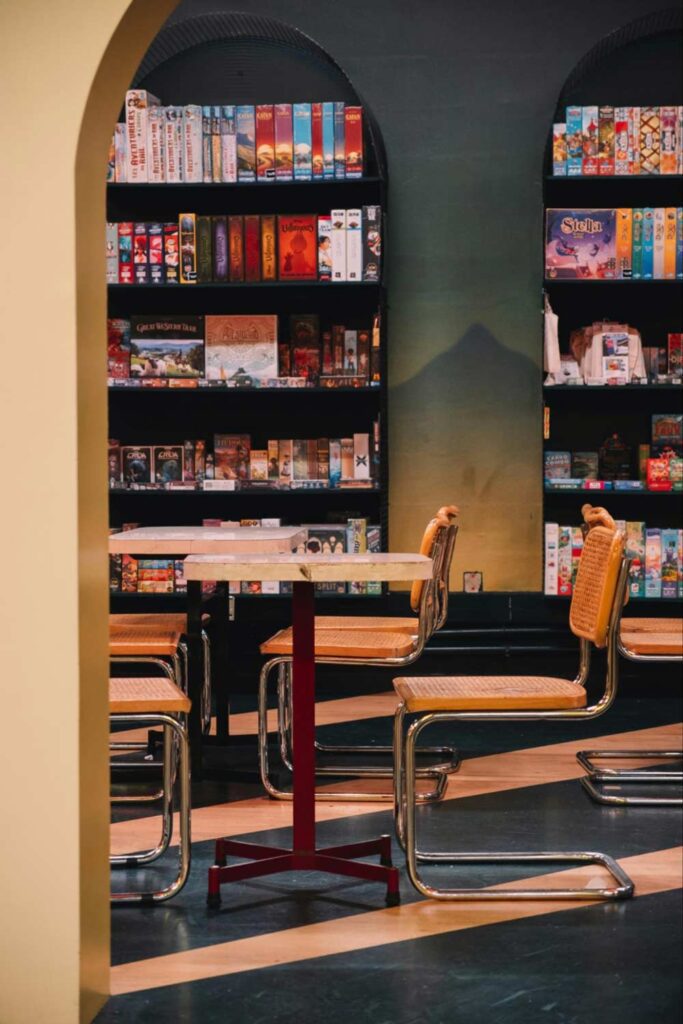
There are a couple of hurdles unique to board games that books just don’t have.
The first is the time commitment. When you’re reading, it’s not a big deal to stop in the middle of a chapter when the event ends, or to just stop reading when you get to a break and you know the event is ending. Board games are harder to just quit and go.
I quickly realized that I needed to suggest a time limit for the games that people were bringing, or at least make sure people were okay with packing up incomplete games. If the event is two hours, a game shouldn’t be more than an hour and a half, tops, including setup and teardown. That leaves time to participate in some of the discussion and still finish your game. The host of an event (whether it’s at a restaurant, library, or someone’s home) isn’t going to want you lingering over your three-hour game when the venue is closing, or the host has to go to work tomorrow.
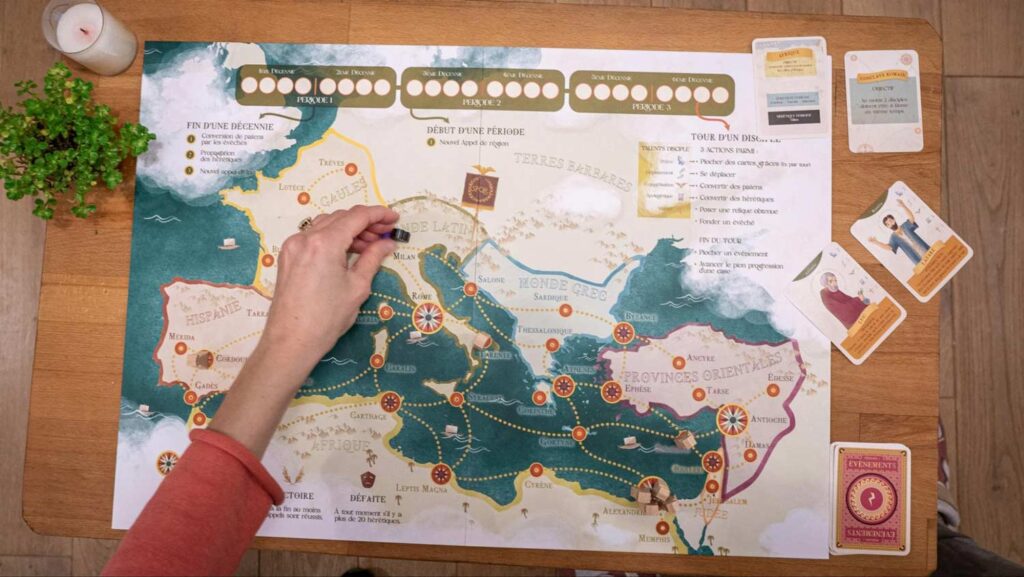
The second consideration is space. Books are easy to accommodate. A couple of people can occupy a sofa, or four people can easily sit at a small table. Heck, some people can sit on the floor propped up against the bookcases. Games change that. Most of them take up a fair amount of space. Some of them take up a lot of space. I had to let people know that we had X-number of tables available, and their dimensions, to steer people toward smaller games.
Ideally, the smaller the game a person brings, the better. Two people playing small games can share a table, whereas a big game means only a single person can occupy a table. Smaller games equal more participants. As the club has gained a little popularity, I have had to resort to a strict sign-up process because there’s just no room to accommodate spontaneous arrivals.
One thing has happened that was unexpected. More than once, some of the participants have abandoned their individual games to play together. Someone sees a cool game on another table and asks to join. No one has said no, yet! It’s a very organic thing that doesn’t feel forced at all. I suspect that even if someone did say no, there would be little offense involved because the expectation is to play solo. It’s not like being turned away from a multiplayer game at a meetup.
Those hiccups and oddities aside, however, I’ve had some success getting my little silent board game club up and running. So far, I’ve limited it to friends and a couple of neighbors. We’ve had a few outings around town (we’ve tried the library and a local restaurant) and people seem excited. I haven’t advertised it widely, because I’m still figuring things out. I am very encouraged, though that this seems to be resonating with people.
As with the book club, the one thing I hear over and over again is how happy people are to get out and play. Whether it’s the fact that it’s a dedicated event, or that it’s low stress, people are enjoying it. I don’t know if I’m the first to think of this (likely not, because I’m just not that innovative), but it seems like an easy way to bring gamers together in an environment that’s less threatening than the usual meetup. If you want a different way to play games with others, or to try a different way to get a group off the ground, I recommend the silent game club.
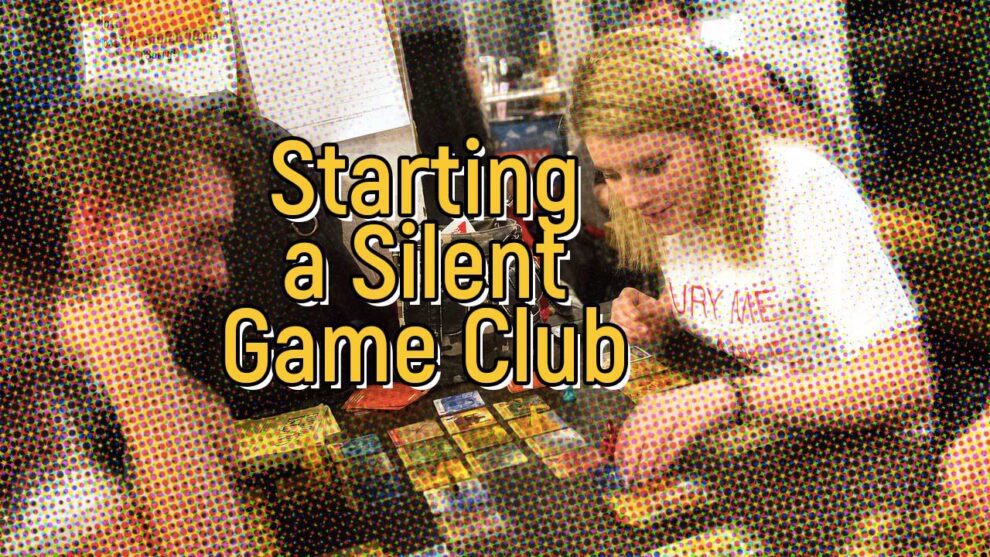
Header image credit: Gabi Porter.