
Crunching the numbers so your Kallax doesn’t.
Disclosure: I own Funkatronic Rex – Games & More, a friendly local game store in Arizona.
On one side: another $60–$80 board game that looks incredible.
On the other: rent, groceries, and that little voice that says, “You already have three games you haven’t opened yet, my dude.” Underneath the FOMO posts, limited print runs, and “must-own” lists is the real question:
“Is this actually a good use of my money and time?”
I spend a lot of time thinking about this hobby in two currencies: dollars and “cackles”. It’s not just “Is this game good?” It’s also “Is this a good trade for my hours and my dollars?” Whether you’re trying to keep a tighter budget, suspect your shelf has secretly gotten out of hand, or you just like having math to back up your gut, this is for you.
So let’s look at board games the same way you might look at concerts, movies, or baseball tickets: cost per hour of fun. If you actually play the thing, how does it stack up against other hobbies? When does buying more cardboard make sense, and when are you just paying for a prettier shelf of shame?
We’ll talk honestly about unplayed games, impulse buys, and that “collector brain” itch—but the goal isn’t to shame anyone. It’s to give you a clearer picture of the value you’re getting, so you can feel better about the games you keep, the games you play, and the ones you leave on the shelf at the store.
Board Games vs. Everything Else You Blow Money On
Let’s start with some quick-and-dirty cost-per-hour comparisons. These are ballpark U.S. numbers, so your mileage (and currency) may vary. The point isn’t perfect precision; it’s perspective. We’ll assume a typical modern game costs somewhere in the $40–$70 range, and a group actually plays it multiple times—not just once and done. Plenty of mid-weight “modern classics” live in that band at retail and big-box stores.
If you get, say, 10 plays out of a $40 game, with 4 people at the table for 90 minutes each time, that’s:
- 10 plays × 1.5 hours = 15 hours of table time
- 15 hours × 4 people = 60 person-hours of fun
- $40 ÷ 60 ≈ $0.67 per person per hour
Get more plays and that number only goes down.
But of course, not everything fits neatly into cost-per-hour math. A game that helps your kid come out of their shell, or becomes the thing your friend group quotes for years, is doing work no spreadsheet can capture. But the numbers are a helpful sanity check.
At my house, Ravensburger’s Disney Eye Found It—the big shared hidden-picture board game with Disney characters—is a perfect “cost per cackle” poster child. It’s a six-foot board where everyone yells when they spot the thing before the clock runs out. Most versions usually run in the $10–$20 range depending on edition and sale.
We have three different versions at home. They’ve seen rainy afternoons, pre-dinner chaos, and “we have 20 minutes before bed” sessions—and they’re still going strong. Compare that to a $40 or $70 game that you never play and suddenly the cardboard is looking… less spicy.
Now let’s stack board games against some other common “fun” expenses.
Streaming Subscriptions
 Netflix’s U.S. plans currently look something like this:
- Standard with ads: $7.99/month
- Standard (no ads): $17.99/month
- Premium: higher than that, if you really like pixels
If you watch:
- 20 hours a month on the Standard plan:
$17.99 ÷ 20 ≈ $0.90/hour - 40 hours a month (roughly “a show most nights”):
$17.99 ÷ 40 ≈ $0.45/hour
Streaming is extremely cost-effective if you actually use it… and hilariously expensive if you pay for three services and mostly just scroll your phone.
Eating Out / Bar Nights
 Some estimates put American spending on eating out around $3,600 per year—roughly $300 per month.
Say you go out four times a month and each outing is 2 hours with a $60 tab:
- $60 ÷ 2 hours = $30/hour of “fun”
That’s per person if you’re paying your own way.
Most of us have had that moment where the bill hits the table, everyone goes quiet for a second, and somebody says, “We could’ve bought a whole game for that.”
With a game, there’s at least some value left on the table later. You can trade it in, sell it, or gift it forward. If we’re talking cost per cackle, once you’ve decided you’ve gotten your fun out of a box, passing it on is an exponential way to squeeze even more value out of it. Who doesn’t like getting something for free?
Every game deserves another chance somewhere. They’re basically evergreen by default—if you’re done with a game, don’t let it calcify on your shelf. Move it along to the next table and let it keep doing its job.
Live Sports (Hi, D-backs Fans)
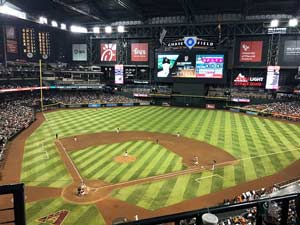 I’m a fairly rigid Arizona Diamondbacks fan. I see at least four games in person every year.
Last season, the cheapest ticket I could find just to get in the stadium was about $26. For me and my two kids, that’s:
- 3 tickets × $26 = $78 just to sit down.
Now add food, and this is where it escalates quickly:
- Three small pizzas and a round of treats? You’re easily staring at another $50–$60.
So before parking or souvenirs, we’re roughly at:
- Tickets: ~$78
- Food and sugar: ~$55
Call it around $130–$135 for one game.
Baseball runs about 3 hours:
- $135 ÷ 3 hours ≈ $45 per hour for the family
- Or $135 ÷ (3 people × 3 hours) ≈ $15 per person per hour
And that’s just the in-person games.
On top of that, there’s the baseball streaming bill. MLB.TV’s regular-season “all teams” package tends to land somewhere around $150 per year for out-of-market games.
Worth it to me! Live baseball and yelling at the TV in the shop with regulars are their own kind of joy.
Meanwhile, league-wide NFL ticket prices have become their own luxury. Recent surveys peg the average NFL ticket around $120–$150, with some team averages significantly higher.
If we’re purely talking cost per hour, one night at the ballpark—or one big football game—can equal a lot of cardboard that would keep paying out game nights for years.
Other Recurring “Little” Costs
 Two quick hitters:
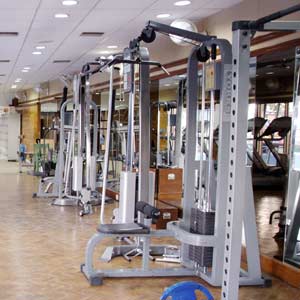
- Gym memberships. Average U.S. memberships often fall in the $50–$70 per month range. If you actually go 3 times a week for an hour, that’s around $5 per hour of gym time—solid value, plus your heart will thank you.
- Pets. Some research pegs average annual pet spending in the ballpark of $2,000 per year once you factor in food, vet bills, and extras. Cost per hour is impossible to calculate because your dog basically lives in your house, but let’s be honest: Fluffy is a luxury roommate who eats like a king.
None of these are “bad” expenses—they all bring their own kind of joy. They just put board games in context: cardboard fun is competing against a lot of sneaky monthly drains.
When Your Shelf of Shame Starts Billing You (and Stealing Your Cackles)
Here’s where we stop high-fiving and look in the mirror.
Shelf of Shame = Infinite Cost Per Hour
If you buy a $70 game and never play it, your cost per hour is:
- $70 ÷ 0 hours = mathematically cursed
This is how a hobby that can be extremely cost-effective turns into “Why is my credit card smoking?”
Take a second with your own collection. If you look at your shelf right now, how many games haven’t been played this year? And if those are all $40–$70 boxes, what would you rather that money be doing for you—funding more game nights, covering a weekend trip, paying for that one “forever favorite” you haven’t bought yet?
And what about the games you *have* played, just not recently? Most hobby collections settle into a pattern where maybe 10–15% of the library sees regular table time in a given year, while the rest waits its turn. That isn’t automatically a problem—it’s more like having a personal game library than a tight little toolkit.
The math shifts a bit, though. If you own 100 games and only 10 of them get played every year, those 10 are doing most of the heavy lifting on your cost per hour. The other 90 are essentially “parked money” until they hit the table again. That’s not a moral failing, but it’s worth being honest about: are you okay paying to maintain a big menu of options, or would you be happier (and spend less) with a smaller shelf where everything earns its keep?
Survey-style breakdowns of board game spending show a wide spread. In one summary, only about 6% of players spend under $100 per year on board games, while about 22% spend over $1,000 annually—with a big chunk landing somewhere in the middle.
It’s very possible to keep this hobby modest. It’s also very easy to drift into car-payment territory on games that never hit the table.
Hidden Costs Lurking in the Box
Board gaming’s secret add-ons:
 Storage: Shelves, Kallax units, plastic bins, maybe even a bigger place.
- Accessories: Sleeves, fancy metal coins, playmats, organizers, upgraded bits.
- Expansions: Because your brain says, “But what if the game had more game?”
- Travel & events: Con badges, hotel rooms, gas money for that big tournament weekend.
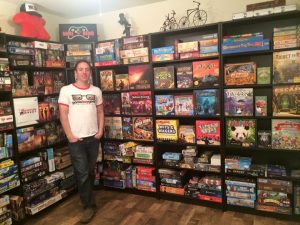 Storage: Shelves, Kallax units, plastic bins, maybe even a bigger place.
None of this is evil. It’s just what’s running in the background while we tell ourselves we picked a “cheap hobby.”
How to Squeeze More Cackles Out of Fewer Boxes
Depending on where you’re at—new to the hobby, budget-conscious, or buried in shrink wrap—different levers will help the most. Think of this as a menu, not homework.
Replay Your Favorites (On Purpose)
Instead of chasing nonstop novelty, build a regular rotation of games that always land:
- The 45-minute weeknight closer.
- The big Saturday-night showstopper.
- The friendly gateway game for new players.
Every extra play drives down that cost per hour and makes your earlier purchases smarter in hindsight.
From my side of the counter, some of the best nights are the ones where a game that’s been out for years—something like Point Salad, a fast little card-drafting veggie puzzle, or The Quacks of Quedlinburg, a push-your-luck bag-builder that has people literally standing up from their seats—hits two or three tables back-to-back. Same box. New players. Fresh laughter every time. That’s value.
If your group leans heavier, the same math applies to a campaign game like Gloomhaven or a crunchy euro you’ll happily play 15–20 times. The upfront price tag is higher, but if it becomes “our game” for a year, the cost per hour can still end up lower than dinner and a movie.
If you’re newer to the hobby or on a tighter budget, a small “house rotation” is your best friend. If you’re a long-time collector, it’s a way to rediscover why you bought those classics in the first place.
Helps most: new players building a core library and collectors who feel oddly guilty about their shelves.
Adopt a “10-Play Rule”
(Or at least pretend to.)
A simple mental rule:
“New game money only after I get 10 plays out of something I already own.”
You don’t have to be rigid about it, but that mindset flips you from “collector” mode to “experience” mode.
Around here, that often turns into, “We can absolutely buy something new… as soon as we get three more plays of this one.”
- If you’re new to the hobby or watching your spending, this rule is magic. It keeps you from impulse-buying a stack of games you’re too overwhelmed to actually learn.
- If you’re a seasoned collector, even a “5-play rule” will slow the flood and push more of your existing cardboard into real circulation.
Instead of “I need more games,” you start thinking “I need more nights with these games.”
Helps most: budget-conscious buyers and FOMO-prone collectors.
Try Before You Buy When You Can

To dodge one-and-done disasters:
- Play at your FLGS (hi, from Funkatronic Rex 👋).
- Borrow from friends.
- Hit demo tables at conventions.
- Watch playthroughs to see if it looks like something your group will actually enjoy.
Many stores (including ours) have open game nights and staff who love steering people toward high-replay-value games instead of future shelf decorations.
If your group is picky or you only buy a few games a year, this step is huge. It saves you from that “we played it once and never again” feeling—and from watching $60 stare back at you from the top shelf.
Helps most: folks with picky groups and people who only want a few, very right games.
Trade, Sell, and Gift the Duds
If a game clearly isn’t working for your group:
- Trade it in to your local shop if they do used games.
- Sell it online and use the cash to fund something that fits better.
- Gift it to someone whose tastes are different.
That effectively lowers the net cost of the games you keep and frees up both money and shelf space.
For overloaded collectors, this is the pressure valve that keeps the hobby from feeling like homework. For newer players, it’s a way to “undo” early impulse buys and reshape your collection around what actually hits the table.
Helps most: overloaded collectors and experimenters who bought a few misses.
Use Events to Squeeze More Fun from Fewer Boxes
Regular game nights at a local store mean:
- You get more plays out of what you already own.
- You meet more potential players so your 4-player game actually hits 4 players.
- You can test new titles without buying them all yourself.
Here at the shop, I pay a lot of attention to what happens after a game leaves the shelf. The nights that stick with me aren’t just about a new release going through the register; they’re the nights when I look up and see a game we recommended a while ago now surrounded by people laughing their heads off. That’s when I know that copy went home with the right group.
One recent shop favorite in that category is MonsDRAWsity, a drawing party game for 3–8 players where one person (“the witness”) has 20 seconds to study a bizarre monster card and then has to describe it from memory while everyone else tries to draw it. The base game usually sits at about $25 and ships with dry-erase boards and a big stack of monsters.
It’s quick to teach, plays in just a few minutes per round, and is exactly the kind of thing that tends to end in a table full of ridiculous sketches and cackling players.
We’ve also had nights where the same copy of Point Salad never makes it back to the shelf—one group finishes, and the next table over asks, “Hey, can we borrow that next?” By the end of the night, that one little ~$25 box has fueled hours of drafting veggies and laughing over who built the weirdest salad.
When we recommend new titles, we’re aiming for “this will live in your regular rotation” way more than “this will look good on your shelf.”
Helps most: people with a small collection who want more plays and extroverts who love finding new groups.
Conclusion – Spend Smart, Laugh Loud
So, are board games actually a good deal?
- When you buy thoughtfully and replay what you own, board games can hit around $0.50 (or less) per person per hour, which is wildly competitive with movies, streaming, live sports, and nights out.
- When games sit unplayed, your cost per hour rockets to infinity and your wallet cries behind the Kallax.
- Other hobbies—gym memberships, pets, travel, dining out, D-backs games, and definitely NFL games—can be amazing, but they often clock in at much higher dollars per hour of fun, especially once you factor in all the extras.
One night at Chase Field is still absolutely worth it to me—but it’s also a reminder that the cost of that D-backs game could buy a single $40 box that keeps paying out Thursday-night cackles all year.
You’re not failing the hobby if you don’t buy everything—if anything, you’re winning when the games you already own keep earning their spot at the table.
And if you’re on a tight budget, you’re not “doing it wrong” by being cautious. Even one well-chosen $40 game that your group loves and replays all year is fantastic value. You don’t need a wall of cardboard to justify your fun.
If nothing else, I hope this nudges you to look at your shelf and think, “How do I squeeze a few more cackles out of what’s already here?” instead of “What do I need to buy next?”
And if you want help finding those high-replay-value gems, Funkatronic Rex – Games & More is here—calculators holstered, dice ready—happy to help you build a collection that’s friendly to both your heart and your wallet. We’d rather help you find one or two games that see fifty plays than fifty games that see one play.